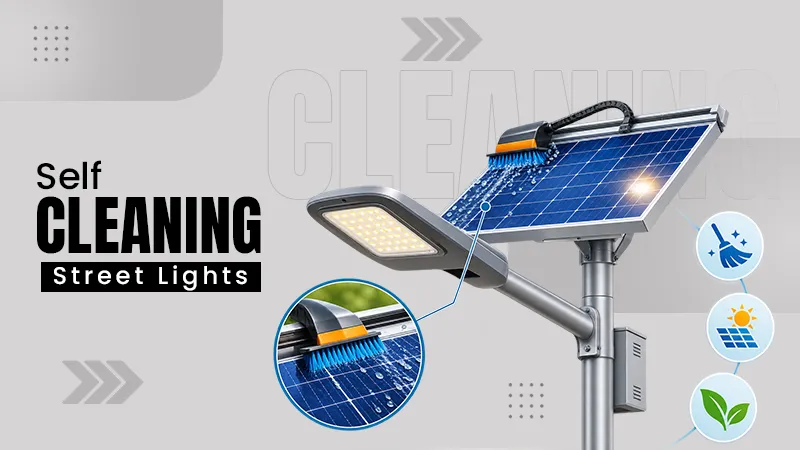
Ans: In simple terms, the self-cleaning streetlight oil palm waste system is a sustainable streetlight project that aims to combine two innovations. The project uses oil palm agricultural by-products for biomass or structural material, and it also integrates a self-cleaning mechanism that ensures that the light output of the streetlights remains consistent without too much human intervention.

A Guide to Understanding the Self-Cleaning Solar Street Lights for Oil Palm Plantation Roads
Self-Cleaning Streetlight Oil Palm Waste is a dual-innovation sustainability project that combines oil palm agricultural by-products, such as palm kernel shells, empty fruit bunches, and biomass fiber.
Table of Contents:
- Understanding the self-cleaning streetlight oil palm waste project
- What is the working process of the self-cleaning streetlight oil palm waste?
- Real-world applications of self-cleaning streetlight oil palm waste
- Environmental and social impact of self-cleaning solar street lights for oil palm plantation roads
- Challenges faced by the self-cleaning streetlight oil palm waste project
- FAQs
Understanding the self-cleaning streetlight oil palm waste project
This project focuses on two distinct engineering challenges combined in one elegant solution. One side of the challenge lies in the Southeast Asian and West African regions that produce large amounts of palm oil agricultural residue in the form of shell, fiber, and fruit branch materials. This waste is traditionally burned or dumped by mills.
On the other hand, millions and millions of people in the region lack reliable and affordable street lighting. The oil palm self-cleaning street light project aims to bridge this gap simultaneously.
The main concept of the project is to pair biomass energy systems with self-cleaning surface technology. Biomass energy systems convert waste into electricity or gas to power LED street poles, whereas the self-cleaning technology keeps lamp output consistent without manual assistance. This results in a streetlight that costs less fuel, needs less maintenance, and is a better environmental alternative.
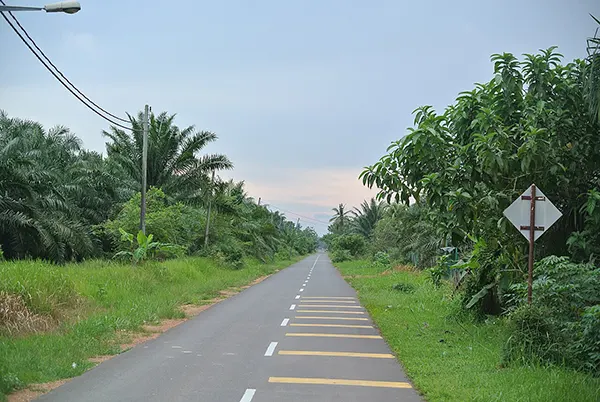
Why is Self-cleaning essential for rural streetlights?
You will find a number of insects, dust, pollen, and palm processing residue in agriculture and rural environments that rapidly coat lamp surfaces and reduce luminosity by 30% within weeks of installation. This is the main reason why conventional streetlights are not suitable for these places. By integrating photocatalytic self-cleaning features into streetlights, this project provides a solution that makes streetlighting economically unviable.
What is the working process of the self-cleaning streetlight oil palm waste?
Whether working as a community pilot, a plantation perimeter lighting project, or even as a municipal rural electrification program, the self cleaning street light palm oil project follows a clear and integrated process. This is how the process works, starting from raw palm waste to a self-maintaining lit streetlight:
Waste Collection
The project starts with the collection of waste, as palm kernel shells, empty fruit bunches, and fiber residue are collected directly from processing mills at near-zero cost.
Biomass Processing
After this, the waste undergoes a gasification and anaerobic digestion process to produce combustible biogas, which is used to power a generator or a fuel cell.
Power Generation
The generator is used to produce electricity, which feeds into a local microgrid or can directly charge battery banks for the street poles.
LED Streetlight Array
High-efficiency LED lamps are then mounted on poles to distribute light across roads, pathways, and community space with the use of minimal energy.
Self-Cleaning Surface
Here, the oil palm lamp project street lamp has a TiO2 photocatalytic coating on the lamps, which is used to break down dirt with the use of sunlight. Additionally, micro-spray systems automatically rinse casings on a timer,
Monitoring and Output
Lastly, IoT sensors are used to track energy output, lamp performance, and biomass fuel levels, which can flag any issue remotely before they cause severe outage.
In certain advanced deployments, engineers integrate hybrid solar-biomass systems, where solar panels handle daytime charging, and the biomass generator covers the nighttime period. This redundancy makes the system even more reliable compared to one energy source alone, which is fundamentally essential for communities where a streetlight outage can create multiple safety risks.
Real-world applications of self-cleaning streetlight oil palm waste
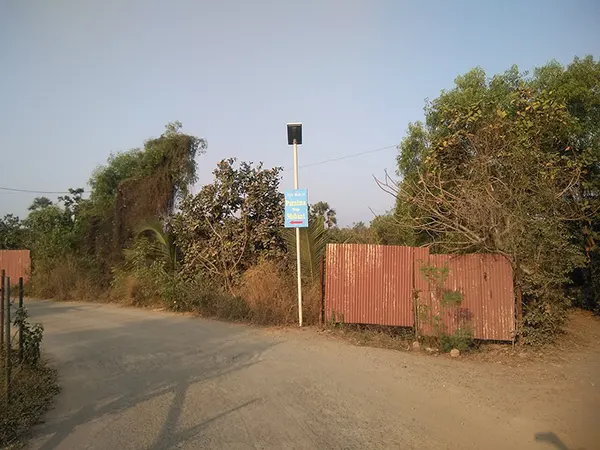
The technology has moved beyond the prototype stage in several palm-producing regions in the world. There are numerous application models that have proved themselves in field conditions, and each of them is suited for a different community.
Plantation Perimeter Lighting
Palm plantation regions in Sumatra and Borneo power perimeter security lighting entirely on their own processing waste, which has eliminated diesel generator costs and enhanced worker safety at night.
Village Road Lighting
In the rural regions of Nigeria and Ghana, palm biomass microgrids power entire street pole arrays in villages. This has provided communities with their first reliable public lighting and lessened road accidents significantly.
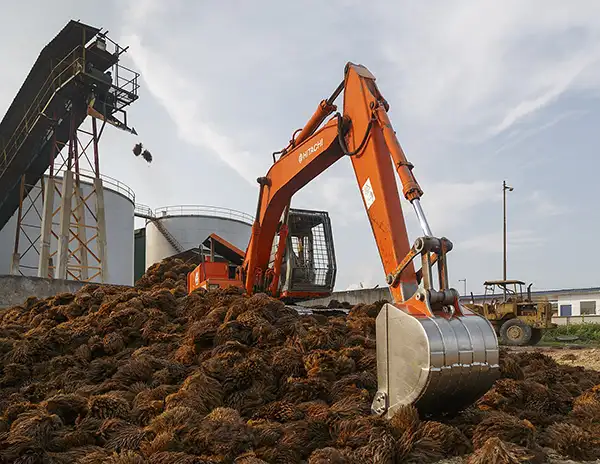
Mill Zone Infrastructure
Self-contained energy systems in palm oil processing areas enable self-cleaning streetlight technology on all factory and employee roads.
University Research Projects
Engineering faculties across Indonesia and Malaysia collaborate on on-site pilot research of self-cleaning streetlight technology, palm oil waste, and sustainable energy on their university grounds.
Environmental and social impact of self-cleaning solar street lights for oil palm plantation roads
The self-cleaning oil palm project involving streetlights also has considerable impact across environmental, economic, and social dimensions, which is often within the same community that it is being used in.
For the environment, the project tackles two major pollution challenges at once: the open burning of palm biomass waste, which releases particulate matter and greenhouse gases, which is a major reason behind the chronic haze problem in Southeast Asia.
Additionally, diverting this material into energy production stops and locks carbon in the system rather than releasing it. As a result of this, each and every installation that uses palm biomass stops hundreds of tonnes of CO2 emissions every year.
Economic and community benefits
The impact is a lot deeper when we consider the economic benefits. Palm mills gain a huge amount of revenue from selling the waste that they previously paid to dispose of. Local technicians also find employment in the process of system installation and monitoring.
Moreover, communities having reliable streetlights see numerous advantages, such as nighttime commerce, school attendance, and personal safety. These outcomes go beyond the engineering achievement itself.
Challenges faced by the self-cleaning streetlight oil palm waste project
Even though the project has shown huge promise, its implementation is challenged by numerous issues that practitioners and policymakers need to address beforehand.
Biomass logistics
It is essential to understand that gasification systems work best when they are in proximity to palm mills. Transportation of biomass over long distance results in more cost and erodes carbon advantages, which is why the deployment center must be near the mills.
Technical skills gap
The operation and maintenance of biogas generators and IoT monitoring systems need skilled technicians that the majority of rural communities lack at present. This is the main reason why training programs need to run alongside hardware development and deployment.
Self-cleaning coating durability
Oil palm lamp project existing systems have shown that TiO2 photocatalytic coatings can degrade under long UV exposure and need regular reapplication, which can be anywhere from 3-5 years. This is a major challenge to the maintenance cycle budget.
Upfront capital cost
Even though the operational costs are low, the initial investment in different items, such as gasification equipment, battery storage, and IoT infrastructure, is quite substantial. This is the main reason why grant funding, public-private partnerships, or development finance becomes essential to launch such projects.
Seasonal biomass variability
The basis of this project is palm waste, which fluctuates with harvesting cycles. This means that the energy output will also not remain perfectly consistent throughout the year. Having hybrid solar backup systems or battery reserves becomes necessary, but they add complexity to the system.
Regulatory gaps
In numerous palm-producing countries, biomass energy systems lack proper regulatory frameworks for small-scale rural deployment, which means getting permits slows the speed of the project.
The thing that you need to know is that developers and engineers are constantly working to develop practical responses to each of these challenges, and they have developed some. There are modular system designs that are adaptable to community sizes, and even community technician training centers, which means that while the barriers are real, they can be conquered.
FAQs
Q1: What is the meaning of a self-cleaning streetlight oil palm waste system?
Q2: What is the working process behind the self-cleaning streetlight oil palm waste system?
Ans: Most of these self-cleaning streetlights use one of the following two methods: automated micro-spray systems, which periodically rinse the lamp casings, or photocatalytic coatings that break down organic matter when exposed to sunlight. Both methods make sure that the light output remains consistent without any form of manual cleaning crew, which saves high operational cost in rural and semi-urban areas.
Q3: What are the locations where the self-cleaning streetlight oil palm waste projects are currently working?
Ans: These projects are currently running in a number of palm-producing regions of different countries, such as Indonesia, Malaysia, Nigeria, Colombia, and Ghana. Pilot installations are present in rural regions, and there are several municipal governments in West Africa and Southeast Asia that have started incorporating this project into rural electrification programs.
Q4: What palm waste materials are used to power these streetlights?
Ans: The primary palm waste materials that are used in this project are palm kernel shells (PKS), empty fruit bunches, and palm mesocarp fiber. All these materials are used to provide energy to the self-cleaning streetlights.
Q5: Do the self-cleaning streetlight oil palm waste systems prove to be cost-effective?
Ans: Yes, these projects do prove to be cost-effective, particularly in regions where palm waste is abundant and free. The raw material cost is completely zero since mills pay other companies to dispose of their waste. The self-cleaning feature also reduces ongoing maintenance costs by 40% compared to conventional streetlights.
Q6: Can this technology be used in urban streetlight systems?
Ans: While gasifying biomass works well with palm mills due to feedstock constraints, biomass gasification technology poses challenges in most large cities. Fortunately, both structural and self-cleaning elements are well suited for almost any environment. Several vendors offer self-cleaning streetlights that can pair with locally sourced biomass power grids, as well as with other energy sources such as solar or grid energy.
Q7: What connection does the self-cleaning streetlight and oil palm waste project have to the sustainability goals?
Ans: Multiple United Nations Sustainable Development Goals, such as SDG 7 (affordable clean energy), SDG 11 (sustainable cities and communities), SDG 12 (responsible consumption and production), and SDG 13 (climate action are achieved through this project.
Related Posts