Take the age of your AC and multiply it by the cost of the repair required. If the number is bigger than $5000, replace your AC. But, for a lower result, your repair is worth it.

Best HVAC System for New Construction: Complete Homeowner's Guide in 2026
Looking for the best HVAC system for new construction is indeed overwhelming. You need specific information to narrow down your options and get to a workable solution that you can call best! So, with this philosophy in mind, we have tried to include all the key aspects here. Get to learn about the types of HVAC systems, their pros & cons, comparisons, and top brands.
Also, learn how to find a reliable provider and take the best care of the installed system. Everything you need is provided below. Make the right decision without overthinking!
Table of Contents:
- Why HVAC Planning Matters While Looking for the Best HVAC System for New Construction!
- Types of the Best HVAC System for New Construction
- Top Brands for the Best HVAC System for New Construction
- Factors to Consider Before Choosing the Best HVAC System for New Construction
- Best HVAC System for New Construction Comparison Table
- Heat Pump vs Furnace: Which is Better?
- Central HVAC vs Ductless Mini Split
- What Size HVAC System Do You Need?
- Understanding HVAC Efficiency Ratings
- Smart HVAC Features Worth Having
- Indoor Air Quality Features to Consider
- Average HVAC Installation Cost for New Construction
- Common HVAC Mistakes to Avoid During New Construction
- Maintenance Tips After Installation
- How to Choose the Best HVAC Contractor
- Is a Heat Pump the Best HVAC System for New Construction in 2026?
- Conclusion
- FAQs
Why HVAC Planning Matters While Looking for the Best HVAC System for New Construction!

Planning significantly reduces the installation costs. Other benefits are easier installation, lower labor costs, hidden ductwork, better insulation planning, and as provided below. Thus, thinking about the best HVAC system for new construction as early as possible is super important.
- Easier installation: That is because no deconstruction is needed. Things can be made from scratch.
- Lower labor costs: Breaking the existing structure and then building new sections to suit HVAC needs requires extra labor.
- Hidden ductwork: With planning before construction, you don’t have to worry about ductwork being open for everyone’s sight. It gets well enclosed within architecture!
- Better insulation planning: When planning after construction, you have to go with the existing structure and its capabilities.
- Proper airflow design: So, the ventilation-related aspects can be improved.
Did you know? HVAC planning in new construction also leads to a higher home resale value.
Types of the Best HVAC System for New Construction

Picking up the best HVAC system for new construction depends heavily on the specific project needs and preferences of the owner. Yet, the top 6 options are listed below.
- Central Air Conditioning with Furnace
- Heat Pump System
- Dual Fuel HVAC System
- Ductless Mini Split
- Geothermal HVAC System
- Radiant Floor Heating
For elaboration, the following sections are provided.
1. Central Air Conditioning with Furnace
Central air conditioning often comes with three major furnace options, such as electric, gas, and oil. This entire system works by absorbing the heat from the atmosphere and providing cool air. The major pros and cons are provided below.
| Pros | Cons |
| Whole-home coverage | Extensive ductwork |
| Humidity control | Energy losses |
| Filtration capabilities | Cooling even unoccupied spaces as well |
| Familiarity and availability | |
| Discreet appearance | |
| Potential for zoning |
Best for: Traditional residential construction where all rooms are well occupied by large joint families
2. Heat Pump System
Heat pump systems work by moving the heat instead of creating it. There are two modes involved. The first one is the cooling mode, which removes the heat from inside. The second one is the heating mode, where the heat is extracted from outside and sent indoors.
The major pros and cons of this system are as follows.
| Pros | Cons |
| Dual functionality | Higher initial cost |
| Great energy efficiency | Not ideal for extreme temperatures |
| Lower operating costs | Specialized technician needs |
| Eco-friendly | |
| Long lifespan |
Best for: Homes where owners need heating and cooling for both facilities with limited space
3. Dual Fuel HVAC System
This option is also known as a hybrid system and is most popular for its smart capabilities. The system monitors outdoor temperatures and switches between heat sources. Predetermined temperature points typically stand around 35 to 40 degrees F.
The system has the following pros and cons.
| Pros | Cons |
| Operates on the most efficient heating source at any given point under any circumstances | Higher initial investment |
| Reduced costs than traditional single-source systems for heating | Installation complexity |
| Better temperature control | Requires more space for both heat pump and furnace components |
| Hybrid capabilities |
Best for: Areas where climate conditions vary a lot
4. Ductless Mini Split
It is the HVAC option that removes the hassle of ductwork. For that matter, this system utilizes individual air handlers. Technically, these handlers are connected to the outdoor unit. This solution ensures the direct flow of the conditioned air into the room.
Consider the following ups and downs.
| Pros | Cons |
| High energy efficiency | Higher upfront |
| Temperature control according to zonal needs and preferences | Maintenance required every 4 to 6 weeks. |
| Simple installation | |
| Compact size |
Best for: Homes that don’t have any ductwork or rooms where extending ductwork isn’t possible
5. Geothermal HVAC System
A geothermal HVAC operates underground. Here, the system utilizes constant subsurface temperatures. This is the most sustainable and eco-friendly option. It runs on renewable energy. The major upsides and downsides are as follows.
| Pros | Cons |
| Energy efficiency | High upfront cost |
| Eco-friendly | Installation complexity |
| Long lifespan | |
| Little maintenance needed |
Best for: Residential properties with large outdoor areas or a lake nearby
6. Radiant Floor Heating
The radiant floor heating is installed beneath the flooring. And that is why it warms the property from the ground up. It uses hot water tubes or electric wires to deliver a constant flow of heat. Major advantages and disadvantages are as follows.
| Pros | Cons |
| Consistent heat | Higher installation cost |
| Increased home value | Electricity dependency |
| Long lifespan | |
| No air circulation, no dust and allergens |
Best for: Living or other gathering spaces in a house
Also Read: Construction Safety Checklist: A Brief Walking Through OSHA-Supported Safety Guidelines!
Top Brands for the Best HVAC System for New Construction
If you are interested in which brands you should consider for a new construction HVAC installation, here is a list. We have included Carrier, Trane, Lennox, Rheem, and more.
| Brand | Installed Range | SEER2 Range | Warranty | Best For |
| Carrier | $3,200 to $15,000 | 13–26 | 10 years parts + lifetime compressor | Extreme climate conditions |
| Trane | $3,500 to $16,000 | 13–22 | 10 years parts + 12 years compressor | Maximum durability |
| Lennox | $3,500 to $15,000+ | 13–28 | 10 years parts + lifetime compressor | High efficiency |
| Rheem | $2,800 to $10,000 | 13–20 | 10 years parts | Reliable performance |
| York | $2,800 to $10,500 | 13–20 | 10 years parts + lifetime compressor | Great quality at medium prices |
| Daikin | $3,500 to $14,500 | 13–20 | 12 years parts + 12 years unit replacement | Best warranty |
| Goodman | $2,600 to $8,500 | 13–18 | 10 years parts | Affordability |
Note: HVAC solutions provided by these brands are best for all construction types.
Factors to Consider Before Choosing the Best HVAC System for New Construction
Home size, local climate, energy efficiency goals, budget, home insulation, and family lifestyle are most crucial in this regard. These factors must be taken seriously when considering an HVAC solution.
- Home size: Make sure that you ensure the size requirements well before getting technicians to install a particular type of HVAC.
- Local climate: Learn about your local climate better. It could be hot, cold, mixed, or humid.
- Energy efficiency goals: You might want to choose a system that runs on low energy. So, you can save a big amount on fuel or electricity on a monthly basis. That is another factor to consider while finding the best HVAC system for new construction.
- Budget: How much money you can afford to spend is also a big consideration. So, you must always pay attention to initial installation charges, lifetime operating costs, maintenance and repairs, etc.
- Home insulation: If your construction project is highly energy-efficient, like using ICF in construction, that means you can go with a lower-capacity HVAC for the same quality. Your property after construction will minimize energy loss, and that will make all the difference.
- Family lifestyle: All the factors, like working from home, family size, using the property as a vacation home, smart home users, etc., are also important.
Best HVAC System for New Construction Comparison Table
All the major types of HVAC systems discussed above are summarized in a comparison table below. It compares based on upfront cost, energy efficiency, lifespan, best climate, and maintenance needs. By the way, the best HVAC system for new construction depends on the owner’s specific needs.
| HVAC Type | Upfront Cost | Energy Efficiency | Lifespan | Best Climate | Maintenance Needs |
| Central Air Conditioning with Furnace | $13,000 to $18,000 | Medium to high | 12–17 years | Moderate | High |
| Heat pump system | $6,000 to $12,000 | Medium | 10 to 16 years | Moderate | Medium |
| Dual fuel HVAC system | $7,500 to $12,000 | Medium to High | 20+ years | Variable | Low to medium |
| Ductless Mini Split | $2,500 to $15,000 | High | 12 to 15 years | Hot & humid | High |
| Geothermal HVAC system | $45,000+ | High to very high | 25 to 30 years | Seasonal extremes | Low |
| Radiant floor heating | $800 to $1,700 (for 100 sq ft) | Low to medium | Over 25 years | Very cold | Low |
Heat Pump vs Furnace: Which is Better?
The following table provides a comparison between a heat pump and a furnace based on location, versatility, efficiency, and investment factors.
| Bases | Heat Pump | Furnace |
| Suitability | For milder climate conditions | For colder regions |
| Versatility | Heating and cooling both available in electric heat pumps | Only heating possible |
| Efficiency | High in dual-fuel systems | Lower |
| Budget | Depending on size + dual fuel systems are costlier | Depending on size |
Note: Choosing the right solution between these two depends on the prevailing conditions, requirements, and preferences. And that is why considering the best HVAC system for new construction can be difficult.
Central HVAC vs Ductless Mini Split
Your best HVAC system for new construction might also be one of these two choices. Consider the following table for a quick comparison based on ductwork, installation ease, coverage, and upfront central air installation costs.
| Bases | Central HVAC | Mini Split |
| Ductwork | Needed | No need |
| Installation ease | Existing ductwork necessary | Can be installed without ductwork |
| Coverage | Whole house | A particular room, area, or space |
| Upfront costs | Higher | Lower |
What Size HVAC System Do You Need?
To learn what size you need, go through a simple two-step process. First, find out how many BTUs of heating or tons of AC you need. And, once that is done, second, decide which unit to buy.
For the first step, you can use either the manual J calculation or square footage measurements. While the manual J calculation is more precise, square footage measurements are easier and simpler. In the second step, your job is to choose the HVAC unit that meets your BTU requirements better.
And, this twofold process remains the same whether you need a commercial HVAC in Fort Worth or somewhere else.
These calculations are important when exploring the best HVAC system for new construction. You don’t want to spend more on over-capacity or less on under-capacity! Both scenarios would be a total waste of time and resources.
Did you know? The BTU stands for British Thermal Unit.
Understanding HVAC Efficiency Ratings
In the following table, the most common efficiency ratings are included. It explains SEER2, HSPF2, AFUE, and EER2 concisely.
| Popular Ratings for the Best HVAC System for New Construction | ||
| Efficiency Ratings | Full Forms | Usage |
| SEER2 | Seasonal Energy Efficiency Rating | A higher SEER2 means a higher level of efficiency. |
| HSPF2 | Heating Seasonal Performance Factor | A higher HSPF2 means a better heating unit for winter days. |
| AFUE | Annual Fuel Utilization Efficiency | For an optimal furnace or boiler, you need a higher AFUE rating. |
| EER2 | Energy Efficiency Ratio | Around a 10.6 rating is best. |
Note: EER2 is more important for you than SEER2 if you live in an area with higher outdoor temperatures.
Also Read: Refinishing Timber Floors: Homeowners’ Guide with Key Insights & Complete Overview
Smart HVAC Features Worth Having
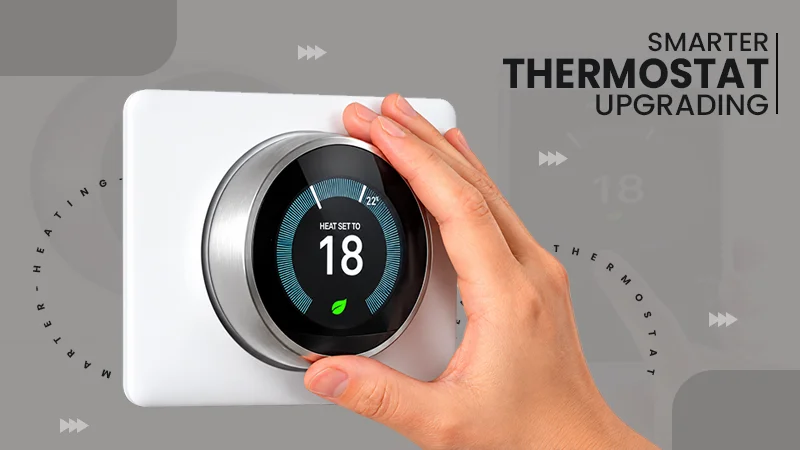
The smart features you should ensure are smart thermostats, Wi-Fi control, air quality sensors, humidity control, zoning, etc.
| Features | Benefits |
| Smart thermostats | Automatically adjusts the indoor temperatures |
| Wi-Fi control | Access & control most of the features online from a screen |
| Mobile apps | A mobile application for the ease of controlling HVAC and high accessibility |
| Air quality sensors | For better monitoring of the prevailing indoor air conditions and regulations |
| Humidity control | An ideal feature in a highly humid area |
| Zoning | So you can just keep a particular room cool or warm, as opposed to all rooms at once cooling |
| Remote monitoring | Get useful information to manage and handle problems better with your HVAC systems |
| Voice assistants | For higher comfort, you can command the system with your voice |
These features make the option you have chosen the best HVAC system for new construction.
Indoor Air Quality Features to Consider
While considering the best HVAC system for new construction, don’t forget to check these indoor air quality features. It includes HEPA filters, UV lights, a whole-home humidifier, a whole-home dehumidifier, etc.
| Indoor Air Quality Features | Benefits |
| HEPA filters | For the filtration of the indoor air to boost its quality |
| UV lights | One of the most effective methods of air & surface disinfection |
| Whole-home humidifier | For adding moisture to the air |
| Whole-home dehumidifier | For eliminating excessive moisture from the air |
| ERV & HRV | These filters remove allergens and pollutants from the incoming air |
| Fresh air ventilation | For the constant flow of fresh air in |
| Air purification | To correct the existing indoor air quality |
Average HVAC Installation Cost for New Construction
The approximate cost of a new construction HVAC installation depends on the system type and specifications. That is why the table explores installation expenses, including central HVAC, heat pump, dual-fuel HVAC, ductless mini-split, etc.
| HVAC Type | Average HVAC Installation Costs |
| Central HVAC system | $3,000 to $7,000 |
| Heat pump system | $4,500 to $8,000 |
| Dual fuel HVAC system | $3,000 to $10,000 |
| Ductless mini split | $2,000 to $8,000 |
| Geothermal HVAC system | $12,000+ |
| Radiant floor heating | Around $6,800 |
Common HVAC Mistakes to Avoid During New Construction
Major mistakes people make are often related to the wrong system size, the cheapest equipment, poor duct design, or as mentioned below.
- Bringing home the wrong system size
- Going for the cheapest equipment
- Ignoring poor duct design, which leads to maximum energy loss
- Not making the home walls highly insulated for max energy efficiency
Note: This is the most expensive mistake you can make when considering the best HVAC system for new construction. You will have to pay a lot for energy bills after installation in the long run.
- Ignoring zoning that helps make only one specific place cool or hot at a given time
- No fresh air ventilation, which impacts the air quality badly
- Hiring an inexperienced and incompetent contractor for your work
Maintenance Tips After Installation
After the new construction HVAC installation, take care of the following maintenance-related aspects. It is related to annual servicing, filter replacement, cleaning vents, etc.
- Ensure annual servicing for optimal performance.
- Consider filter replacement for high air quality.
- Make sure your vents are cleaned on time for better air quality and less energy loss.
- Thermostat devices must be updated for better functioning.
- Clean the outdoor units so internal units don’t experience an extra burden.
- Get refrigerants checked every once in a while.
- Always hire a professional for your checkup.
Also Read: MEP in Construction: Meaning, Importance, Common Problems, Future Trends, and More!
How to Choose the Best HVAC Contractor
Choosing the best HVAC contractor is key to finding the best HVAC. Thus, to reach an experienced contractor, keep in mind certain things related to comparison, licensing, insurance, etc.
- Comparison: Compare charges and benefits by different providers.
- Licensing: A provider or contractor must be licensed to deal in HVAC products and services.
- Insurance: Your product must have the insurance benefits.
- Reviews: Go through past client reviews on the internet to figure out how reliable an option is.
Insight: That is an essential task if you want to get the best HVAC system for new construction. You can leverage their knowledge to your advantage.
- Experience: Ensure 3 to 4 years of experience in the field at least.
- References: If you get to know about a contractor through your social or family circles, that is great.
- Warranty: That will give you peace of mind. Your product will be replaced, repaired, or refunded in case of defects.
- Written estimates: Have quotes in writing for better communication later.
- Energy calculations: After precise calculations only, make your purchase, or you might end up with undercapacity or overcapacity.
Is a Heat Pump the Best HVAC System for New Construction in 2026?
Yes, a heat pump is the best option for most homeowners. Don’t get confused by the name. Heat pumps deliver heating as well as cooling. And that doesn’t mean you need a large setup. There will only be a single system deployed that will work both as a heater and a cooler, as per the needs.
Note: It is the best time as well to invest in a heat pump due to federal tax credits. That will cover up to 30% of costs.
Conclusion
So, that has been a general discussion about the best HVAC system for new construction. The final choice, however, depends on your budget, preferences, and project needs. Whether a particular option will be feasible in your project idea or not is also a major consideration. So, before making any purchases, make sure you have a thorough consultation with a contractor.
FAQs
What is the $5000 rule for HVAC?
What are the top 3 HVAC systems?
Heat pumps, dual-fuel HVAC, and geothermal HVAC systems are the top 3 options.
What brand of HVAC is the most reliable?
Carrier, Trane, and Lennox are top brands.
Sources:
SoCal Climate Control: 5 HVAC System Types Explained: Pros and Cons for Every Home
HVAC Project Cost: Best HVAC Brands — Ranked by Reliability, Value & Efficiency
This Old House: Radiant Floor Heating: Why It’s Worth It
Related Posts