Ans: The typical cost of a 5-ton geothermal HVAC is $25,000. By the way, the actual cost depends on the complexity and the load of the system used.

What is the Cost to Install Geothermal HVAC in 2026? Learn in Detail!
Everyone wants to find a sustainable, high-efficiency heating, ventilation, and air-conditioning system! You might ask if such a thing even exists. Well, if you are ready to bear a high upfront cost and have the right site conditions, a geothermal HVAC unit is all you need! It completely works on the earth’s innate thermal capacity! That means zero carbon emissions.
The minimum cost to install geothermal HVAC (without the equipment) lies somewhere between $15,000 and $20,000. However, it can even reach up to $50,000+ as per the load and the complexity of the entire setup. For many of you who want to dive deep into the subject, a complete analysis is provided below.
Table of Contents:
- What is a Geothermal HVAC System?
- How Much is the Average Cost to Install Geothermal HVAC?
- What is the Cost Breakdown of a Geothermal HVAC Installation?
- Factors That Affect Geothermal HVAC Cost
- Types of Geothermal Systems & Their Costs
- Is Geothermal HVAC Worth the Cost?
- A Quick Overview of Geothermal HVAC Vs Traditional HVAC Cost
- Consider Government Incentives & Tax Credits with a Geothermal HVAC System
- What About the Maintenance Cost of Geothermal HVAC?
- Pros and Cons of Geothermal HVAC
- How to Reduce Geothermal Installation Cost?
- How Long Does Installation Take?
- Conclusion
- FAQs
What is a Geothermal HVAC System?
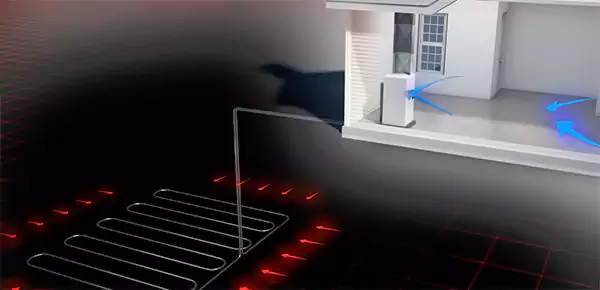
Before the cost to install geothermal HVAC, let’s first talk about how it works. In simple terms, a geothermal HVAC system is a temperature control unit that operates underground. This setup utilizes constant subsurface (or underground) temperatures to keep your homes and buildings comfortable.
When too hot outside, this geothermal HVAC makes the interior cool. And, when too cold outside, this makes the interior warm. It becomes possible because this temperature control system works by exchanging heat with the earth through a ground heat exchanger. Here, the ground is like thermal energy storage. It allows the device to act as a heat sink.
Insights: Even in extreme winter, the deep layers of the earth below ground are always warm & comfortable! And, during summer, the same underground becomes relatively cooler. So, the heat pumps take advantage of this geothermal contrast. And keep the modern buildings comfortably warm or cool, as the case may be. This system can be installed in all types of houses.
How Much is the Average Cost to Install Geothermal HVAC?
The average cost to install geothermal HVAC ranges from $15,000 to $40,000. However, this is a general approximation. The price can even go up as per other influencing factors (discussed further in the article).
Too Much😨! A max $40,000 cost is indeed a lot higher than what most traditional HVAC systems require for installation. But the key lies in the future. A geothermal HVAC provides unbeatable energy and money savings in the long term. It is like choosing future benefits over current expenses!
Consider the following specifics with respect to the average range mentioned above.
| Cost per ton | Cost per sq. ft. |
| $7,500 to $10,000 Note: This is for a setup that weighs 3 to 4 tons. It is a standard weight for a medium-sized home. | $12 to $15 Note: This is for a typical 2,000 to 2,500-square-foot home. |
The bigger the system size, the higher the cost will be. Both are directly correlated to each other. Suppose you own a big property or are planning a large residential construction. In that case, you will need a large geothermal HVAC installation to control the indoor temperature. And that inevitably means a higher installation cost.
Wow: The geothermal HVAC can help you cut back on energy consumption by up to 50%. And that will automatically result in bigger savings and better investment possibilities.
What is the Cost Breakdown of a Geothermal HVAC Installation?

Let’s now have a look at the breakdown of the cost to install geothermal HVAC. There are two components here. First, we will talk about the cost of the equipment itself. Like how much it costs to purchase a completely new geothermal HVAC system. And, second, we will move on to the installation cost and other factors, such as permits and all.
1. How Much Does the System Cost in Itself?
Most houses require a geothermal HVAC system with a weight of 1.5 to 5 tons. And the price of each ton is $2,500 to $5,000. So, considering the max value, you will have to pay $25,000 for a system of 5 tons. It is simple! For a heavy deal, you also have to pay heavily. The geothermal heating and cooling system cost increases!
What does it have? Each setup includes the blower, compressor, and heat exchanger.
2. What About the Ground Loop Installation Cost!
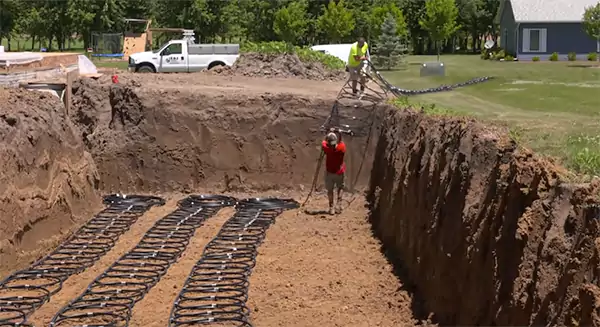
So, purchasing the system is done! Now, the next step is installation. The geothermal heating cost to install lies between $15,000 to $50,000. It is the most laborious and expensive part of the process. Not everyone can handle the work here. Only experts! Precision and perfection always demand years of practice.
By the way, this range is subject to change or fluctuation, according to the chosen type of loop! There are three major types. They include vertical, horizontal, and pond or lake loops. Consider the following table for more.
| Type | Cost Variation | Suitability |
| Vertical loop | $20,000 to $48,000 |
|
| Horizontal loop | $15,000 to $34,000 |
|
| Pond/lake loop | $18,000 to $28,000 |
|
Note: Drilling and trenching are a major part of the installation work. And, without sufficient manpower, it cannot be done effectively. That is why factors related to the cost also affect the overall cost of the project.
3. Additional Considerations
Also, it is not just about purchasing the system and installing it underground. This process is also a legal enterprise. Thus, government intervention is also involved. That is why various permits are needed. Next, learning about the status of the ductwork and electrical capacity is also crucial here. These considerations also affect the project expense. For details, consider the following.
- Permits: Permission from government is a must. Permitting fees vary from one region to another. The most essential permit types are briefly mentioned below.
Type For Drilling permit Vertical loops Trenching permit Horizontal loops Mechanical permit The installation of the indoor heat pump unit, heat exchanger, and system piping Electrical permit The electrical connections to the heat pump unit Zoning permit Proving compliance with property setbacks and land use regulations Environmental permit Open-loop systems that extract groundwater - Ductwork: Installing new ductwork costs around $5,000 to $10,000. But this value isn’t the same for all. For new construction, the installation costs much less than for a house without any ductwork.
- Electrical upgrades: Are you considering a geothermal system in an existing structure? Then, you also need to modify the electrical setup. Higher capabilities are needed to handle the new system.
Advice: Many people build their dream houses from scratch. But forget to purchase a comprehensive insurance policy! You don’t repeat this mistake. Choice Home Warranty prices are always relatively lower than those of other competitors in the market.
Also Read: How Much is a Water Softener? Consider an In-Depth Analysis from all the Major Perspectives!
Factors That Affect Geothermal HVAC Cost
Most project owners are always looking for ways to reduce the cost to install geothermal HVAC. It is because they have a tight budget. So, for that matter, it is important to analyze key factors that affect the installation in the first place. In short, these factors are property size, existing house, soil condition, climate or location, loop type, and accessibility.
- Property size: The size of your home is the first cost-influencing factor. Larger homes need bigger systems for cooling and heating. That also means that you will need more equipment, materials, and labor for the installation. It results in a higher geothermal heating cost to install.
- Existing house: If you are considering a geothermal HVAC system in an existing property, that means a huge spike in the total cost. You will have to either install new ductwork or check the stability of the current one. Your electric system will also require adjustment. Now, it also needs to be accommodated as per the load of the geothermal HVAC. Upgrades make the project too expensive for many.
- Soil condition: For rocky terrain, vertical drilling is preferred for ease of installation. That applies to most Massachusetts locations. If there are no rocks, ledges, boulders, etc., you can easily opt for a horizontal excavation. So, the condition of the soil also affects the project loop and thus overall costs.
- Climate or location: Sometimes, it is the location that presents hard soil, or other times, climate! Both dictate the choice of the loop and its size. For example, living in a location where the soil is rocky and hard, vertical drilling is more efficient. Next, if the climate is extreme, deeper and longer loops are needed for best functioning.
- Loop type: Choose a vertical loop, and you have to pay the most for its installation. Other types, such as horizontal and pond loops, are relatively cheaper. So, the loop type also affects the geothermal heating system cost.
- Accessibility: Easy access to the heavy construction vehicles is also a thing. Without them, the project owner will have to consider manual work. That means high labor charges. The same work could have been done swiftly with excavators or cranes! The same logic applies to the availability of the geothermal HVAC experts as well.
Types of Geothermal Systems & Their Costs
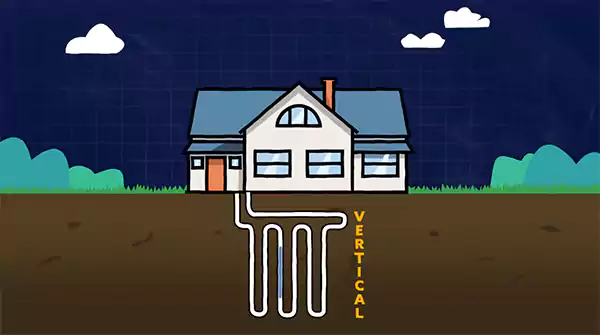
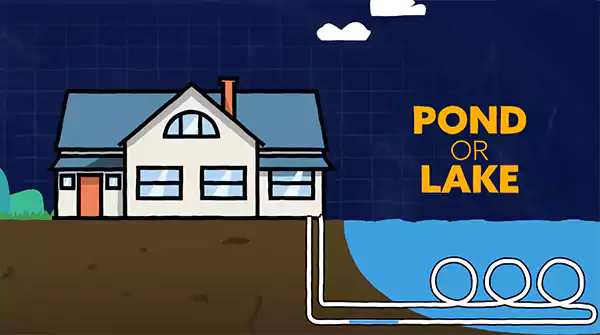
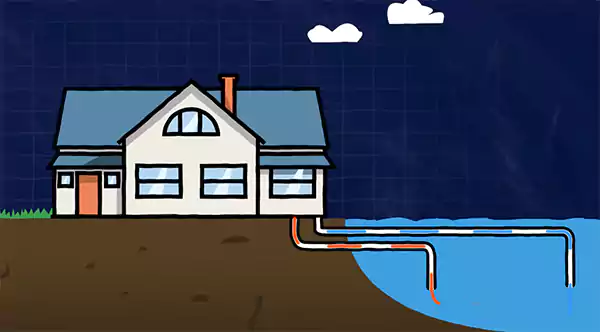
We have amply discussed the cost to install geothermal HVAC above. Now, let’s deal with the types of geothermal systems. So, there are two types of setups. One is closed, and another is open. The closed-loop system further has three variations, namely horizontal, vertical, and pond/lake.
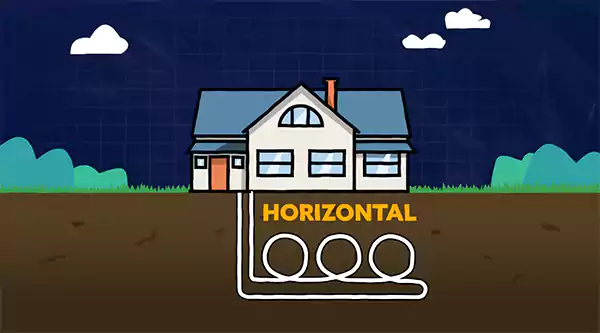
Consider the minimalistic depictions of all these systems below. It will help you have a rough idea of the concepts.
- The horizontal closed loop system
- The vertical closed loop system
- The pond or lake closed loop system
- The open-loop system
The geothermal heating system costs vary according to this open and closed category. A quick comparison between them is provided below. Also, how does this affect the project’s initial cost?
| Feature | Closed-Loop System | Open-Loop System |
| Initial cost | Higher | Lower |
| Operating cost | Lower | Higher |
| Maintenance | Lower | Higher |
| Efficiency | Lower | Very higher |
| Land requirement | Needs space for trenching/drilling | Clean and abundant water needed |
| Lifespan | 50+ years for pipes and 20-30 years for a heat pump | Often shorter |
| Best use case | Suitable for most properties | Ideal when abundant, high-quality water |
Houseura Tips: Owners must analyze all the available options in the market first of all. It helps compare things and find out which system will work best for them. For example, many looking for commercial HVAC in Fort Worth must also see if a geothermal HVAC system proves to be a better solution.
Is Geothermal HVAC Worth the Cost?

The upfront cost to install geothermal HVAC is very high. It is because it includes a huge setup underground. But the real benefits start in the long term. Ultimately, the owner will end up saving up to 50% of their current energy consumption. It is because a geothermal system uses renewable energy stored inside the earth’s deep layers. And, as a result, dependence on energy for indoor temperature control reduces.
However, this percentage fluctuates from 30% to 70% as per the load of the household. Additionally, low maintenance cost is also a real blessing! Once you have set up the geothermal HVAC, that means you are freed from regular upkeep. It requires the least care. And that doesn’t impact its long life as well, spanning 20 to 50 years.
Final thoughts: This is definitely worth it if you have the money to spend and the required space for proper installation.
So, are you planning a house for construction from scratch, such as a Tudor-style house, a rambler house, a split-level house, etc.? In that case, this is the right time to give thought to this geothermal heating, ventilation, and air conditioning setup. In an existing house, electric and structural modifications spike the total cost manyfold.
A Quick Overview of Geothermal HVAC Vs Traditional HVAC Cost
The cost to install geothermal HVAC is higher than that of traditional HVAC. However, the real savings start with the operating cost. That is lower in the case of the geothermal pumps. At a glance, consider the table below.
| Feature | Geothermal HVAC | Traditional HVAC |
| Upfront cost | Higher | Lower |
| Operating cost | 50-70% lower | High |
| Lifespan | 50+ years loop and 20-30 years equipment | 9-16 years |
| Energy source | Renewable (geothermal underground) | Fossil fuels and the electric grid |
| Carbon footprint | Zero, no emissions | Higher compared to geothermal technology |
| Noise | Quiet | Loud |
| Component placements | No outdoor units | Outdoor setup |
| Tax incentives | 30% tax credit available | Almost none |
| Maintenance | Low | Moderate to high |
Also Read: Refinishing Timber Floors: Homeowners’ Guide with Key Insights & Complete Overview
Consider Government Incentives & Tax Credits with a Geothermal HVAC System

The upfront cost to install geothermal HVAC might indeed seem exorbitant for many middle-class project owners. But there is a hidden benefit of using this technology. And that is a major tax credit. Each tax credit is a reduction from your total tax liability to the government.
The following table summarizes this help from government assistance. These credits and aids reduce the financial burden on an individual when installing a geothermal heating and cooling system.
| Incentive Type | Description | Key Details |
| Federal tax credit (Section 25D) | You get to enjoy a direct reduction of your federal income tax. | 30% of the total cost (equipment + installation) |
| Local rebates | Here, cash back or an instant discount is provided by local power companies. | Ranges from $500 to $7,000+ |
| State-specific incentives | In this part, additional grants or tax credits are offered by individual states. | Maryland offering up to $3,000, while Massachusetts up to $12,500 ***The amount varies from state to state as per the terms of the applicable programs. |
If you are considering commercial tax credits, they come with their own benefits. Particular timeframes are provided by the law for such credit distributions. You can talk to your tax consultant for further assessment or read the federal and local policies yourself.
What About the Maintenance Cost of Geothermal HVAC?
Only the initial cost to install geothermal HVAC is high. After that, as such, there aren’t any big upkeep expenses frequently. This HVAC setup requires the least maintenance. It is limited only to annual inspections and filter changes. And that results in a lot of savings over time, compared to traditional HVACs.
For such annual maintenance charges and long-term savings, have a look at the following tables.
| Annual Maintenance Burden | |
| Particulars | Explanations |
| Average costs | $150 to $300 per service visit |
| What does it include? |
|
| DIY tasks (can you do something yourself?) | You can consider changing air filters every 1 to 3 months. And, it will improve the efficiency of the system. |
| Let’s compare! | Traditional HVAC systems need $300 to $600 per year, as they have lots of moving parts and outdoor components exposed to the elements. That is expensive! |
| Long-Term Savings | |
| Energy bill reduction | 30% to 70%, varying in this range |
| Payback period | The system starts paying for itself in 5 to 10 years due to high energy savings. |
| Lifespan |
|
| Incentives | 30% reduction in your Federal income tax liability |
So, it is a mixed solution. While you have to invest a big amount right in the beginning, there are also considerable savings in the long run. And, lastly, nothing can beat this HVAC when it comes to choosing a sustainable lifestyle.
Pros and Cons of Geothermal HVAC
The geothermal heat exchanger cost is much more than that of a traditional system. But that isn’t a complete analysis until we look at both sides. Let’s discuss both the pros and cons of the geothermal HVAC in this section.
| Pros | Cons |
| Energy efficiency | High upfront cost |
| Eco-friendly | Installation complexity |
| Long lifespan |
- Energy efficient: The geothermal HVAC system helps you cut back on energy consumption by up to 50%. Usually, it varies from 30% to 70%. Always choose the right type of system for maximum benefits. For that, talk to your service provider.
- Eco-friendly: This choice is highly sustainable. The energy used here for indoor temperature control is renewable geothermal energy. That means no carbon emission. And it leads to a huge reduction in the carbon footprint.
- Long lifespan: The loop remains intact for a long period of time, over 50+ years. And, as far as the heat pump is concerned, its life spans over 20 to 30 years. That is radically shorter for a traditional heating, ventilation, and air conditioning system.
- High upfront cost: However, most owners feel that the total cost of the geothermal setup, including installation, is too much. The cost of the system itself reaches $25,000 when considering a 5-ton setup. And the installation needs an extra cost somewhere between $15,000 and $50,000. So, indeed, it is a huge investment upfront.
- Installation complexity: Many homeowners, even though they want to install this HVAC, cannot! The simple reason is the unavailability of skilled professionals. The installation is complex and thus requires expertise.
How to Reduce Geothermal Installation Cost?
You can benefit from the following tips. They will help you reduce the cost to install geothermal HVAC. It is a simple art that only includes three things. Choose the right loop system. Compare contractors. And use incentives by the government.
- Choose the right loop system: Sometimes, property owners buy HVAC systems that are bigger than the capacity they need. It means they are using a system for a higher load when their actual consumption is much lower. It results in a waste of money and resources that could have been used somewhere else.
- Compare contractors: Don’t just agree with the first geothermal HVAC dealer you ever met and finalize the deal. Always ask for quotations from multiple providers. And analyze their charges. Then, choose the one who offers the most affordable services. That is how you take advantage of a competitive market.
- Use incentives: The US federal government offers a 30% tax credit on the total installation cost. Additionally, local rebates and state-specific incentives also make the upfront cost feel less challenging.
Also Read: Garage Apartment Plans: Ideas, Designs, and Everything Important You Need to Know!
How Long Does Installation Take?
Let’s also deal with the installation timeline! It doesn’t usually take more than 6 weeks. The time it requires often fluctuates between 2 and 6 weeks. However, certain factors can impose challenges.
The loop type, ground conditions, site accessibility, property size, and existing system all affect the timely completion of the project. Furthermore, a delay in permits is also a big hassle. And this directly affects geothermal HVAC installation cost.
Conclusion
The cost to install geothermal HVAC lies between $15,000 and $50,000. The larger, heavier, and more complex the system gets, the more money it requires for installation. Furthermore, the loop type is also a key consideration. The most expensive loop is the vertical one.
At maximum, its installation cost can reach up to $48,000. This seems exorbitant upfront, but there is considerable energy saving in the long term. It can help you save up to 70% to 80% of the non-renewable energy.
FAQs
Q: How much does a geothermal HVAC cost?
Q: How much HVAC for a 3,000 sq ft house?
Ans: A non-geothermal HVAC for a 3,000 sq ft house typically ranges from $15,000 to $20,000. And that is when only the AC and furnace/heat pump are included. Including the ductwork as well, you might have to pay at least $17,100.
Q: What country gets 90% of its homes heated by geothermal energy?
Ans: Iceland is this country! Here, almost 90% of houses are heated with geothermal energy. And the rest, 10%, relies on electricity. Well, in today’s degrading world, that is the most favorable condition.
Related Posts