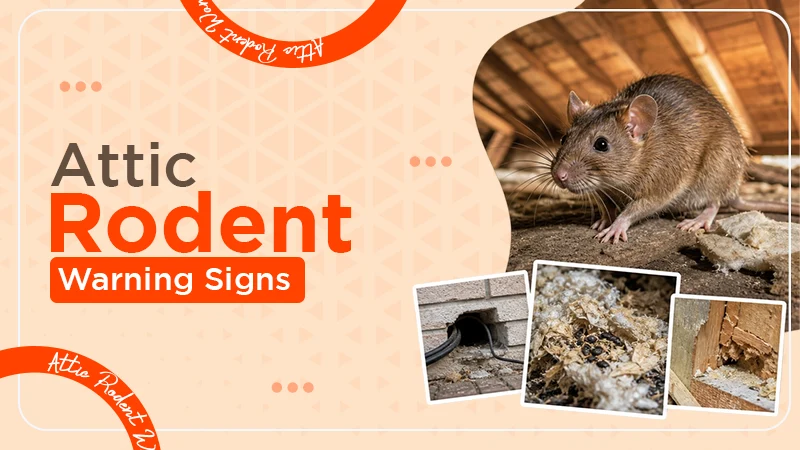
Scratching sounds, droppings, disturbed insulation and unusual odour might be clear signs of rodent activity.

Understanding Rodent Activity in Attics: Warning Signs, Entry Points, and Prevention Strategies
Rodents might not sound like a serious issue until they cause major damage to your home. While you may feel safe looking down, they might still be existing in your attic. Some common signs of their presence are scratching sounds, droppings and damaged insulation.
Either choosing reliable rodent control in Colts Neck, NJ, can help you come across them or knowing what to look for can help you share the issues and find common entry points.
Keep reading to explore the warning signs, entry points and prevention strategies for rodent activity.
Table of Contents:
- Why Attics Attract Rodents
- Recognizing Early Warning Signs
- Understanding Common Attic Entry Points
- How Rodents Can Affect Attic Materials
- Why Traps Alone May Not Resolve Activity
- Managing Attic Storage and Sanitation
- Preventing Rodent Activity From Returning
- Protecting Your Attic Through Informed Decisions
- FAQs
Why Attics Attract Rodents
Attics often lead to different conditions that are perfect for rodents to take shelter. Their defined exposure to the atmosphere and hidden corners can make them ideal for nesting.
Shelter From Outdoor Conditions
Rodents often seek environments that protect them from predators and changing weather. Attics may offer relatively stable conditions compared with exposed outdoor locations.
Insulation and already present materials serve as a right place to stay. Although, just insulation might not be supportive for infestation.
Access to Nesting Materials
Cardboard, paper, fabric, and certain insulation materials may become attractive nesting resources. Rodents can gather or disturb these materials when establishing sheltered areas.
Different placement can be a clear sign rather than predicting damaged materials to come across. Physical proof will definitely provide solid evidence for identification.
Recognizing Early Warning Signs
Rodent activity may become noticeable through sounds, droppings, damaged materials, or unusual odours. Individual signs should be interpreted carefully because other animals and building conditions can produce similar observations.
Scratching and Movement Sounds
Scratching, scurrying, or movement above ceilings can be a sign of some unusual activity in the attic. Silent evenings and nighttime are the perfect time to notice such sounds.
However, noises alone cannot reliably identify the animal responsible. Recording when and where sounds occur may help professionals evaluate the situation.
Droppings and Nesting Evidence
Droppings and collected debris might be a sign of rodent activity. The place and concentration can indicate aspects of rodent activity.
Homeowners should avoid handling unidentified droppings directly. Appropriate protective procedures are necessary because contaminated materials may present health concerns.
Understanding Common Attic Entry Points
In a building, rodents might open spots that are vulnerable to building features. Proper inspection is required, as many species can easily pass through minor gaps.
Roofline and Eave Openings
Damaged soffits, deteriorated fascia, and gaps near roof edges may provide access. These locations can be difficult to observe safely from ground level.
It is best to avoid moving to the above space just to find entry points. Rather, one should prefer to rely on qualified professionals to find the suspected areas properly.
Utility and Ventilation Openings
Pipes, cables, vents, and other building penetrations may create openings when surrounding materials deteriorate. However, ventilation components must retain their intended function.
Closing major useful points without even understanding their right purpose can create additional issues. This is why it makes sense to consider both animal exclusion and construction demands.
How Rodents Can Affect Attic Materials
Rodent activity can influence insulation, stored belongings, and vulnerable building components. The extent of damage depends on the species, duration, and location of activity.
Insulation and Stored Belongings
Rodents might affect insulation while moving through concealed spaces. Nesting activity can also have an impact on fabrics and other accessible materials.
Contaminated insulation may require specialized assessment and handling. Homeowners should avoid disturbing questionable material before understanding appropriate safety precautions.
Wiring and Structural Concerns
Gnawing can affect electrical wire and other major components. Compromised wiring might result in major safety issues.
Suspected electrical damage requires evaluation by a qualified electrician. Pest professionals address animal activity, while electrical repairs remain a separate responsibility.
Why Traps Alone May Not Resolve Activity
Trapping can help, but it does not resolve why rodents enter a space. Other animals might keep using the attic through the same passage rodents used.
Identify the Source of Entry
A useful inspection considers both interior evidence and exterior building conditions. Activity concentrated near particular structural features may help guide further investigation.
The right pest control services can reveal both the rodent activity and other accessible entry points. The right identification helps with suggestions aligned to the property.
Avoid Unplanned Exclusion
Closing an opening while animals remain inside can create additional complications. Trapped rodents may enter other building spaces or die in inaccessible locations.
Exclusion needs to follow proper assessment, as timing and procedure are important to prevent reentry.
Managing Attic Storage and Sanitation
Organized storage makes attic conditions easier to observe. It also reduces unnecessary disturbance when suspicious evidence requires professional examination.
Keep Stored Materials Accessible
Dense storage can obscure droppings, nesting material and other accessories. A right gap between the boxes can provide required visibility.
Homeowners should avoid moving questionable materials into occupied rooms without guidance. Preserving their original location may help clarify activity patterns.
Handle Contamination Carefully
Rodent droppings should not be removed simply, as this might lead to the release of major harmful particles in the environment.
Cleaning should follow appropriate public health guidance and protective procedures. Extensive contamination may require professional remediation.
Preventing Rodent Activity From Returning
Long-term prevention hinges on finding access points and the environment for reentry. The right way considers the building instead of defining standalone views.
Maintain Vulnerable Exterior Features
Routine building maintenance can identify damaged vents, deteriorated seals, and openings around exterior components. Repairs should use materials appropriate for the specific location.
Homeowners should value defined issues instead of sealing every gap. Some openings might lead to targeted drainage or ventilation reasons.
Monitor for Recurring Evidence
After corrective work, occasional observation helps identify whether suspicious activity continues. Dates, photographs, and locations can provide useful comparison records.
Rodent control is great when decisions are made based on the proof and not on predictions. Repeated signs might force further investigation.
Also, learn what pest issues can teach homeowners.
Protecting Your Attic Through Informed Decisions
In the end, rodent activity in an attic can lead to major damage to insulation, stored belongings and wiring. Look for common signs such as droppings, scratching sounds, and other disturbed materials. Always avoid taking action without any solid proof.
The perfect approach will be to find out how rodents are getting in, what their entry spot is, and then take action by repairing those parts. This way, when regular inspections are done, the chances of rodents appearing again will decrease significantly.
FAQs
What are common signs of rodents in an attic?
Where do rodents usually enter an attic?
They may come inside through damaged soffits, gaps near rooflines or openings around pipes and cables.
Are traps alone not always enough?
Traps might find rodent already inside, but they do not prevent new ones from coming back.
Related Posts