It depends on the customer, as there is no one best channel; retail and Amazon suit homeowners, B2B distribution and marketplaces suit business clients, while group buying organizations suit city governments.

Solar Lighting Sales Strategies United States: Channels, Buyers, and Compliance
Gaining market share is dependent upon good alignment of solar lighting sales strategies United States-manufactured products and brands, which have particular buyer considerations, procurement guidelines, and safety regulations. In choosing the right channel, it is imperative that you consider the kind of buyer and align your choice of channel with the right one, such as retail and Amazon for homeowners, distributors and installers for corporations, and contract deals for cities.
Table of Contents:
- Solar Lighting Sales Strategies United States: Three Buyer Segments
- How to Sell Solar Lights in the USA: Distribution Channels Compared
- Selling Solar Lighting to Cities and Government Buyers (200 words)
- Compliance Checklist Before You Sell Solar Lights in the US
- Pricing, Margins and MAP Policy by Channel
- How Incentives Affect Your Sales Pitch in 2026
- Marketing Tactics That Support Each Channel
- Common Mistakes in Solar Lighting Sales
- Frequently Asked Questions
- Final Takeaway
Solar Lighting Sales Strategies United States: Three Buyer Segments
All US solar lighting buyers usually fall under three distinct groups with different purchasing triggers, risk tolerances, and approval timelines. Structuring your pitch and spec sheets correctly for each segment allows you to prevent stalled deals and mismatched inventory.
Residential buyers (fast, price- and review-driven)
Homeowners often buy impulse-to-considered outdoor fixtures, including pathway stakes, deck lights, and security floodlights. They look for star ratings, visual appeal, brightness claims, and unit prices within minutes. Having a clean installation guide and reliable dusk-to-dawn operation also factors in.
Commercial buyers (budget approval, payback focus)
Commercial buyers include property managers, parking lot operators, warehouses, and hospitality groups who evaluate solar area lights, canopy fixtures, and bollards on total return. They weigh upfront fixture cost against avoided trenching, cabling, and recurring utility bills. You should expect multi-stakeholder sign-offs that include facilities, finance, and operations teams before a purchase order is issued.
Municipal and government buyers (RFPs, compliance, long cycles)
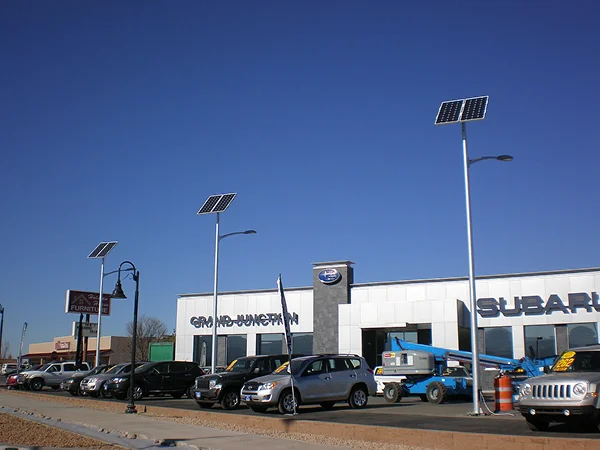
Cities, counties, transit agencies, and park districts also buy solar street lights, trail lights, and bus-stop illumination using formal bids, quotes, and cooperative contracts. The main factors that weigh more than the initial pricing are domestic content rules, multi-year reliability, and safety listings. Sales cycles run for around six to eighteen months due to budget calendars and public procurement reviews.
| Segment | Sales cycle | Decision maker | Top channel |
| Residential | Days to 2 weeks | Homeowners | Amazing & home-improvement retail |
| Commerical | 1 to 4 months | Facilities, operations, and finance leads | electrical/landscape distributors & EPCs/installers |
| Municipal & Government | 6 to 18+ months | Procurement officers, city engineers & boards | Cooperative purchasing and formal RFPs |
How to Sell Solar Lights in the USA: Distribution Channels Compared
Understanding how to sell solar lights in USA distribution channels start with correctly matching product specs, margin structure, and working capital to each route to market.
| Channel | Buyer | Typical entry requirements | Margin pressure | Speed to First order | Best for |
| Big-box & home-improvement retail | Homeowners & DIYers | EDI/ASN compliance, liability insurance, line-review presentation, seasonal inventory | High (co-op fees, chargebacks, allowances) | Slow (6-12+ months) | High-volume consider SKUs |
| Amazon & online marketplace | Homeowners & small buyers | Brand registry, GS1 UPCs, FBA/Vendor compliance, ad & review budget | Medium-high (referral fees, FBA storage, PPC) | Fast (weeks) | Velocity testing, reviews & direct reach |
| Own e-commerce store | Homeowners & prosumers | Conversion storefront, payment/shipping stack, customer acquisition engine | Low-medium (ad spend & fulfillment costs) | Fast (weeks) | Highest gross margin & first-party data |
| Electrical distributors & lighting wholesalers | Electrical contractors & commercial buyers | Net terms, UL/DLC cut sheets, stock availability, rep coverage | Medium (distributor discounts & rebates) | Medium (1–3 months) | Commercial fixtures & contractor pull-through |
| Landscape supply distributors | Landscapers & property managers | Regional warehouse stocking, weatherproof specs, seasonal readiness | Medium (wholesale tiering & volume rebates) | Medium (1–3 months) | Pathway, bollard & outdoor accent lighting |
| Manufacturer’s reps & installers/EPC contractors | Commercial & municipal buyers | Photometric layouts, engineering submittals, project references, commission terms | Medium (rep commissions & project quotes) | Medium-long (2–6 months) | Turnkey site lighting & custom layouts |
| Cooperative purchasing & government contracts | Cities, counties, school districts & agencies | Solicitation bid, compliance docs, admin fee & reporting commitments | Medium-low (contracted pricing & admin fees) | Long (6–18 months) | Repeat municipal & public-sector orders |
| Private label & dropshipping partners | Retail brands & online merchants | Consistent MOQs or API feed, QC tolerances, packaging specs | High (contract wholesale or drop price) | Fast-medium (2–8 weeks) | White-label volume & lean fulfillment |
Big-box and home-improvement retail (line reviews, seasonal buys, vendor onboarding)
National chain retailers structure outdoor lighting product planning based on Spring/Summer reset planning through formal line reviews. Buyers seek to see success through demonstrated sell-through, proper packaging of lumen output and battery runtime information, and strict compliance from vendors. Late deliveries and improper labeling chargebacks could eat into the profit very fast if the operation is unprepared.
Amazon and online marketplaces (FBA vs Vendor Central, review velocity)
Amazon enables quick testing of demand and establishing social proof much faster than traditional retail. Amazon’s Fulfillment by Amazon (FBA) manages Prime shipping service for third-party sellers, while Vendor Central uses order-based purchases on wholesale terms and higher operational chargebacks. Early review velocity, accuracy of runtime claim, and sponsored search optimization determine organic ranking.
Your own e-commerce store (margin and customer data control)
A direct-to-consumer website avoids losing gross margin from marketplace fees and gives you direct email, SMS, and warranty registration. You get to have complete control over the customer relationship and are able to package accessories and replacement batteries over time. The trade-off is having to fund your own traffic through search, paid social, and organic efforts.
Electrical distributors and lighting wholesalers
Commercial electrical counters carry fixtures that have proven themselves on construction sites by contractors. To get counter and branch buys, give them IES/photometric files in good form, accurate wattage/lumen equivalency, and dependable stock depth. Availability at the local branches is important to contractors when the schedule gets tight.
Landscape supply distributors
Hardscape and irrigation yards work well for contractors doing landscaping for homes and businesses. Low-glare path lights, bollards, and wall washes will be needed in the spring through fall installations. Local yard counter people appreciate quick and easy installs without any wiring and dependable replacement parts.
Manufacturer’s reps and installers/EPC contractors
Your independent lighting reps sell all over the territory and bring in your fixtures to the engineers, general contractors, and EPC Solar lighting installers. The lighting installers and EPCs need accurate solar autonomy calculations to ensure that your fixtures keep running even during cloudy weeks. Technical support will be invaluable to your reps closing the commercial sale.
Cooperative purchasing and government contracts (Sourcewell, OMNIA Partners, TIPS, GSA Advantage)
Public agencies regularly make purchases through competitively solicited cooperative contracts such as Sourcewell, OMNIA Partners, TIPS, and GSA Advantage. Being on these contracts gets you on their approved buying vehicle, although you will need to educate the local agencies and school districts about this purchasing opportunity.
Private label and dropshipping partners
White labeling for existing outdoor brands or dropshipping through tested dropship partners can sell products without having to build the consumer brand equity. The margins are lower per item; thus, there is a need for quality control of the batteries and charge controllers. One should be cautious when selling untested knockoffs under the brand name.
Selling Solar Lighting to Cities and Government Buyers (200 words)
Municipalities evaluate solar street lighting solutions according to long-term reliability, operational efficiency, and total cost of ownership rather than only considering the upfront purchase cost.
- Total cost of ownership vs. Traditional wiring
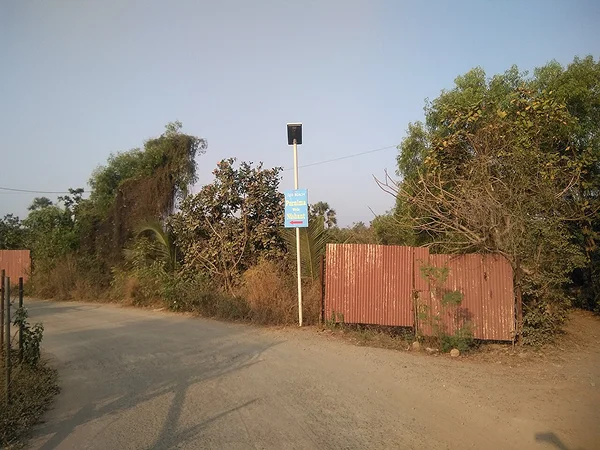
Conventional street lighting needs trenching, road restoration, conduits, transformers, and utility connections, which significantly increases installation costs. Solar street lights remove many of these expenses at suitable locations by offering lower lifecycle costs when the battery capacity and solar panel sizing match local sunlight conditions.
- RFP documentation and certifications
Getting municipal tenders requires comprehensive RFP documentation, such as IES photometric files, wind-load ratings, battery autonomy specifications, warranty terms, and performance test reports. You need to highlight relevant certifications, technical compliance, and product reliability before presenting pricing.
- Smart features in Municipal tenders
Modern public lighting tenders specify smart features, including adaptive dimming, motion sensors, programmable schedules, and remote monitoring. These technologies enhance energy efficiency, simplify maintenance, and provide better operational control.
- Government grants and funding opportunities
Municipalities can explore government funding opportunities for sustainable infrastructure, public safety, and community development. Relevant US programs also include the Highway Safety Improvement Program (HSIP), Safe Streets and Roads for All (SS4A), and others. The funding depends on application requirements, grant cycles, and eligibility.
Investing in reliable solar street lighting assists municipalities in reducing infrastructure costs, enhancing public safety, and achieving long-term sustainability goals.
Compliance Checklist Before You Sell Solar Lights in the US
When selling solar lights in the United States, one needs to verify all technical requirements, shipping requirements, customs requirements, and procurement requirements prior to shipment of goods. Make sure to double-check all the requirements according to the current laws issued by the corresponding agencies and institutions.
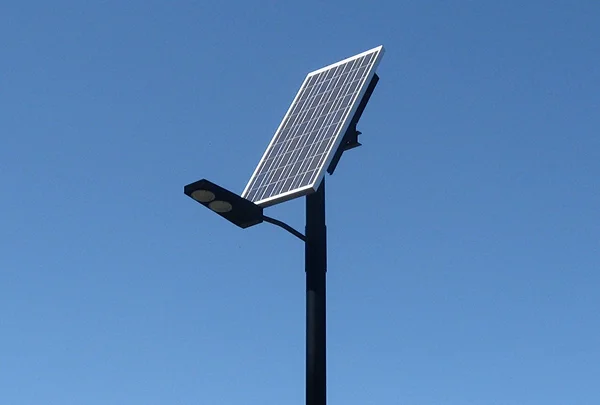
- Listing requirements and safety markings: Make sure that your products have the necessary electrical safety markings (e.g., UL or ETL certification under the NRTL program); FCC compliance; and listings such as DLC and ENERGY STAR when appropriate.
- IP ratings: Ensure the ingress protection rating (e.g., IP65 or IP66) is suitable for actual exposure to dust, moisture, rain, and washdowns.
- Lithium battery transport requirements: Make sure that any lithium-ion or lithium-metal cells and batteries undergo UN 38.3 testing and comply with US Department of Transportation hazardous material shipping regulations.
- Import requirements and tariff classifications: Properly classify the luminaires, solar panels, and fixtures using the US Harmonized Tariff Schedule (HTS) system; mark with proper country of origin and pay duties when required.
- Buy American requirements: Check to see if the project you are bidding on requires compliance with the Buy American Act (BAA), Buy America (BA), or Build America, Buy America (BABA).
- Warranty provisions: It is essential to publish clear warranty provisions for all luminaires, solar panels, and batteries, which also include replacement procedures and exclusions.
(Offer the checklist as a downloadable PDF.)
Pricing, Margins and MAP Policy by Channel
Different channels have different fulfillment, marketing, and service costs, which means wholesale discounts and landed unit prices should showcase actual channel economies. Set a clear base cost, calculate channel-specific fees, and protect a sustainable net margin on every SKU.
Establish a written Minimum Advertised Price, also known as MAP, policy that governs advertised prices across online marketplaces and stores without dictating final resale prices. It is also essential to monitor listings regularly and enforce consistent cure notices and remedies for violations, and avoid selling identical SKUs at steep discounts in one channel.
How Incentives Affect Your Sales Pitch in 2026
Solar lighting investments should not primarily rely on tax incentives. Stand-alone solar lighting products have never been eligible for residential clean energy tax credits (Section 25D), as this incentive expired for eligible property that was put in service after December 31, 2025. Instead, residential buyers should consider factors such as saving money on electric bills, ease of installation, and no need for wiring.
When it comes to commercial and tax-exempt solar investments, the criteria of Sections 48 and 48E include construction deadlines, deadlines for placing in service, and federal guidelines. New legislation might impact the availability of incentives and eligible solar investments. The latest information regarding tax incentives should be obtained from the IRS and Solar Energy Industries Association (SEIA). It is necessary to consult a tax specialist prior to determining potential tax incentives.
Marketing Tactics That Support Each Channel
Align your marketing engine with the process through which each potential buyer uncovers and evaluates your products:
- Amazon listing optimization and reviews: Optimize your Amazon listings with keyword-rich titles, bullet points about lumens and runtimes, comparison charts, installation pictures or videos, and review generation.
- Installer and contractor outreach: Send IES files, no-voltage and no-wiring installation instructions, stock information, and profitability calculations.
- Trade shows and B2B marketplaces: Attend regional trade shows on lighting, municipalities, and construction; and provide complete data sheets on B2B marketplaces where people who specify and buy products do research.
- SEO content for homeowners searching for “solar pathway lights”: Provide helpful buying guide information, installation information, spacing tables, and winter performance guidance.
Common Mistakes in Solar Lighting Sales
- Using the same pitch for all buyers: Homeowners are looking for ease and appearance, whereas commercial and municipal buyers need payback, reliability, and spec compliance.
- Not paying attention to compliance until launch: Missing safety marks, FCC testing, or UN 38.3 battery documentation, as this can block customs clearance, sales channels, or inspections.
- Relying on a single channel: Being overly dependent on one marketplace, retailer, or bid cycle can leave revenues exposed to algorithm shifts, line cuts, or procurement delays.
- Overstating runtime or lumens: Inflated specs trigger returns, bad reviews, and lost trust with contractors and engineers.
- Underpricing without accounting for channel costs: Ignoring marketplace fees, distributor margins, and warranty replacements turns volume into losses.
Frequently Asked Questions
What is the most appropriate sales channel for solar lighting in the US?
How do I get solar lights into Home Depot or Lowe’s?
Make SKUs that are compliant, profitable, and have clear packaging, safety listings, and sufficient manufacturing capacity. Make pitches to category buyers during their seasonal resets that occur usually far in advance of the spring season through robust internet demand data, retail logistics, and allowances.
Should I sell on Amazon or through distributors first?
Begin with Amazon if you market consumer or prosumer lighting and need quick confirmation of demand and product reviews. Begin with distributors and installers if you sell commercial or pole/area lighting products that need technical submittals, local inventory, and professional installations.
How do I sell solar lighting to a city or municipality?
Sales cycles for municipal customers are slower than those for both individual and business customers and usually take several months or more.
What certifications do solar lights need to be sold in the US?
Product requirements differ based on application and light type but may commonly include safety listings (UL or ETL), FCC listings for electronic drivers/controllers, and battery transportation/environmental listings. If your applications are commercial or rebate-based, they will also require DLC and ENERGY STAR listings.
Do solar lights qualify for federal tax credits?
Since standalone solar lighting units were not eligible for the residential tax credit at all, there was no change in their eligibility status. The 30 percent tax credit for complete residential solar system installation expired after December 31, 2025; the same credit still applies to business and nonprofit installations until 2027.
Final Takeaway
There is no magic bullet for selling solar lighting products in the U.S. market. Successful sales are defined by the alignment of the pitch, the sales channel, and expectations in the sales process with the buyer: speed and low cost of purchase for home buyers, price and reliability of purchase for commercial buyers, and compliance and total cost of ownership for government buyers.
The fastest-growing firms in this industry today are those that created separate playbooks for each customer segment rather than trying to stretch a one-size-fits-all solution for all of them.
Related Posts