Different types of noise in construction are continuous noise, intermittent noise, impulsive noise, and fluctuating noise.

How to Deal with Construction Site Noise? Administrative and Technological Measures
Heavy excavation work and machinery create significant noise and disturbance on a construction site, affecting both workers and the surrounding environment. But taking precautionary measures and using the right tools can help site owners to reduce the impact of loud machinery noise for operating the daily tasks smoothly.
In this article, we will study the causes of construction site noise, its impact on site workers, and how to deal with construction site noise using the right tools and measures.
Table of Contents:
- What is Construction Site Noise and its Causes?
- Impact of Construction Site Noise
- Measures to Handle Construction Site Noise
- Role of Technology in Reducing Noise on Construction Sites
- Regulatory Standards for Construction Site Noise Reduction
- How to Deal With Construction Site Noise as a Neighbor?
- Conclusion
- FAQs
What is Construction Site Noise and its Causes?
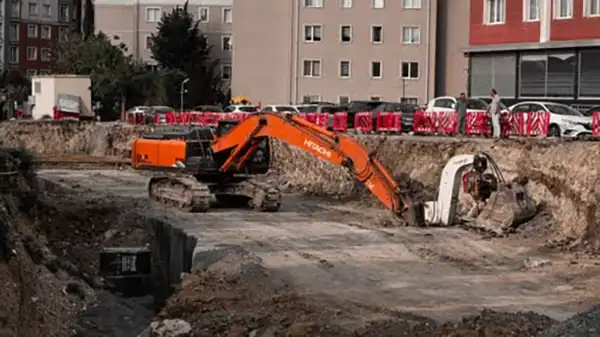
Construction site noise is an unpleasant and disturbing clatter or extremely loud sound that occurs when construction work, like mining, excavation, drilling, welding, etc., is being done at a site. According to the National Institute for Occupational Safety and Health’s 2026 data on noise and hearing loss, about 23% of noise-exposed tested construction workers have a material hearing impairment.
Unbearable construction noise is a hazard to the site workers, nearby people, and animals. If the noise exceeds the permissible levels, it can cause hearing damage and disturbances in heart rate and sleep, reduce mental peace and concentration, affect birds and animals, etc. Below are some causes of construction noise at job sites.
1. Machinery Noise
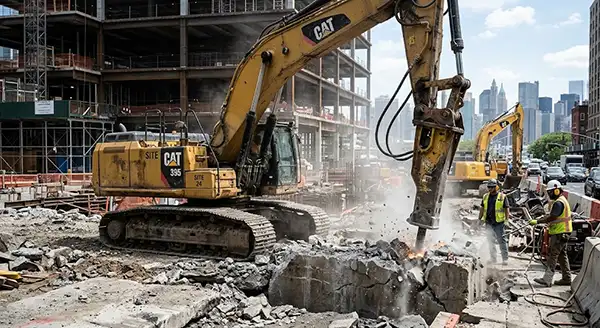
Heavy machines like excavators, bulldozers, drilling machines, welding machines, pile driving, etc., create noise that sometimes exceeds up to 120 or 130 decibels. The vibrations created by these machines also impact the building foundations and might cause ceiling or wall cracks.
Did You Know?
The maximum permissible level of sound that can be created for an 8-hour day shift is 90 dBA; failing to comply with this can cause financial penalties and stop-work orders.
2. Power Tools

Power tools such as circular saws, grinders, drills, drivers, and other small handy tools like jackhammers and pneumatic nail guns can also create noise of 100 dB to 115 dB. Continuous metal-to-metal striking, grinding, and chiseling actions produce irritating and ear-piercing sounds.
3. Transportation Vehicles
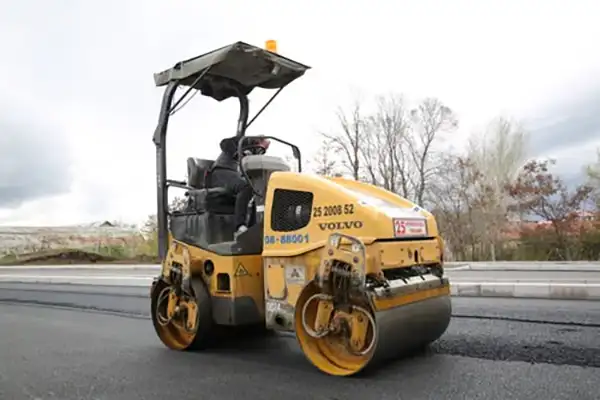
When heavy vehicles like road rollers move on the road, they create vibrations in the ground. These vibrations can elevate our heart rates and can strain our nervous tissues. While moving, the vehicle continuously creates a hissing sound and also releases harmful gases that cause noise pollution as well as air pollution.
4. Generators and Engines
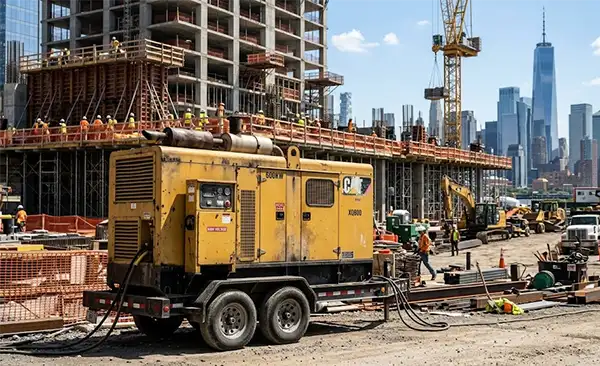
Site owners always keep generators and engines ready as a power source for sudden electrical outages. They become an additional source of noise other than the heavy machinery. Open-frame diesel or industrial generators create more noise, ranging from 85 dB to 105 dB, compared to standard generators.
Also Read: Construction Types – Effective Tips for Major Challenges!
Impact of Construction Site Noise
Construction site noise creates a highly negative impact on the site workers, nearby residents, and even the surrounding living creatures, such as birds and animals, and on concrete structures also, with the vibrations caused by the huge noisy construction activity. Below are the impacts of the noise from the construction sites.
1. Hearing Loss or Damage
Exposure to a high-noise environment creates physical hearing damage. It is often observed that most workers who are exposed to a noisy construction environment experience hearing impairment or hearing loss. Persistent exposure to noise above the permissible level bends the inner hair cells, and even sounds of up to 130 dBs rupture the eardrum.
2. Mental Fatigue
Not only physical damage, but the continuous heavy machinery noise and vibration create mental fatigue, sleep disturbance, high cortisol levels, and increased heart rate, which gradually lead to anxiety issues and mental health issues.
3. Impact on Birds and Animals
Birds and animals are more vulnerable to the hazardous impact of construction noise. Some animals can hear sounds at these decibel levels, which human ears can’t. Consequently, when the sound level exceeds their hearing range, it also reduces their listening ability. This directly affects their hunting and eating cycle.
Did You Know?
Elephants hear infrasonic sounds below 20 Hz that humans can’t hear, and they hear the loud construction noise as some physical tremors or earthquakes occur on Earth.
4. Impact on Structural Components
High sound created by excavators, bulldozers, pile driving, and rock breakers creates vibrations, which sometimes cause cracks in walls and ceilings and even in the ground. More than airborne noise, structure-borne noise causes building damage.
Also Read: Construction Estimating in 2025: Get 100% Accuracy with Tried and Tested Methods!
Measures to Handle Construction Site Noise
Certain methods can be taken at the administrative level to handle construction site noise, like optimizing machinery use by hours, using safety equipment, creating noise-safe zones, etc. Take a look at the different measures for dealing with construction site noise effectively.
1. Analyze the Noise-Prone Areas

Construction managers should analyze the noisy areas of the site and heavy equipment noise levels using sound level meters or noise dosimeters to track the decibels of noise and exposure over an area for a given period of time.
2. New or Upgraded Equipment
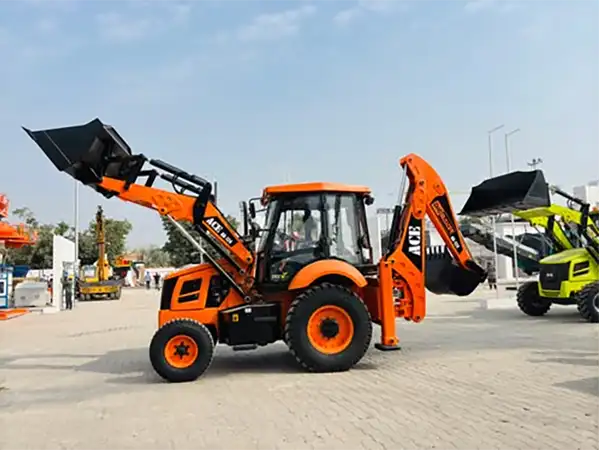
Check the efficiency of the equipment and mechanical engine issues, worn-out issues, loose fittings, or creaky sounds before operating them. Use quieter equipment, like hydraulically powered and air-conditioned coring, which is quieter than the regular tools.
3. Use Acoustic Panels and Sound Barriers

Nearly all residents and people are generally affected by the loud construction site noises. These noises can be prevented from reaching them by the use of noise barriers and acoustic panels that absorb or block the loud noises from the heavy machinery and keep the atmosphere noise-free for surrounding residential people.
4. Strategically Schedule Work
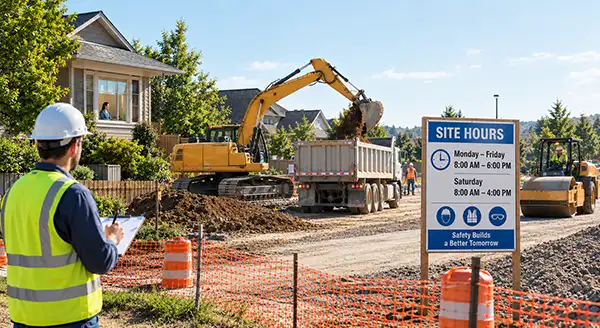
Site owners must plan the work schedule and keep the heavy machinery work for those who are not much affected by the noise. But don’t postpone it to the night, as night is the time for everybody to sleep, and a single harsh sound can disturb the residents of the residential area. So keep the noisy work mostly for the daytime with quieter equipment and better precautions.
5. Make a Hearing Protection Zone
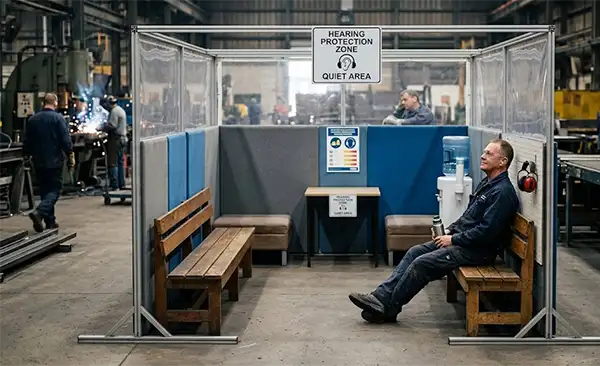
Workers’ full days remain in a noisy environment, which exhausts both their ears and minds. So, there should be a safe hearing protection zone built for the workers where they can give rest to their ears. While working, they should use the foam earplugs that help to reduce the noise when plugged in tightly in the ears.
Note: Standard foam earplugs are made of PVC polyurethane foam and provide a noise reduction rating of 28 to 33 decibels if fitted properly to the ears.
6. Training and Awareness for Site Workers
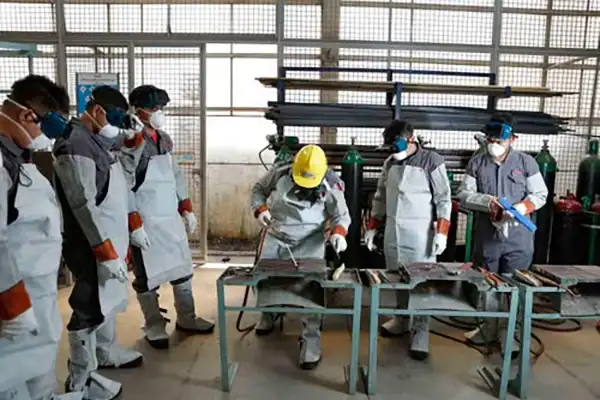
Site owners should either hire trained workers, or they should train them before operating heavy construction equipment. They should be trained on how to use the equipment in a controlled way and also on the maximum permissible sound levels. Teach them to turn off the engines when they are on a break and not using the equipment actively.
Role of Technology in Reducing Noise on Construction Sites
With the advancement of technology, new equipment has been developed that has helped to reduce construction noise effectively with more safety precautions. Below are some of the technological solutions that help to manage construction site noise.
1. Upgrade to Electric Equipment
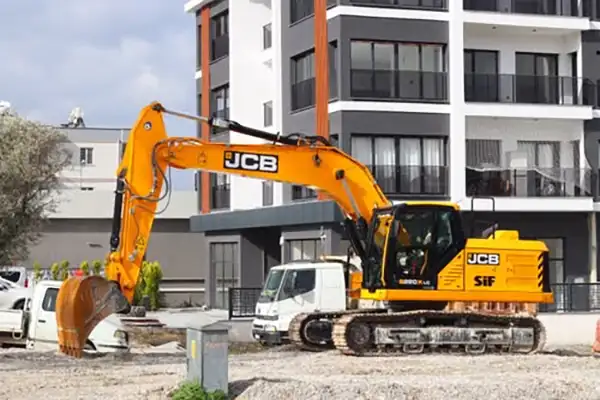
New electric equipment contains motors instead of engines, which reduces the rumbling sound. They have fewer moving parts, like fans and complex mechanical setups, which ultimately reduce vibrations. Regular diesel equipment makes idle noise even when it is not working. But electric equipment generates sound only when it is powered on. They make nearly 10dB less noise than the regular equipment.
2. GPS and Telematics
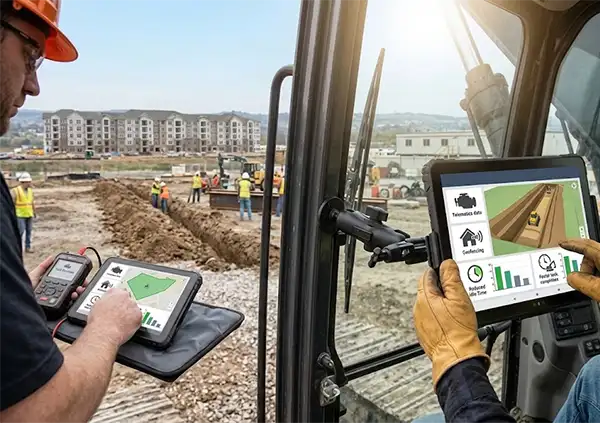
GPS (Global Positioning System) and telematics (the technology that tells how the vehicle is performing) are installed in a machine and help to reduce idle noise and enable automatic engine shut-offs. They diagnose the engine hours and any mechanical wear and tear and detect any issues with the engine, which helps the site owners fix the problems early.
GPS and geofencing techniques also help to manage the layout for placing the machinery far from the noise-sensitive areas, reducing the noise effect reaching the residential areas. These systems help the excavating machines to perform the earthmoving tasks faster, which ultimately reduces the noise hours.
3. IoT-Enabled Noise Monitoring Systems
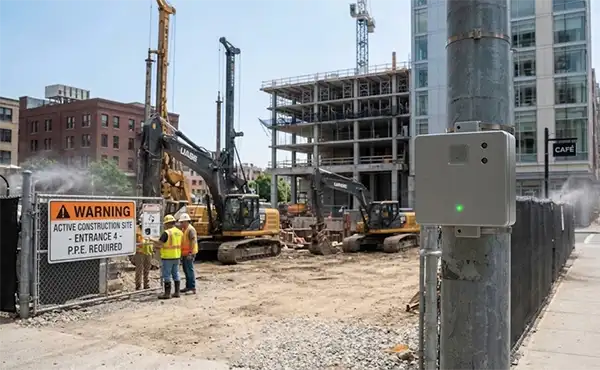
IoT-enabled noise monitoring systems pair acoustic sensors with data analytics platforms to track sound on site and provide real-time data through automated alerts and signals. When noise levels exceed permissible limits, the sensors send SMS alerts to managers.
4. Noise Mapping Software

Noise mapping software, or predictive noise modeling software, is a computer program that uses an algorithm to map how sound will travel through the roads, buildings, and surrounding areas. The software also suggests when to run the heavy machinery to have less noise impact on the nearby areas.
5. ANC Systems

ANC (Active Noise Control Systems) are devices/tools that generate anti-noise sound waves in response to the incoming sound waves from the machines and cancel them out. On construction sites, they are installed on stationary equipment, generators, and exhaust systems to cancel out the low-frequency hums coming from them.
Also read: How Much Does it Cost to Finish a Basement? Full Cost Breakdown and Basement Remodeling Cost
Regulatory Standards for Construction Site Noise Reduction
Certain government and official organizations set rules and regulations for workplace and construction site noise management. Organizations like OSHA and FHWA have set some strict guidelines for the permissible levels of noise production, which are given below.
1. OSHA
OSHA regulates workplace noise by capping the 8-hour work shift at 90 dBA and starting hearing conservation at 85 dBA. The standard also proposes a 5 dBA exchange rate, which says that with every 5 dBA rise, the exposure time will be cut in half. For impulsive or blast sounds, the primary limit is 140 dBA and shouldn’t be exceeded in any case.
2. Federal Highway Administration
Under 23 CFR 772, the regulatory authority FHA provides the Roadway Construction Noise Model (RCNM), which is a screening tool or software that helps contractors to predict the noise levels and take precautionary and complaint measures on specific projects. The FHWA construction noise handbook outlines some measures and methods to control construction site noise.
- Use of Quieter Equipment: Opt for electrically powered and well-maintained equipment.
- Equipment Placement and Shielding: Keep the loud equipment away from the noise-sensitive areas and place sound barriers or earth berms when operating such equipment.
- Worktime Scheduling: Set the work schedule for the less sensitive daytime hours and reduce the effect on the everyday routine of the nearby communities.
3. Municipal Organizations and Country Governments
Local municipal organizations and county governments also outline rules and regulations for specific areas, limiting noise production levels by decibel limits according to the zone types and using acoustic blankets or sound barriers on the work sites, as well as scheduling the loud machinery work within set daytime hours.
4. US Department of Housing and Urban Development
The US Department of Housing and Urban Development noise standards use the average Day-Night Average Sound Level to determine the total environmental noise exposure from all sources. It sets the permissible noise levels in decibels for different zones, which are given below.
- Acceptable Zones: Zones with DNL of less than or equal to 65 dB are considered acceptable zones.
- Unacceptable Zones: Sites with DNL above 75 dB are considered unacceptable zones.
- Normally Unacceptable Zones: Zones with DNL between 65 dB and 75 dB are considered normally unacceptable zones.
- Interior Noise Standard: The interior environment of the residential spaces must not exceed the 45 dB DNL.
Also Read: Residential Construction: A Complete Guide to Building Your Dream Home in 2026
How to Deal With Construction Site Noise as a Neighbor?
Construction site noise is inevitable and can’t be ignored, though. But as a neighbor who continuously gets affected by the huge machinery noise, you can opt for some measures to get rid of the noise hazard to some extent. Some of the measures to deal with the construction site noise are given below.
1. Seal the Windows and Doors
Seal the windows with foam or rubber strips and the doors’ edges and bottoms with acoustic caulk or draft stoppers. Hang sound-absorbing curtains on the walls and place heavy furniture against the shared wall to create a barrier to outside noise.
2. Use Coping Measures
Use high-quality earplugs during peak machinery or hammering work. To neutralize the machinery sound, switch on your home devices like fans, televisions, and music systems, which will cancel out the outside noise to an extent.
Houseura Tip: A subwoofer is a specialized loudspeaker that emits low-frequency pitched sound between 20 Hz and 200 Hz when amplified with a sound system. It helps to neutralize or cancel out the vibrating noise coming from the outdoor construction work.
3. Manual Action
Enduring the noise is not the only solution for reducing the construction noise. But when you observe the unethical exceeding of the permissible sound level persistently for longer hours or days, you can take action or file a legal complaint against the construction authority.
Call the non-emergency numbers to complain about the loud parties or construction activities taking place at night. If you live in a society, you can approach the Homeowners Association Board (HOA) to discuss the issues and find possible solutions or mitigation strategies for your problem.
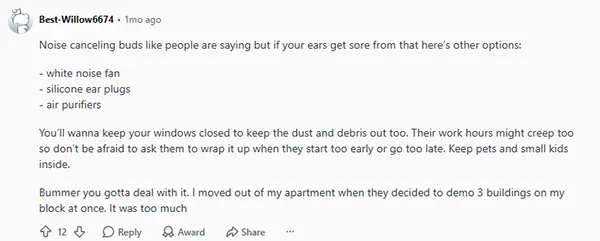
Here is one of the redditor’s opinions on how to deal with the neighboring construction work noise.
Also Read: What Is ICF Construction? Benefits, Cost & How It Works!
Conclusion
Summing up! In this article, we have studied the causes and impacts of noise created in construction activities and how to deal with construction site noise. Construction noise is the sound or clatter created when heavy machinery works, such as demolition, excavation, and pile driving.
Some of the measures to handle construction site noise are using quieter equipment, scheduling the heavy machinery work for set day hours, using hearing protection devices at the work site, training the workers about the noise hazards, and careful use of equipment. Construction site noise cannot be completely mitigated, but with these measures, noise can be reduced to some extent so it doesn’t harm the nearby living and nonliving creatures.
FAQs
What are the different types of noise in construction?
What is the permissible level of construction noise by OSHA standards?
The permissible level of construction noise for an 8-hour day shift is 90 dBA, and it also mandates starting hearing conservation when the sound level reaches 85 dBA.
How to complain about the loud construction noise around your building/area?
To complain about the persistent loud noise in your building/area, you can call the non-emergency police line numbers or report the irregularities to the housing association of your society. You can also contact the local municipal government to make your complaint.
How to cope with the loud construction noise coming into my home?
To cope with the loud construction noise, you must seal all windows and gaps in your home, hang sound-blocking or sound-absorbing curtains inside, and place furniture against the walls to reduce the impact of the outside noise.
Which tool is often used to measure sound levels in decibels?
A sound level meter or a decibel meter is used to measure sound in decibels.
Sources
Noise and Hearing Loss: National Institute for Occupational Safety and Health
Related Posts