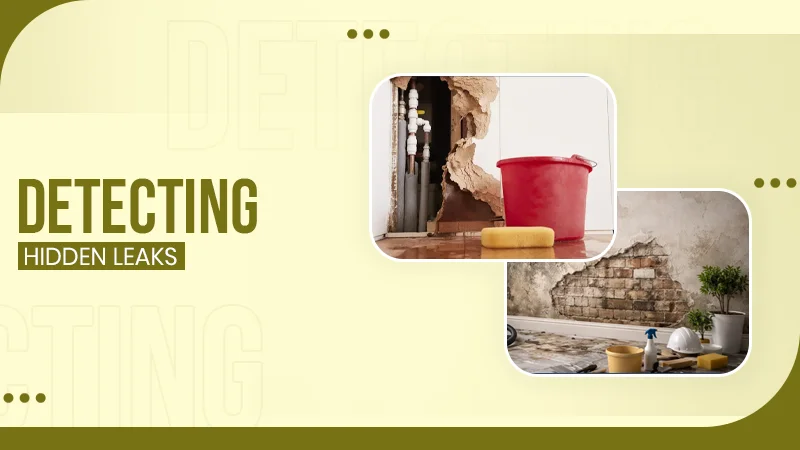
Water damage behind the walls can happen before the homeowner even gets the chance to do anything. They can happen for many reasons. They are not like a dripping faucet; they are hidden leaks that let moisture collect inside the drywall.
And when it gets noticed by stains or peeling paint, the damage is already done. The best way to manage this problem is to learn the early signs of hidden water leaks inside the walls.
Read this blog to learn how to do just that.
Early Warning Signs of Water Leaks Behind Walls
The first clues can appear as changes in a wall’s surface, an unusual smell, or increased water consumption. Hidden leaks do not always produce visible water.
Homeowners should watch for these warning signs:
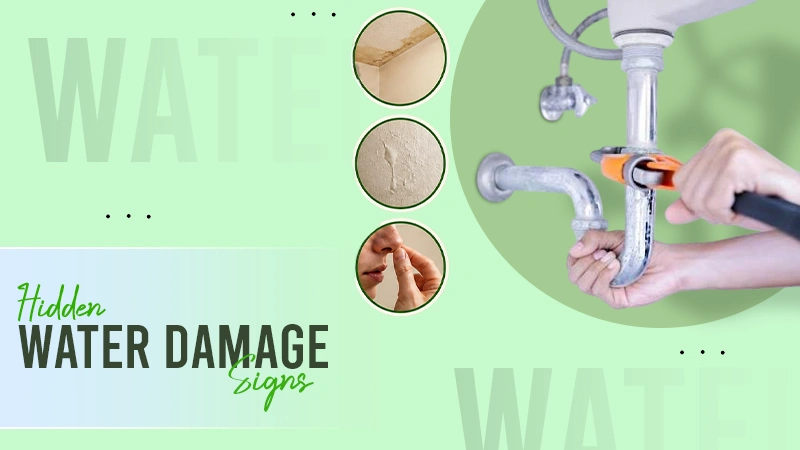
- Water stains: Moisture collecting behind a wall can be indicated by Yellow, brown, or dark patches.
- Peeling or bubbling paint: Blisters or separation from drywall can be caused by moisture.
- Soft or swollen drywall: Drywall that’s damaged by water can lose firmness or develop an uneven surface.
- Musty odors: Conditions for mold growth can be created by damp materials inside walls.
- Warped baseboards or flooring: Moisture can cause nearby materials to swell, buckle, or separate.
- Higher water bills: A leaking supply pipe can waste water even when fixtures are not being used.
These symptoms do not automatically confirm a plumbing leak. Roof damage, condensation, and exterior water intrusion can produce similar problems. However, recurring moisture or multiple warning signs should prompt further investigation.
How to Check for a Possible Hidden Leak
Before scheduling an inspection, homeowners can perform basic checks
Start by examining nearby plumbing fixtures. Look for damp cabinets, beneath sinks, loose connections, and water around toilets or showers.
Within the home’s metered supply system, a water meter test can also help identify leaks.
- Turn off faucets, appliances, and other water-using equipment.
- Make sure irrigation equipment is inactive, and toilets are not refilling.
- Record the water meter reading.
- For approximately two hours, avoid using water
- Check whether the reading has changed.
A change suggests water is moving through the system despite no intentional use. However, it does not establish where the leak is located.
Homeowners experiencing persistent symptoms can seek professional leak detection in Spartanburg, SC, to investigate concealed plumbing and identify the source without unnecessary wall demolition.
What Causes Plumbing Leaks Inside Walls?
Several plumbing problems can allow water to escape into concealed spaces.
- Aging or corroded pipes: Plumbing materials deteriorate over time. Corrosion can weaken metal pipes, while aging fittings can develop leaks.
- Loose connections: Improper installation, corrosion, or physical stress can weaken pipe joints and allow water to escape.
- Renovation damage: Plumbing lines can be accidentally damaged during remodeling, particularly when walls are opened or fixtures are relocated.
- Excessive water pressure: High pressure places additional stress on pipes, valves, and fittings.
Even a slow leak can cause significant damage when moisture remains trapped behind drywall.
Why Small Leaks Can Cause Significant Damage
The amount of visible water does not always reflect the extent of damage inside a wall.
Drywall and insulation can absorb moisture before it becomes noticeable. Wooden framing can also remain damp when water continues entering an enclosed space.
Drywall deterioration, mold growth, wood decay, and damage to surrounding areas can happen cause of Prolonged exposure. Water can travel along framing and building surfaces, eventually affecting floors, ceilings, or adjacent rooms.
Affected materials also need to be inspected and properly dried. Repairing the leaking pipe is only part of the solution.
What to Do When You Suspect a Hidden Leak
Shut off the appropriate fixture valve or the home’s main water supply when safe. If water is actively escaping from a suspected supply pipe,
Avoid touching wet electrical components or opening walls near outlets and switches. Photograph visible damage and record when symptoms appeared.
Do not paint over stains or replace drywall before locating the moisture source. Cosmetic repairs will not stop an active leak.
A plumber can use moisture meters, pressure testing, and other diagnostic methods to narrow down the source. Some situations still require opening a limited section of wall to confirm and repair the problem.
Preventing Hidden Water Damage
Regular plumbing maintenance can help homeowners identify problems before extensive damage develops.
Inspect visible pipes and fittings, monitor water bills for unusual increases, and investigate persistent dampness or musty odors. This alerts homeowners to moisture or unusual water usage. Water leak detection devices can provide additional protection.
Identifying the source early helps protect drywall, insulation, framing, and surrounding areas from continued water exposure. A small stain or unexplained odor should not be ignored.
Frequently Asked Questions
How to check for hidden water leaks myself?
1-Turn off all water-consuming appliances and taps.
2-Record the current reading on your water meter.
3-Wait 30 minutes to an hour (do not use any water).
4-Check the meter again. If the reading has changed, water is escaping somewhere in your system, confirming you have a hidden leak.
What are the common signs of a hidden water leak?
The most common indicators are an unexplained spike in your water bill; damp, peeling paint, or discoloured patches on walls or ceilings; a musty/earthy smell; and the sound of running or dripping water when all taps and appliances are switched off.
Is cutting walls and floor necessary for finding the hidden leak?
Duration depends on complexity; most residential hidden water leaks can be found in a few hours to one full day. Employing certified technicians ensures a swift and accurate diagnosis, accelerating the overall resolution time.