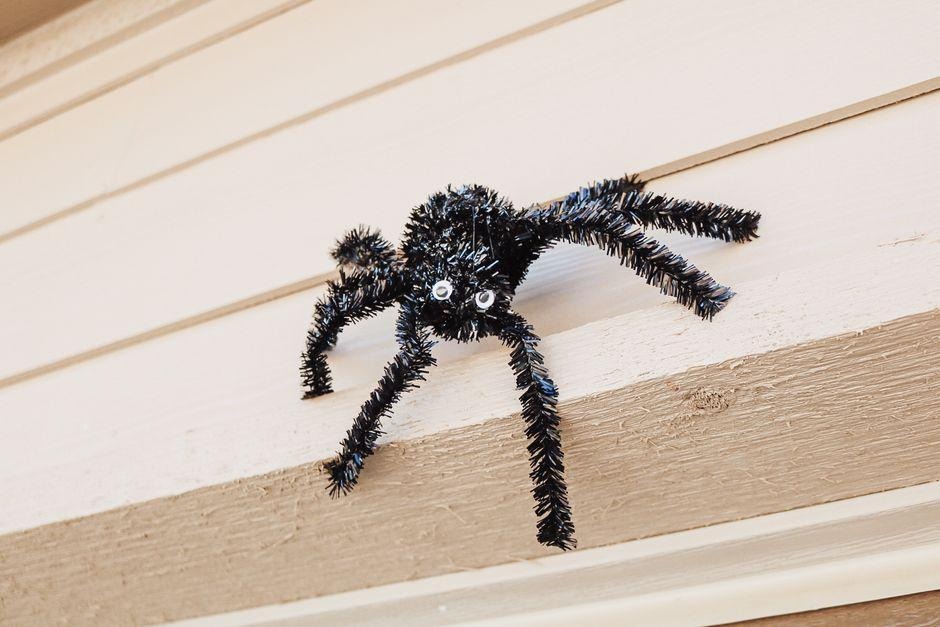
The giant house spider. They are also the fastest, reaching speeds of up to half a metre per second – which explains why they can take you by surprise when you catch a glimpse of one scurrying across the floor.

Fewer Webs, Fewer Surprises: A Smarter Approach to Keeping Spiders Out
Everybody has found spiders in their homes sometimes, and some people have found them a lot of times. They realize they have repeated sightings of spiders. It may not be a coincidence.
spiders appear regularly in storage areas, or several rooms seem to have activity at once, the conditions inside or around the house may be giving them what they want. The real problem is that you just use a normal repellent or just dust the place to stop the spiders from coming.
Read this blog to learn how ot keep spiders out of your home forever.
Table of Contents:
- Start With Why Spiders Are Showing Up
- Know When the Problem Has Moved Beyond Simple Cleanup
- Know Where to Look Before You Start Cleaning
- Seal the Routes Spiders and Their Prey Use
- Remove Hiding Places Without Emptying the House
- Reduce the Insects That Keep Spiders Around
- Use Monitoring Instead of Guessing
- Be Careful With DIY Pesticide Use
- Build Prevention Into Normal Home Maintenance
- Frequently Asked Questions
Start With Why Spiders Are Showing Up
Spiders do not often enter a home because the inside itself is very good looking. They are looking for shelter and a chance to feed.
That makes other insects an important part of the picture.
Exterior lighting can draw flying insects toward doors and windows. Damp areas may help other pest activity. Cluttered storage spaces make quiet places where spiders can stay undisturbed.
The more favorable the places become for insects, the more useful that environment becomes for spiders as well.
Look at patterns and not reacting to every individual spider. One wandering spider may have entered by itself. Many webs come a lot of the time in the same area; advise there is a reason the location continues to work for them.
Finding that reason gives you something useful to fix.
Know When the Problem Has Moved Beyond Simple Cleanup
Vacuuming visible spiders and webs can help with light activity. It removes adults, egg sacs, and accumulated webbing, making it easier to see what returns.
Recurring activity may need a more targeted approach.
If spiders repeatedly come after cleanup, egg sacs are showing up in many areas, or activity grows in difficult-to-reach places, expert spider extermination can give a more structured response. Professional spider control may involve inspecting the property, finding the type of spider involved, treating active hiding areas, removing webs and egg sacs, addressing entry points, and lowering the insects that provide a food source.
That wide way matters because just killing the spiders you can see may leave the conditions supporting them untouched.
If those conditions stay, new activity can eventually replace what was removed.
Know Where to Look Before You Start Cleaning
Spiders tend to like areas that are quiet, protected, and rarely disturbed.
Garage shelving, ceiling corners, window frames, storage rooms, crawl spaces, utility areas, and spaces behind boxes or furniture are good for checking first. Exterior eaves, door frames, vents, and light fixtures can also show activity.
Use a flashlight, not just relying on what is immediately visible.
Old webs tell you where spiders have been active, and new webs that come again soon after removal can show current problem zones.
Pay attention to the surrounding environment too. Stacked boxes, unused equipment, dense vegetation near the structure, and gaps around pipes or doors can all make movement and shelter easier.
The point of the inspection is not to find every spider. It is to find where conditions are always best.
Seal the Routes Spiders and Their Prey Use
Exclusion is one of the least dramatic parts of pest control, and it can have a lasting effect.
Check around exterior doors, windows, vents, utility penetrations, siding transitions, and other small openings. Damaged screens should be repaired. Gaps in doors may need nicely fitted sweeps.
Caulk can help close smaller cracks where needed.
These improvements affect more than spiders because they also stop access for many of the insects spiders prey on.
A wider pest-prevention approach involves sealing cracks and crevices, lowering clutter, and closing off places pests can enter or hide.
Do not expect a fully sealed house. That is unrealistic.
The goal is lowering the number of easy routes into the structure, mainly around areas where activity has already been seen.
Remove Hiding Places Without Emptying the House
You do not need a minimalist home to stop spiders.
You do need to pay attention to undisturbed clutter.
Cardboard boxes, paper stacks, stored fabrics, tools, seasonal decorations, and rarely moved items can make protected areas where spiders stay hidden.
Storage gets easier to check when belongings are grouped and not scattered.
Sealed plastic containers can also make some storage areas less inviting than loosely closed cardboard boxes. Leave enough space around shelving and walls to clean sometimes and not pack every available gap.
Outside, avoid letting piles of materials sit indefinitely on exterior walls.
Firewood, unused containers, garden materials, or dense vegetation can make shelter close to potential entry points.
Organization is good here for practical reasons, not cosmetic ones. Fewer hidden spaces make both checking and cleanup easier.
Reduce the Insects That Keep Spiders Around
Spider control gets hard when the home still supports a large supply of prey.
That is why focusing only on spiders can miss half the problem.
Look for flies, moths, ants, mosquitoes, and other insects around the same places where webs appear. Bright exterior lighting can focus flying insects near doors and windows, making useful hunting areas.
Moisture may help insect activity too.
Repair leaking plumbing, reduce persistent dampness, and stop leaving standing water where it can help pests.
The basis behind integrated pest management focuses on seeing and stopping before escalating control methods. That means finding what is present, removing favorable conditions, and picking targeted controls when stopping alone is not enough.
For spiders, low insects often mean less reason to stay.
Use Monitoring Instead of Guessing
You cannot always judge activity by the number of spiders you happen to notice.
Many stay hidden for long periods.
Sticky monitoring traps placed rightly with walls or in low-traffic storage areas can give good data about where crawling pests are moving. Keep them where children and pets cannot reach them.
Check the traps periodically, not just putting them down and forgetting them.
The goal is not really to stop an infestation with traps alone. They are more useful for showing if activity is focused in one part of the house and if your prevention efforts are affecting the pattern.
You can also see through routine web removal.
If one corner has a new web repeatedly and the rest of the room stays clear, spend more time checking that exact area.
Pest control gets better when decisions are based on evidence instead of treating every room identically.
Be Careful With DIY Pesticide Use
Reaching immediately for a spray can feel efficient, but pesticide use should be planned.
A product may kill a spider that is directly contacted without solving the bigger reason spiders are present. Random application also exposes people and pets to chemicals without really having much long-term benefit.
Read labels carefully and use products only according to their directions.
Avoid thinking that more product means good control.
If chemical treatment becomes needed, it works best as one component of a wider approach that also has exclusion, cleaning, monitoring, and prey reduction.
That mix solves the environment as well as the visible pest.
It also helps avoid the cycle of repeatedly spraying the same area while new spiders continue entering or finding food nearby.
Build Prevention Into Normal Home Maintenance
Spider control works better as a routine than as an yearly emergency.
Vacuum webs when you see them. Repair damaged screens and don’t leave them for months. Check door sweeps sometime. Keep storage areas manageable and deal with moisture when it comes.
Then watch what changes.
If sightings become less frequent, the mix is working. If the same places repeatedly show activity even after cleaning and exclusion, closer checking may be needed.
The important change is to stop treating every spider as a one-off event.
Spiders respond to their environment. Food, shelter, access, and low-disturbance spaces influence where they stay.
Change those things, and the house gets less useful to them.
That is often far better than chasing individual spiders from room to room whenever another web comes.
Frequently Asked Questions
What Spider Am I Most Likely To See In My Home?
Why Do Spiders Enter My Home?
Spiders typically venture indoors in search of food and shelter. They are attracted to warm, dark, and secluded spaces, which are abundant in most homes. Understanding their habits can be the first step in keeping them away.
Can essential oils really repel spiders?
Yes, many spiders dislike the scent of certain essential oils like peppermint and lavender, making them effective repellents.