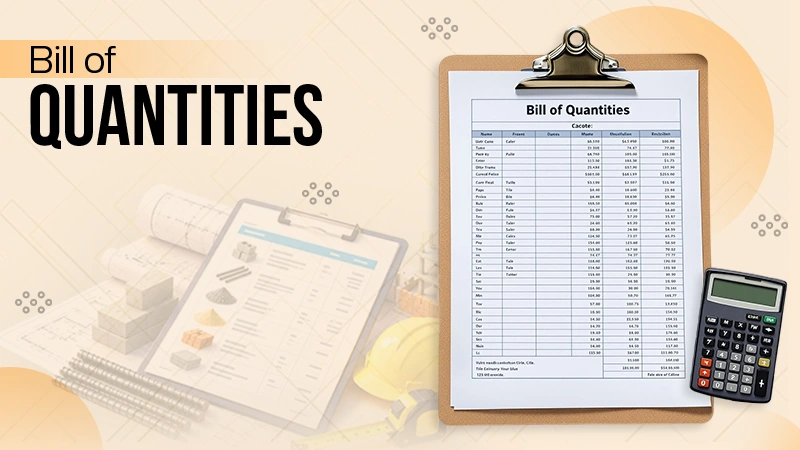
You can take the help of a construction document management system to auto-generate an SOV. However, most contractors love to create it manually when there is time and more intricacies to the project.

Schedule of Values (SOV) in Construction: Its Definition, Process, Components, Templates, & More!
The schedule of values is one of the key construction documents. It helps manage construction funds and define the project’s scope as precisely as possible. Its primary work is to make billing and payment less of a hassle. So, construction can sail from start to end effortlessly. In short, it is an essential tool for simplifying the construction processes!
For owners, it also makes the overwhelming hassle of project tracking highly convenient. To learn more about it, like what goes into it and where it is used, refer to the following sections.
Table of Contents:
The Basics of the Schedule of Values (or SOV)

The Schedule of Values (or SOV) is a detailed breakdown of the contract price as per various specific tasks. This is the most fundamental construction cost-related document. It is furnished before the construction by the contractor. In short, that is “What is a schedule of values in construction?”
The SOV document becomes a key reference material after approval. With it, a contractor can easily allocate the funds and request payments. The project owner finds it less overwhelming to track the project’s progress.
Values in an SOV are different from the figures from construction estimating. Estimates are about the expected cost of a project. But scheduled values are finalized payments that the owner needs to make progressively to the builder after each step.
SOVs matter. They ensure transparency, payment verification, and ease of managing funds for project owners. And not just that, for contractors, this document serves as the billing foundation and a smart tool for better resource planning.
Note: The particular cost of each itemized piece of work, when summed up, will always be equal to the contract sum!
How to Create a Schedule of Values?

The major steps to create a schedule of values construction are underlined below. These steps focus on the contract value & scope, clear line items, and appropriate values. Other aspects are the project schedule, submission for review, and finalization.
- Contract value & scope: Confirm the contract value and scope first of all. Both are the most essential things. You need these two before creating an SOV. The clearer the scope, the clearer the SOV will be!
Note: Contract value completely depends on the project’s needs and requirements.
- Clear line items: Next, break the scope into specific items that cannot be further deconstructed. Each item on the SOV has to be well-defined so that there is no uncertainty.
- Appropriate values: Assign the right value out of the contract price to each itemized component of the SOV. Each row in the table must reflect the real cost with no scope for ambiguity. That is the most demanding part, as calculations have to be precise without errors.
- The project schedule: The values must be spread across a project’s timeline, not beyond that. If there is a mismatch between the SOV and the project’s timeline, the former has to be adjusted.
- Submission for review: Now, the crafted SOV is submitted to the project owners for review, including architects. All the major issues in the documents are noted and labelled at this stage.
- Finalization: If everything is fine, the formulated schedule of values is approved. That means the document gains the authority to direct all future billing during construction.
Do you know? These steps remain the same in all construction types.
Also Read: What is Architecture?
What to Include in an SOV?
The major components of the Schedule of Values are listed below. Project information, item number, description of the work, scheduled value, start & end date, work completed, etc., are typical examples.
| Parts Included in SOV | Description |
| Project information | All the crucial project information comes in this particular section. The project name, address, number, the name of the contractor’s firm, etc., are a few examples. |
| Item number | Each task in the breakdown is assigned a specific number, which is called the item number. It technically corresponds to a piece of work. |
| Description of the work | An explanation that eliminates the ambiguity from construction plans and instills clarity! |
| Scheduled value | The cost of each work item that is to be paid to the contractor is the scheduled value. This cost or value is typically due by the completion of the project. |
| Start & end date | These two time elements are super important when it comes to tracking the project’s progress. |
| Work completed | This label is to mark the progress made so far in the construction project at hand. |
| Stored materials | The cost of the construction material purchased and stored but not used yet. |
| Total completed + stored-to-date | Total cost of the work completed and materials stored for each task. |
| Percent complete | It is used to track the completion of each item included in an SOV. |
| Retainage | The portion of value from each item that is withheld until all the contractual obligations are fulfilled. |
| Total cost | This summed-up figure is calculated from all the values in sov construction. |
Note: Don’t pay all the money at once. It might influence the contractor’s behavior. They often leave work undone when paid fully to close other deals to maximize their profits.
Both commercial and residential construction have these components in SOVs.
Schedule of Values Templates
The two commonly used types of templates are the AIA schedule of values G703 Continuation Sheet and ConsensusDocs 293: Schedule of Values. Some projects might demand the use of either of these specific templates, while others do not! Where such frameworks are not required, the contractor can use any suitable form available on the internet.
Many owners also rely on this document. An SOV helps them assist with payment management, financial documentation, and project monitoring. These are explained below.
- Payment management: The project scope is broken down into actionable work pieces along with their cost of completion. This much detail in an SOV provides the ease of managing payments.
- Financial documentation: An SOV in construction tracks all the costs of completing a project down to the shortest task. This much coverage in tracking expenses becomes a great help in managing financial resources better.
- Project monitoring: As the payment requests are made, it helps track how much of the project has been completed. Thus, it also makes tracking fun!
Note: When this document is formulated, make sure all the key stakeholders are involved! Otherwise, disagreements might prevail at a later point.
Also read: What is the Cost to Install Geothermal HVAC in 2026? Learn in Detail!
How the Schedule of Values Is Used
The key activities in which this document is mostly used are related to managing payments, tracking project progress, planning finances, and managing cash flow, etc. Let’s explore these points as well after understanding “What is a schedule of values?”
- Managing Payments: On the basis of these documents, contractors request and receive payments. Getting paid after completing a certain level of work becomes a well-organized and highly simplified process.
- Tracking project progress: When the project is completed up to a certain level, money is requested by the contractor. It is not done here. This also makes project tracking easy!
- Planning finances and managing cash flow: The owner can check if the values are allocated well within the agreed-upon contract price. It is very important to ensure that there will be no unexpected cost overruns in the future.
- Managing resources and manpower: That is a big help for the contractor. With SOVs, they have a detailed document at their disposal. They can refer to it when they need to learn about a work’s requirements, i.e., manpower and resources needed to complete it.
- Resolving conflicts and complying with the contract: Most of the disagreements in a construction project are related to the cost. Thus, SOVs help eliminate most of them right from the beginning. Additionally, it is an effective tool to make sure that the terms and conditions of the contract are adhered to 100% without fail.
- Managing change order: Suppose some project aspects change after construction has begun. In that case, making adjustments and analyzing the cost impacts would be easy with an SOV.
- Controlling cost: If there are expense overruns, the schedule of values document will instantly point that out. The root cause can then be analyzed, and costs brought well within the limits.
Note: Suppose there are 19 steps to building a house. Then, an SOV’s work here is to categorize and highlight each item along with the actual cost, not the expected one!
Common Mistakes to Avoid
Insufficient & excessive detail, mismatch of line item with the contract total, inconsistency in change order, and others as provided below are major common mistakes. You should learn about these and be careful!
- Insufficient detail: Due to a lack of accuracy and effort, a schedule of values document might contain line items without a detailed breakdown. If the scope of a particular line item is broad, tracking the progress will be difficult due to incomplete details.
- Excessive detail: That is just as challenging as insufficient detail. If there are too many tasks included, that might just be done for the sake of increasing the cost. It is malpractice when owners don’t have much knowledge of the industry.
- Mismatch of line item with the contract total: Each line item cost has to be equal to the contract total when summed up. It is also a very common mistake that, in most cases, this doesn’t match, creating major disputes at a later point in time.
- Inconsistency in change orders: If new changes to the project aren’t properly adjusted to the document, that will not just create a mismatch. But the owner might also have to face over-payments.
Note: It typically happens due to lack of time, negligence, and carelessness on the part of the owner.
- Overstatement of completion: If the owner doesn’t inspect too much, they might also end up paying extra. The instances of overstatement of completion are very common in construction projects.
- Front-loading the schedule: Beware of this cunning practice as well. Make sure that the starting entries in the construction schedule of values document aren’t assigned higher values. That means you will end up paying a large amount when even half of the project hasn’t been completed yet.
Real-World Example of an SOV
The following is a very simple schedule of values document. It can be used in a typical residential house with an average square footage. It includes components like site preparation, foundation work, structural framing, plumbing & electrical, etc.
| Item No. | Description | Amount | Percentage |
| 1 | Site preparation | $5,000 | 9.1% |
| 2 | Foundation work | $15,000 | 27.27% |
| 3 | Structural framing | $10,000 | 18.18% |
| 4 | Plumbing & electrical | $7,000 | 12.72% |
| 5 | Exterior work | $6,000 | 10.09% |
| 6 | Interior finishes | $8,000 | 14.5% |
| 7 | Landscaping | $4,000 | 7.27% |
| 8 | Total contract price | $55,000 | 100% |
Note: You can modify or extend this simple table as per your needs and project complexity.
Also Read: Why Invest in Miami Florida Verenigde Staten? Your Complete Investment Guide in 2026!
Benefits of Using Technology to Create and Manage an SOV
Automation, real-time updates, progress tracking, and integration with billing software are four major benefits of integrating the schedule of values into technology. Use the latest software for ease of work!
- Automation: Several management software programs can now create SOVs on their own without human help. You just need to provide it with your budget and project needs. It doesn’t just save administrative costs but time as well.
Also know: This trend is growing due to the advancements in generative artificial intelligence.
- Real-time updates: SaaS services operate on cloud-based systems. That means it allows users to collaborate in real time. Key updates also reach key stakeholders on time. So, decision quality increases.
- Progress tracking: Real-time updates, collaboration, and automation help save huge time and cost. That translates into better project progress tracking.
- Integration with billing software: The entire concept of SOV is just to simplify the billing process. Thus, linking this breakdown-of-cost document to a digital billing software takes the efficiency to the next level.
So, these are the major advantages of using technology in SOVs.
Precaution: However, don’t forget to check the documents generated by AI for potential errors now and then.
Conclusion
The schedule of values is an important financial document. It helps define the project scope in a manageable way according to the total cost of the project. However, the honesty of an SOV hugely depends on the professional integrity of the contractor. Always hire a trustworthy person or one from the biggest construction companies in the US.
FAQs
How to build a schedule of values?
Who prepares the schedule of values?
Your general contractor is supposed to build this document. That is because they will manage the entire project, and they have a detailed understanding of the work.
What does a schedule of values do?
It helps break down the scope into manageable and actionable pieces of work along with their respective costs.
Sources:
Foundational: Schedule of Values: A Complete Guide
Related Posts