Before buying land, you must check the legal title, property boundaries, zoning rules, utility access, soil stability, flood risks, road access, tax dues, environmental restrictions, and local development plans.

What to Do Before Building on Raw Land & How to Prepare It
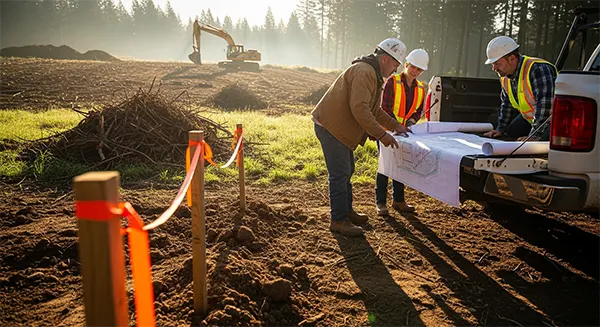
“It is not the beauty of a building you should look at; it is the construction of the foundation that will stand the test of time.” — David Allan Coe (Musician & Writer)
Building on raw land provides you with a great, unique opportunity: Creating a property from scratch. But there’s a whole process to that. You first prepare the site to lay the foundation. Think about driveways, drainage, utilities, and a place for heavy equipment. The manner in which the construction proceeds is affected by the terrain slopes, vegetation, water flow, and underground utility lines. Having a thorough site plan reduces delays and prevents costly rework. So, essentially, it saves you money and an even more precious resource, time.
Table of Contents:
Understand the Property with a Site Assessment
Before clearing or excavation begins, conduct a full site evaluation:
- Verify legal boundaries: Obtain a survey to confirm property lines, easements, and local setbacks.
- Evaluate physical conditions: Record low spots that collect water, steep slopes, existing trees, and equipment access paths.
- Review local regulations: Municipalities often mandates specific permits for land disturbance. For example, Pierce County in Washington State requires a site development permit when clearing 6,000 square feet or more.
Build a Single Site-Prep Scope
In land development, site preparation is a major expense, with the U.S. excavation contractors industry projected to reach $142.5 billion in 2026. Owners often request separate quotes for clearing, grading, and trenching without recognizing how these tasks overlap.
Combining site prep needs into a single scope of work prevents duplicate equipment mobilization fees, saving property owners an average of $623 to $2,105 per delivery. It also reduces civil construction change orders, which typically carry a 15% to 20% premium over base contract rates. Assessing the services offered by excavation specialists like frankysexcavation.com in Washington State—such as land clearing, demolition, grading, trenching, drainage, permits, and inspections—helps ensure every site requirement is accounted for upfront.
Your unified scope of work should specify:
- Topographic survey data and defined clearing limits.
- Structures, slabs, or trees designated for removal versus protection.
- Target elevations for rough and final grading.
- Drainage plans, including catch basins and stormwater measures.
- Utility trench routes, depths, and soil import/export conditions.
- Permit responsibilities and equipment staging areas.
Coordinate Clearing, Demolition, and Grading
Clearing should strictly follow the construction footprint to prevent exposing unnecessary soil. Remove old sheds, slabs, or retaining walls before grading begins.
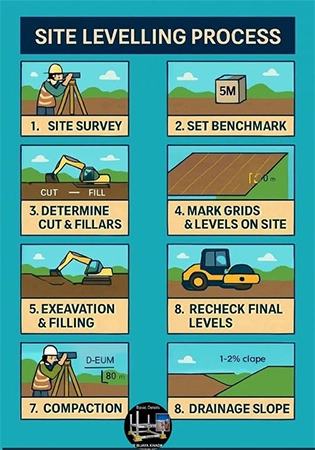
When shaping the land, emphasize drainage. Set elevations so surface water drains away from the future foundation. Install catch basins, French drains, and retention features during rough grading to keep water management incorporated into the landscape rather than an afterthought.
This is how you level a site properly:
Locate Utilities and Legacy Systems
Plan utility routes for water, sewer or septic, power, gas, and communications before the site becomes crowded. In 2025, Washington State reported 2,705 underground utility damages—42% of which occurred because digging began without locating utilities first. Call 811 to locate existing lines before excavating.
Check the parcel for abandoned septic systems from previous structures. Health authorities, such as the Tacoma-Pierce County Health Department, require licensed firms to properly retire inactive septic tanks—pumping out remaining waste, removing or crushing the lid, filling the cavity with gravel or soil, and filing documentation—before building over the area.
Keep Permits and Access on Schedule
Site preparation isn’t just about moving dirt—it’s about keeping the administrative and physical moving parts in alignment. Beginning grading or excavation without the proper municipal permits can cause heavy fines, project shutdowns, or forced removal of completed work. Schedule required inspections into your timeline so open utility trenches, septic connections, and drainage bedding are approved before backfilling. Finally, establish a stable, well-graded access route that heavy trucks and delivery crews can use without damaging prepared ground.
By taking the time to plan the ground first, you eliminate costly surprises and ensure a smooth transition into vertical construction.
FAQs
What are 10 things to check before buying land?
What documents should I check before buying land?
Before buying land, you must check ownership and legal papers. Key documents include the Title Deed (Mother Deed) to trace root ownership, the Sale Deed of the current seller, an Encumbrance Certificate (EC) for past liabilities, local revenue or Municipal Records (Khata/Patta), and official Land Use/Zoning Approvals.
What are the key things to check before buying a property?
Before buying a property, check your total budget including hidden costs, verify the legal title and ownership documents, inspect the physical condition of the building, and evaluate the neighborhood and local infrastructure.
What are charges I need to pay when buying land in India?
When buying land or a plot in India, you must pay government taxes, legal fees, and optional agent costs on top of the base land price.