The following are the things:
- Paver systems can be lifted and reset
- Concrete can only be patched
- Localized repairs save real money over time
- Utility access without full replacement

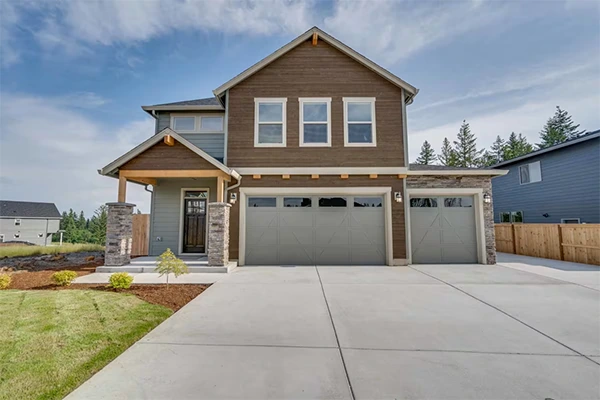
Two driveways head into the same summer on the same street. Five years down the line, one has minor cracks beginning from the edges and a low spot that retains water. The other still looks brand new. Same conditions, different results. What separates them is entirely underneath.
That’s the frustrating thing about evaluating driveway bids. The visible product is identical across the options, but the differences are the ones that determine whether it lasts eight years or twenty five.
Here’s what actually determines which outcome you get, the specific choices that separate a driveway that holds up for decades from the one that needs restoring within a few years.
Base preparation is the single largest variable in driveway longevity and the easiest place to cut cost without a homeowner noticing. Depth, material gradation, and compaction all matter, and all of them are invisible once the surface goes on.
Proper work means excavating to the required depth for your solid and expected load, installing graded aggregate in lifts instead of a thick layer, and compacting every lift mechanically.
A contractor who excavates four inches where eight are needed, or who dumps and compacts once instead of in stages, produces something that looks identical on completion day and behaves very differently by year three.
Water is what turns a marginal installation into a failed one, since saturated base material loses load-bearing capacity and freeze-thaw cycling amplifies any existing weakness.
Permeable systems address this very differently, treating these things as allowing rain and snowmelt to seep through instead of running off, reducing the volume of stormwater leaving a property.
This approach doesn’t just protect the driveway itself; it reduces the strain on municipal drainage systems that struggle most during heavy rain events.
Whether permeable or conventional, grading has to send water somewhere deliberate rather than wherever gravity happens to take it. Contractors quoting driveway installation work should be able to point to exactly where run-off will end up before anything gets excavated.
That question about water flow is one Viking Pavers addresses directly on-site, treating drainage as a planning decision rather than something left to chance once installation begins.
Paver systems depend on lateral confinement to work.
Asking directly what restraint system is specified, and whether it’s included in the quoted price, is a reasonable question that quickly separates thorough contractors from casual ones.
Concrete pavers, poured concrete, and asphalt each have distinct failure modes and maintenance profiles. Poured concrete cracks, and the crack is permanent. Asphalt is more forgiving of minor movement but softens in sustained heat. Pavers accommodate settlement because individual units can shift slightly without the system failing.
Load matters too, and the engineering principle is the same one that governs road construction. FHWA documentation on pavement structure describes the entire assembly, surface over base over subbase, as designed to support the traffic load and distribute it across the roadbed, which is exactly why base depth is specified against expected weight rather than chosen by default.
A driveway that sees a heavy vehicle, an RV, or frequent delivery trucks may require different base depth and surface specifications than one carry two sedans.
Being honest about actual use during the estimate produces a better-matched system than describing typical residential traffic when that isn’t the situation.
This is where long-term math usually gets decided.
It also means a driveway can be opened for utility work and put back rather than replaced, which matters more often than homeowners anticipate.
Every driveway looks good the week it’s finished, which is exactly why comparing bids on appearance tells you nothing useful.
The questions worth asking are about the excavation depth, compaction method, edge restraint details, and where water is being directed, as those are the four vital things that account for most of the difference between a surface that lasts and one that starts failing before its paid off.
A contractor who answers them in specifics and puts the details in writing is quoting a different product than one offering the same square footage for less. It’s worth paying attention to which one you’re actually buying, since you’ll be living with the answer for a couple of decades.
The following are the things:
Paver systems depend on outward movement, interlock across the field, inexpensive relative to the total cost, and ease to install.
Yes, Concrete pavers, poured concrete, and asphalt each have distinct failure modes and maintenance profiles.