You must look beyond the total cost and examine various elements of the estimates. A perfect quote will break down the list of activities involved, various material allowances, exclusions, payment schedules, and methods to deal with change orders.

What to Look for When Choosing a Renovation Contractor for Your Home
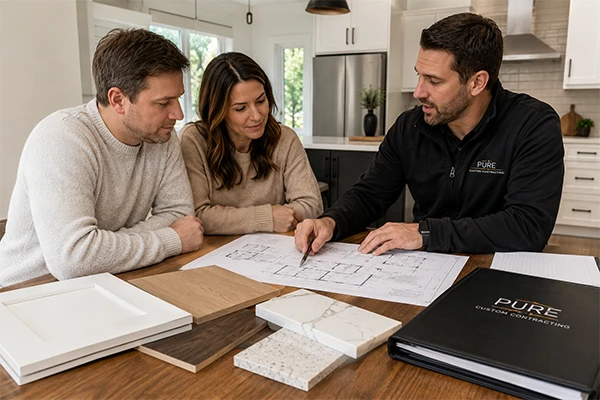
Choosing a contractor is one of the most important decisions homeowners make when planning a renovation.
The right contractor is a lot more than just a worker.
He brings vision to your home.
Experience, communication, documentation, and project management all affect how smoothly a renovation progresses.
This is why, before signing a contract, it is worth taking time to understand how each contractor operates.
Read further to know more!
Table of Contents:
Look Beyond General Renovation Experience
Years in business can provide useful background, but the type of experience a contractor has is equally valuable. A contractor who regularly manages residential renovations may be better prepared for the challenges of working in an occupied home than someone whose experience is mainly in new construction or commercial projects.
Ask potential contractors about projects that are identical in scope and complexity to yours. This does not mean they need to have completed an equivalent renovation. Instead, look for evidence that they understand the planning, sequencing, trade coordination, and finishing requirements required.
A residential renovation contractor should also be able to explain how unexpected conditions are managed. Existing homes can reveal hidden plumbing, electrical, structural, or moisture issues once work starts. An experienced contractor should have a clear process for assessing these discoveries, discussing options with the homeowner, and recording changes before additional work proceeds.
Credentials and appropriate insurance should also be confirmed rather than assumed. Homeowners can ask what insurance coverage the contractor carries and whether permits or specialized trades will be necessary for the proposed work.
Compare the Detail Behind Renovation Estimates
A lower estimate is not necessarily a better estimate. The more useful question is whether each quote provides enough information to determine what is included.
A detailed renovation estimate should make it easier to identify the proposed scope, materials, allowances, exclusions, and other important considerations. If one quote is significantly lower than the others, compare the details closely. The difference may reflect a different material allowance, missing work, or a narrower understanding of the project.
Homeowners should also ask how changes are priced and authorized. Renovations sometimes evolve after construction starts, either because unexpected conditions are discovered or because the homeowner demands a change. A written change-order process helps both parties understand how those decisions affect cost and scheduling.
Payment terms deserve the same consideration. The contract should clearly explain deposit requirements and when subsequent payments are scheduled. Homeowners should understand these terms before work begins rather than relying on casual discussions.
Ask How the Project Will Be Managed
Good workmanship matters, but a renovation also depends on coordination. Before hiring a home renovation contractor in Cambridge, ask who will manage the project from day to day and who will be your main point of contact.
Find out how the contractor schedules trades, communicates delays, handles material deliveries, and keeps homeowners informed about upcoming tasks. For larger projects, ask whether you will receive a general schedule and how changes to that schedule will be shared.
Contractor communication is particularly important when homeowners are occupying the property during construction. Ask about expected working hours, site access, cleanup, dust control, and how disruptions to utilities will be reported.
Pay attention to the quality of communication before actually signing the contract as well. Contractors who answer questions clearly, provide requested documents, and explain their process in decided terms give homeowners more information on which to base a decision. Repeatedly vague answers or difficulty obtaining basic project details may signal problems later.
Check References, Previous Work, and Warranty Terms
References can help homeowners understand what working with a contractor is actually. Rather than simply asking whether previous clients were satisfied, ask specific questions about communication, scheduling, budget management, cleanliness, and how the contractor reacted when something did not go according to plan.
Reviewing completed projects can also provide useful evidence of renovation expertise. Look at projects with a similar level of complexity and pay attention to finishing details, consistency, and the overall standard of the completed work.
Warranty information should be discussed before the contract is finalized. Ask what workmanship warranty is provided, what it covers, how long it applies, and what process homeowners should follow if an issue arises after completion. Material and manufacturer warranties may be separate, so it is useful to understand which party is responsible for each type of coverage.
A contractor willing to explain post-project responsibilities clearly can help reduce uncertainty about what happens after the final inspection.
Research Local Contractors Before Making a Decision
Once homeowners know what criteria matter, they can apply the same questions consistently when evaluating local renovation professionals. This makes it easier to compare contractors based on their processes and suitability for the project instead of relying primarily on price or first impressions.
Local experience can also be important. A renovation company in Cambridge that regularly works on homes in the area may be familiar with common housing types, local project considerations, and the practical requirements involved in overseeing residential work.
For example, Cambridge homeowners researching renovation professionals may encounter Pure Custom Contracting while comparing options for a renovation contractor in Cambridge. As with any contractor under consideration, homeowners should evaluate relevant experience, project processes, estimates, communication, references, and warranty information before determining whether the company is a suitable match.
Warning signs should also carry importance during this stage. Be cautious when a contractor provides an unusually vague estimate, pressures you to make an immediate decision, avoids putting important commitments in writing, cannot provide reasonable information about previous work, or gives unclear answers about insurance and project duties.
The goal is not simply to find the lowest price. A successful home remodeling project depends on having clear expectations about scope, cost, communication, responsibilities, and workmanship before construction starts. Taking the time to compare those factors can help homeowners choose a contractor with a process that fits both their renovation and the way they want the project handled.
Frequently Asked Questions
What are the key factors to consider while assessing renovation quotes?
What is the difference between the experience of home renovation and the experience of working on new construction projects?
Home renovation contractors can operate in situations as they work in occupied structures, take care of dust and utility disruptions, and deal with surprises like various structural and utility issues discovered when opening walls.
What questions should I ask references provided by a contractor?
Instead of generic questions related to satisfaction with the contractor’s work, you should focus on how the contractor handled communication and difficulties and what actions they took when things did not go as planned.
What red flags can help me avoid a contractor?
Some of the signs of a bad contractor may include vague estimates, urgent requests to sign paperwork, unwillingness to provide any documentation, inability to show any references and poor communication at the beginning stages of cooperation.
Related Posts