Industrial power cables are designed with durable outer jackets, suitable electrical ratings, moisture resistance, flexible conductors, and heavy-duty connectors.

What Makes Industrial Power Cables Suitable for Harsh Construction Environments?
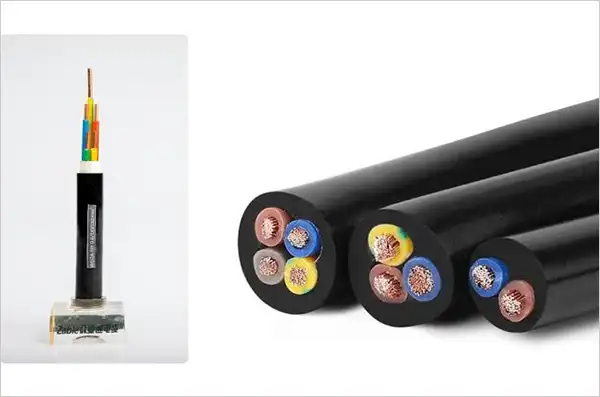
The right industrial power cable is built to manage more demanding work. Its materials, design, and electrical rating all play a part in keeping power flowing while helping reduce safety risks. Choosing the wrong cable can lead to damage, delays, or dangerous electrical issues. Electrocution is recognized by the U.S. Occupational Safety and Health Administration (OSHA) as one of the construction industry’s “Focus Four” leading causes of fatalities. This shows why electrical safety requires careful attention on every job site. If you already know how to plan a compact construction equipment purchase around your project pipeline, you have a better base to understand this topic.
Here are seven features that make industrial power cables that suits for harsh construction environments.
Table of Contents:
1. Strong Outer Jackets That Protect Against Physical Damage
Construction cables often face harsh treatment. Workers may pull them across concrete, move equipment over them, or place them near sharp tools and building materials. A weak outer covering can wear down faster and expose the wires inside.
Industrial cables often use thick, tough outer jackets made to resist cuts, scrapes, and daily wear. Some are also designed to manage contact with oils, chemicals, and other materials found on work sites.
The best jacket depends on where the cable will be used. A cable that works well in a dry indoor area may not be suitable for a muddy outdoor site. Checking the manufacturer’s ratings helps ensure the covering can bear the conditions.
2. Correct Electrical Ratings to Prevent Overheating
Every cable has limits. It is made to carry a certain amount of current at a given voltage and under set conditions. Choosing a cable that is too small for the equipment can cause it to overheat.
This is a serious issue on busy sites where several tools or machines may need power at the same time. A cable should be chosen based on the equipment’s power requirments, cable length, temperature, and the way it will be installed. When comparing power cables, check their voltage and current ratings, conductor size, and intended use. Such details help show whether a cable is suitable for the job. A qualified electrician should confirm the choice when the setup is complex or includes high loads.
3. Moisture Resistance
Rain, standing water, and damp ground are common on construction sites. Water can create serious electrical risks when it reaches damaged cables or barely protected connections.
Industrial cables made for outdoor or wet use have materials and designs that help limit water entry. Their connectors also require suitable protection, especially where power is used near wet surfaces.
The Occupational Safety and Health Administration (OSHA) warns that wet cord connectors can allow current to leak, introducing a shock risk. Its guidance recommends limiting moisture exposure and using watertight or sealable connectors where needed.
Still, a water-resistant cable should never be treated as safe to use in every wet situation. Workers must follow the cable’s ratings and site safety regulations.
4. Flexible Construction for Easier Handling
Cables on a construction site rarely lie in one place. Workers may need to move them around tools, equipment, temporary work areas, and changing building layouts.
A cable with flexible conductors can bend and move more easily without putting too much stress on the wires inside. This is useful for temporary power setups, portable tools, and equipment that has to be moved during the workday.
However, flexibility should not mean poor strength. The cable must still be made for the level of use it will face. Good strain relief at the plug and connector also helps avoid damage where the cable joins other parts.
5. Heat Resistance
Some construction areas can get very hot. Cables may stay near generators, engines, heaters, or equipment that produces heat during normal use. Outdoor cables may also face strong sunlight for long durations.
A cable’s insulation and outer jacket should be rated for the temperatures it is likely to face. If the material gets too hot, it may become weak, crack, or lose some of its protective characteristics.
Temperature ratings are therefore worth checking before buying. The cable should suit both the working environment and the electrical pressure. Proper placement also helps, since even a well-made cable can be damaged by constant contact with hot surfaces.
6. Durable Connectors to Keep Power Connections Secure
A strong cable is only part of a better power setup. The plugs, sockets, and connectors must also be able to handle regular use.
On a construction site, connections may be unplugged, moved, and reconnected many times. Loose or poorly fitted parts can lead to heat build-up, power loss, or electrical issues.
Heavy-duty connectors are designed to provide a secure fit and handle more demanding use. Some power distribution systems also use weather-resistant housings to secure connections in outdoor work areas.
For example, Duraline’s data on construction and mining power systems highlights the role of protected power distribution equipment in temporary work settings. This is a useful reminder that cables and their connection points should be checked as a working system.
Final Thoughts
Industrial power cables are made for the demands of tough work areas. Strong jackets, moisture protection, flexible conductors, correct electrical ratings, and secure connectors all help them manage the daily challenges of construction bonds 101.
Still, selecting a heavy-duty cable is only the first step. It must match the equipment, site conditions, and safety rules. Regular checks and proper handling help protect workers and keep projects moving without avoidable power issues.
Frequently Asked Questions
What makes industrial power cables suitable for construction sites?
Why is the outer jacket important in industrial power cables?
The outer jacket protects internal conductors from cuts, abrasions, impact, oils, chemicals, and general wear.
Can industrial power cables be used in wet construction environments?
Only cables and connectors specifically rated for the intended wet or outdoor conditions should be used, and the manufacturer’s instructions should also be considered.
Related Posts