By phased construction and coordinated outages, you can expand the plant without completely stopping production.

How Industrial Facilities Can Prepare for Expansion Without Disrupting Operations
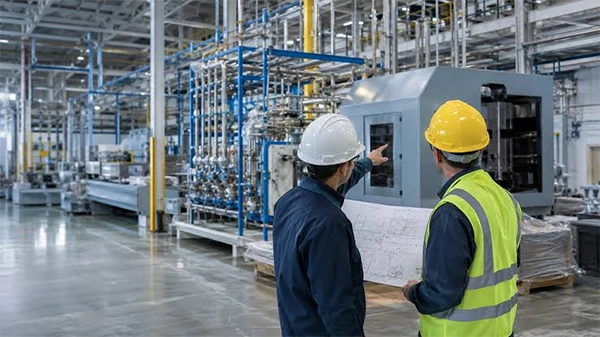
Nowadays, demands are growing, production targets are rising, and the facility is running out of space. But then a question arises: how do you expand an industrial facility when the production lines paying for that expansion cannot afford to stop? This is a familiar challenge for the facility managers across the Gulf Coast. Construction must move forward while employees, equipment, deliveries, and daily operations continue without any major interruptions. The important thing is to make operational continuity part of the expansion plan from the beginning.
Businesses can create additional capacity while keeping existing operations on track with careful preparation, realistic scheduling, and clear coordination.
Table of Contents:
Start With a Clear Picture of Your Operations
Before anyone makes a footprint, check how the facility actually works today. Expansion projects usually don’t work because the people designing them do not see the daily flow of materials, vehicles, and people.
Gather these basics early:
- Production schedules: peak seasons, planned outages, and shift patterns.
- Traffic routes: where trucks, forklifts, and pedestrians move each day.
- Shared utilities: power, water, steam, compressed air, and drainage that new work may touch.
- Restricted areas: zones with hazardous materials, clean requirements, or limited access.
Once this picture exists, every later decision, from where to stage materials to when to schedule a tie-in, becomes simpler to defend.
Know What Downtime Really Costs
It is fascinating to treat a short stoppage as a minor price for growth. The numbers say otherwise. The National Institute of Standards and Technology shows that preventable maintenance-related losses in U.S. manufacturing total $119.1 billion, including $18.1 billion from downtime. Construction tie-ins are not the same as maintenance, but the lesson adds up: unplanned stops add up quickly.
Put a rough dollar figure on one hour of lost output at your facility. That number helps you determine which tasks deserve a planned shutdown window, which can be done live, and how much additional planning is worth paying for.
Plan the Work Around Your Production Schedule
The most disruptive projects are the ones designed on a contractor’s calendar rather than the plant’s. Flip that. Start from your own schedule and fit construction around it.
Some habits make the schedule more realistic:
- Group high-risk tasks into planned outage windows rather than scattering them.
- Separate noisy or dusty work from sensitive processes and from shift changes.
- Build in buffers for deliveries and weather, which are common causes of slippage.
- Agree on a change process so scope additions do not slowly creep into your outage window.
Take the schedule as a shared document that operations, maintenance, and the construction team all sign off on. That way, a delay in one place triggers a conversation, not a crisis.
Bring In Experienced Help Early
The earlier your construction partner joins the conversation, the more disruption you can avoid. Choosing an industrial contractor in Lake Charles with experience working around active industrial facilities can make early planning better. Important considerations for example, site access, utility connections, material deliveries, and construction sequencing can then be addressed before the final plans are approved.
Look for a contractor who includes scheduling, budgeting, material procurement, and weather contingencies in the pre-construction process. Specialized requirements, incorporating HVAC systems and workplace safety measures, should also be considered when developing the project schedule.
Whoever you select, ask how they plan to manage construction beyond operating equipment. Good answers should describe the work sequence, communication procedures, and who will make decisions when site conditions change.
Keep People Safe and Informed
Construction crews and plant staff share the same ground, which increases the stakes for safety and communication. Do not leave it to chance.
- Hold a joint kickoff where operations and construction review hazards, permits, and emergency routes.
- Mark physical boundaries with barriers, signage, and designated walkways.
- Control access so only trained people enter active work areas.
- Run short daily briefings including what is changing today and who is affected.
Plant employees should also know whom to call when something looks wrong. A clear contact and a simple escalation path prevent small concerns from turning into stoppages.
Protect Utilities and Tie-Ins
The riskiest moments in most expansions are the connections between new and existing systems. A single mistimed power or process tie-in can stop a line in minutes.
Plan these steps carefully:
- Identify every utility and process connection well before construction starts.
- Verify as-built drawings against what is actually in the ground and overhead.
- Prefabricate or stage components off to the side so the live connection takes hours, not days.
- Rehearse the sequence, including a rollback plan if something goes wrong.
Treat each tie-in as its own mini-project with an owner, a checklist, and a clear go or no-go decision. That discipline keeps the most vulnerable work calm and predictable.
Conclusion
Expanding an industrial facility without disrupting functions comes down to preparation and communication. Understand how your site actually runs, put a number on downtime, and build the construction schedule around production instead of the other way around. Bring your construction partner in early, set clear safety and access rules, and treat every utility tie-in as a carefully planned event. None of this eliminates the need for flexibility, but it shifts most surprises from the middle of production to the planning table, where they are far cheaper to solve. Do the groundwork well, and your expansion can enhance capacity without taking away the output you already depend on.
FAQs
How can one expand a plant without completely stopping production?
What are some of the habits that make a schedule more realistic?
Some habits,, like grouping high-risk tasks, building in buffers, and agreeing on a change process, can make a schedule more realistic.
What should one do when starting industrial operations?
Before anyone makes a footprint, check how the facility actually works today. Expansion projects usually don’t work because the people designing them do not see the daily flow of materials, vehicles, and people.
Related Posts