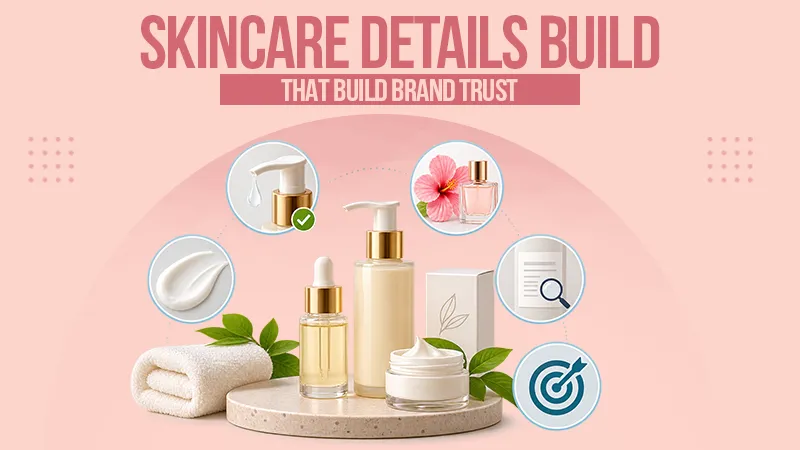
The quality of the product, consistent formulation, quality packaging, scent, clarity of labelling, and customer retention.

5 Overlooked Product Details That Can Shape a Skincare Brand's Reputation
Most of the times when customers fall out for love with a skincare product. This is because of issues with the formula, but sometimes it is because of little issues such as leakage in the toiletry bag, or a product that smells too strongly. The pump works least well over time when you finish using the product.
If you are looking at developing your own range of skin products, using an existing formula can make it easier to develop your product. The packaging and practicality still need to be considered. Brands can look into manufacturers like Rainshadow Labs. When launching your product successfully, you should consider everything from the dispensers, scent, batch uniformity, clear labelling, and realistic claims.
Table of Contents:
- 1. A Dispenser That Works in the Bathroom, Not Just in a Sample Test
- 2. Fragrance That Fits the Product's Actual Audience
- 3. Consistency From One Purchase to the Next
- 4. A Container That Makes the Product Easy to Understand
- 5. Expectations That Match the Everyday Experience
- Reputation Is Built Through Repeated, Ordinary Moments
- FAQs
1. A Dispenser That Works in the Bathroom, Not Just in a Sample Test
A sleek pump looks great in product imagery. Its real test starts when someone uses it with wet hands, sets it on a narrow shelf, or tries to get the last piece of cream out of the bottle.
A formula’s thickness affects how easily it moves through a pump or nozzle. A thick moisturizer may dispense slowly, while a thin serum can dispense more than someone needs. If the opening collects residue, users may have to wipe it before closing the container. These experiences are minor individually, but they become memorable when repeated every morning.
Test the Complete Package
Instead of evaluating a formula only in a sample pot, brands should try it in the intended retail packaging. Test several pumps in succession, use it after the container has been opened for a while, and see how much remains when dispensing becomes difficult. A package that cannot reliably deliver the product transforms customers’ sense of value, even when the formula itself is satisfactory.
Shipping deserves attention as well. Caps and closures should be ensured they don’t leak under the conditions reasonably expected during fulfillment. A beautiful carton does little to keep confidence if the customer opens it to find lotion on the outside of the bottle.
2. Fragrance That Fits the Product’s Actual Audience
A fragrance can help make a product stand out, but scent choices can be very personal. What feels overwhelming to one person may seem overpowering to another. Even people who enjoy a scented body lotion may prefer an unscented facial moisturizer.
Brands sometimes make fragrance decisions in a room where everyone knows the intended product idea. That can create a different response from the one a customer has at home. A tester who hears that a cream is supposed to smell botanical may define it positively before deciding whether they would want that scent near their face every day.
Ask Questions That Reveal Preferences
Instead of asking testers whether a fragrance is “good,” ask whether its strength is comfortable, whether they would use the product daily, and whether the scent performs with other items in their routine. Include people who did not help choose the original fragrance. Their responses may be less influenced by the product team’s expectations.
For products marketed as fragrance-free, brands should confirm the formulation and labeling details with skilled partners. “Fragrance-free” and “unscented” do not necessarily communicate the same thing, and wording should perfectly display the product quality.
3. Consistency From One Purchase to the Next
Customers rarely compare laboratory batch records, but they notice when their second purchase behaves differently from their first. Perhaps a lotion feels thinner, a cleanser has a different appearance, or a cream carries longer to extend. Even a harmless-looking variation can leave someone wondering whether the product has altered.
This is why production texture belongs in discussions about private label skin care, not only in technical discussions behind the scenes. A brand should understand what specifications are used to review a product and how differences are investigated when a batch does not match expectations.
Keep a Useful Reference Sample
An approved sample provides a point of comparison, but the approval process should document more than “looks and feels right.” Details such as formation, texture, scent, and relevant technical measurements help define what the finished product is supposed to be. Storage and stability assessments are separate parts of that work; a reference jar alone does not establish shelf life or safety.
Once the collection is established, consistency also impacts how products work together. A cleanser, serum, and moisturizer should each have an exact purpose. Customers may lose confidence if every new release seems to change the feel or positioning of the products they already buy.
4. A Container That Makes the Product Easy to Understand
Packaging will tell a customer a lot before they read the full instructions. Someone should be able to identify a cleanser from a treatment or moisturizer without having to look at multiple similar bottles. Names, label hierarchy, and legible instructions all contribute to that transparency.
Consider a customer getting ready for work. If three products have similar shapes and tiny labels, they may pick the wrong one. If application instructions are hidden behind marketing text, they may use an amount or frequency different from the intended guidance. Neither problem requires a dramatic packaging failure to become annoying.
Design for Real Reading Conditions
Review the label at its actual printed size. Check the visibility between lettering and the background and whether the instructions remain readable on curved or small containers. Product claims also need to be accurate and supported. Language that sounds appealing in an advertisement may cause unrealistic expectations when it appears on a package.
For an online business, product pages should show enough detail for someone to understand what they are purchasing before checkout. Precise usage instructions, ingredient information, and realistic descriptions can help to avoid confusion after delivery. A carefully designed label and a clear product page should reflect the same story.
5. Expectations That Match the Everyday Experience
You may market your product as a lightweight morning moisturizer, but if it feels heavy under sunscreen, customers may consider it disappointing even when it moisturizes adequately. A cleanser defined as soft may receive complaints if users misunderstand how often it should be used or which skin types it is intended for.
It is not about whether it is a good or bad product. It is the gap between what the customer expected and what happens during use.
Brands should evaluate product descriptions alongside sample feedback. If testers repeatedly describe a cream as rich, it may not be wise to market it as subtle. If packaging makes a product difficult to use during travel, “perfect for your bag” is not a helpful promise. Clear text often helps customers better than dramatic claims.
When discussing your manufacturing choices with a partner such as Rainshadow Labs, brands can bring these observations into discussions about formula selection, packaging, and presentation. This will help ensure your product concept matches the expectations customers will actually have.
Reputation Is Built Through Repeated, Ordinary Moments
Your brand reputation does not build on impressive ingredients or a memorable launch. It is built from your customers reaching for the same product again and finding that it is easy to use, consistent with the previous purchase, and accurately described.
A private label skin care business can strengthen that experience by treating dispensing, scent, batch consistency, label clarity, and honest expectations as a part of your product-development concerns rather than last-minute details. None guarantees repeat purchases. Together, they will take away any unnecessary reasons for customers to feel disappointed. This will give your well-chosen formula a better opportunity to build long-term trust.
FAQs
What factors affect a skincare brand’s reputation?
Why is packaging important in skincare?
To ensure that the product formula is secure. It also makes the product easy to use and applicable every day. Poor packaging will result in frustration even if the product looks good.
How can you make sure that your skincare products are consistent?
Clear guidance for the formulation of the skincare products. Also confirm they follow cosmetic, GMP instructions, verify every batch of the product, make sure that there are no challenges in recognizing texture, scent, pH, and more importantly appearance.
Should skincare products be unscented?
No, it basically depends on whether the product is for and who its targetted. It is considered scented when people may be sensitive to it and check ingredients very strictly in labelled products.
Related Posts