Ans: Apartments allow Tokyo to accommodate high population density while remaining compact and efficient. Flexible zoning, extensive rail infrastructure, and limited developable land have made multi-family housing the most practical way to integrate residential life with transit, commerce, and services.

Apartments in Japan: How Tokyo Redefined High-Density Living Without Losing Livability
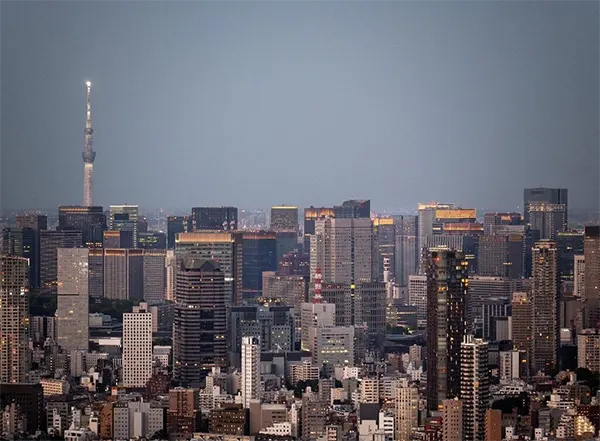
Apartment buildings in central Tokyo display how the residential density is integrated into the city’s broader urban fabric. Tokyo is one of the world’s densest megacities, but it still ranks high in terms of safety, cleanliness, mobility, and overall livability, thereby defying the common assumption that density often leads to congestion and decline.
The core of this system includes apartments. Apartments in Japan, Tokyo, form the building block of the city’s residential fabric, consistently being shaped by regulation, infrastructure, and expectations that focus on functionality and adaptability over plain aesthetics.
This article gives an insight into how design, policy, and urban systems align to support high-density living at scale, without compromising on livability.
Key Takeaways
- Unlike many Western cities that depend increasingly on single-use zoning, Tokyo allows residential, commercial, and light industrial functions to coexist within the same neighborhoods
- These apartments are not designed to impress visually, but to function reliably within tight constraints, accommodating daily life with minimal friction
- Renting dominates everyday housing in Tokyo, especially among younger residents and professionals who value proximity to transit and employment centers
- Apartment buildings are routinely replaced after a few decades, not because they fail structurally, but because redevelopment allows for better upgrades, higher efficiency, and better land utilization
Table of Contents:
- Density by Design: Why Tokyo’s Apartments Look the Way They Do
- Inside the Typical Tokyo Apartment: Efficiency Without Compromise
- Renting vs Ownership: Two Housing Models, One Urban System
- Apartments as Infrastructure: Transit, Walkability, and Daily Life
- Aging, Renewal, and the Lifecycle of Tokyo’s Apartment Buildings
- What Other Cities Can Learn From Tokyo
- FAQs
Density by Design: Why Tokyo’s Apartments Look the Way They Do
Tokyo’s residential landscape is the result of a regulatory framework that prioritizes flexibility rather than rigid land-use separation. Unlike many Western cities that depend increasingly on single-use zoning, Tokyo allows residential, commercial, and light industrial functions to coexist within the same neighborhoods and sometimes within the same buildings.
This flexibility decreases commuting distances considerably and supports continuous urban activity throughout the day.
Building form is further shaped by pragmatic constraints. Height limits vary by zone, while street width directly influences allowable building volume.
Setback rules require structures to display caution as they rise, producing the distinctive silhouettes seen commonly across different residential districts
These guidelines are often considered as limitations, but practically, they encourage a diverse streetscape and access to light and air even in dense areas.
Rather than enforcing uniformity, Tokyo’s regulations allow variation within a clear structural logic. The result obtained is an apartment ecosystem that adapts to its surroundings, balancing density with better comfort.
Inside the Typical Tokyo Apartment: Efficiency Without Compromise
A typical Tokyo apartment layout showing circulation efficiency and the clustering of utility spaces.
The interior logic of a Tokyo apartment reflects the same system-driven thinking found at the urban scale.
Space is provided wth precision, not guesswork. Entry typically starts at the genkan, a recessed threshold that separates the exterior from the interior environment, increasing hygiene and spatial order. Beyond this, circulation is minimized to benefit the usable living area.
Wet functions such as the bathroom, toilet, and kitchen are included in compact cores, reducing plumbing runs and enhancing construction efficiency. Storage is integrated vertically and horizontally, usually built into walls or overhead spaces.
Balconies, while regular in size, serve many roles: daylight access, ventilation, and compliance with building and fire regulations.
What may appear small by international standards is better understood as optimized. These apartments are not designed to impress visually, but to function reliably within tight constraints, accommodating daily life with minimal friction.
Renting vs Ownership: Two Housing Models, One Urban System
Renting dominates everyday housing in Tokyo, especially among younger residents and professionals who value proximity to transit and employment centers.
Rental-oriented apartment buildings usually prioritize standardization: flexible layouts, durable finishes, and an efficient backbone of Tokyo’s near-station residential zones.
Ownership-oriented apartments often emphasize longevity. Construction specifications may include thicker walls, higher-grade materials, and better sound insulation, reflecting longer-term occupancy expectations.
Both models remain in the same urban framework, differentiated more by structural intent than by location.
For international readers unfamiliar with Japan’s housing structure, neutral reference material such as an overview of apartments in Japan, Tokyo rental framework, and data on residential property ownership in Japan helps contextualize how these parallel systems operate without distorting the city’s overall housing balance.
Fun Fact
Japanese real estate uses specific abbreviations. For example, a “1K” apartment is a one-room studio with a separate kitchen, while a “1LDK” features a dedicated living, dining, and kitchen area.
Apartments as Infrastructure: Transit, Walkability, and Daily Life
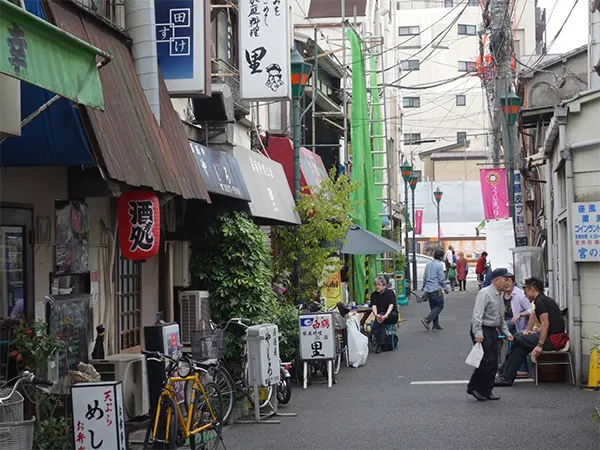
Residential density around rail hubs illustrates Tokyo’s transit-oriented housing model.
Tokyo’s apartments serve as an integral part of a broader mobility network rather than as isolated structures. Residential density enhances predictability around rail stations, where housing, retail, and services stack within a short walking radius.
This pattern allows daily life to function within compact zones, reducing reliance on private vehicles.
Ground floors usually host shops, clinics, or offices, while upper levels comprise housing. This vertical zoning supports active streets and ensures that essential services are accessible throughout the day.
For residents, the result is a five-minute living radius where commuting, shopping, and social activities are tightly integrated.
Density, in this context, enhances resilience. Redundant transit lines, distributed services, and mixed-use buildings create flexibility during disruptions, whether caused by weather, seismic events, or demographic shifts.
Aging, Renewal, and the Lifecycle of Tokyo’s Apartment Buildings

Shorter building life cycles have influenced how apartments are designed, replaced, and reconfigured over time in Tokyo.
Unlike many Western cities that focus on long-term preservation, Tokyo approaches buildings as part of a continuous renewal cycle.
Apartment buildings are routinely replaced after a few decades, not because they fail structurally, but because redevelopment allows for better upgrades, higher efficiency, and better land utilization.
This cycle allows density to increase gradually without an outward sprawl. Older, low-rise apartments give way to taller, better structures that respect present regulations while also delivering improved performance.
The city develops through replacement rather than expansion, maintaining a compact urban footprint.
This mindset reframes impermanence as a strength. Buildings are expected to adapt or make way for better ones, ensuring that the apartment stock remains aligned with contemporary needs.
What Other Cities Can Learn From Tokyo
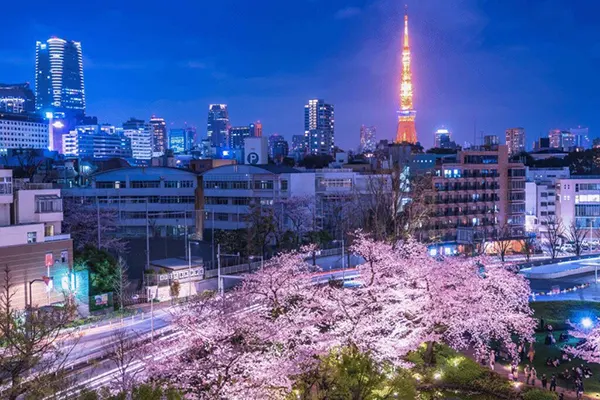
Tokyo displays that density doesn’t have to come at the expense of livability. Through flexible regulation, thoughtful design, and integration with infrastructure, apartments in Japan, especially in Tokyo, operate as core components of a larger urban system rather than just being standalone products. Regulation acts as an enabler, not a barrier, while regular redevelopment ensures consistent adaptation.
The lesson is not that other cities should replicate Tokyo’s model completely, but that housing works best when in line with transit, policy, and everyday behavior.
As cities worldwide deal with growth and housing pressure, Tokyo’s apartment ecosystem displays a compelling example of how density, thoughtfully aligned, can support urban life rather than degrade it.
FAQs
Q1) Why are apartments the dominant housing type in Tokyo?
Q2) How do earthquakes influence apartment design in Japan?
Ans: Seismic considerations impact nearly every aspect of apartment construction in Tokyo, from structures to interior layouts. Lightweight materials, modular planning, and regular redevelopment cycles allow buildings to meet evolving safety standards while maintaining urban density.
Q3) Can Tokyo’s high-density apartment model work in other cities?
Ans: Elements of Tokyo’s approach—such as mixed-use zoning, transit-oriented development, and flexible redevelopment—can inform housing strategies elsewhere. However, these systems are deeply interconnected, and their success depends on coordinated planning rather than isolated design interventions.
Q4) How do ownership-oriented apartments work?
Ans: Ownership-oriented apartments often emphasize longevity. Construction specifications may include thicker walls, higher-grade materials, and better sound insulation, reflecting longer-term occupancy expectations.
Related Posts