The following are the benefits:
- It creates a natural social hub
- It supports an active lifestyle at home
- It can add real property value

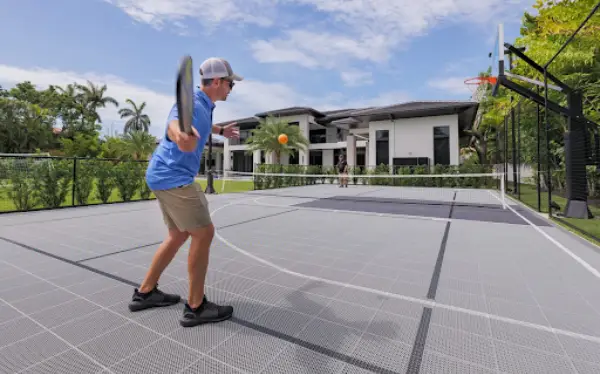
Have you noticed how many of your neighbors seem to be talking about pickleball nowadays? Or wondered why that empty area of your backyard keeps looking like a perfect place for adding something new? You are far from imagining things.
Pickleball has transitioned from being a niche activity into one of the most popular additions to residential properties across the country, with families investing real money and planning into building dedicated courts for the same.
Here’s what homeowners should know before building, why choosing the right builder matters, and what value it adds to the property itself.
Pickleball’s popularity is not just a feeling. According to the Sports & Fitness Industry Association, 24.3 million Americans played pickleball in 2025, reflecting 479 percent participation growth since 2020.
The sport has now been considered the fastest-growing game in the country for five consecutive years, with participation rising by 22.8 percent in a single year alone.
These numbers explain why homeowners are not just playing pickleball at the local park anymore. Many want the game available whenever they want it, right at home.
Unlike a full tennis court, a pickleball court makes a surprisingly small footprint, which is a major reason why it has become such a realistic and easy addition for typical residential lots.
Homeowners who once considered that a dedicated sports court was only reserved for large estates or country clubs are discovering that pickleball changes that equation completely.
Together, these factors make a backyard court a far more realistic investment than most other home sports facilities homeowners consider, since the space, cost, and versatility line up in a way larger courts and fields simply cannot match.
It is this rare combination, small footprint paired with genuinely broad appeal across different ages and skill levels, that explains why pickleball has become the backyard addition so many homeowners are actually able to say yes to.
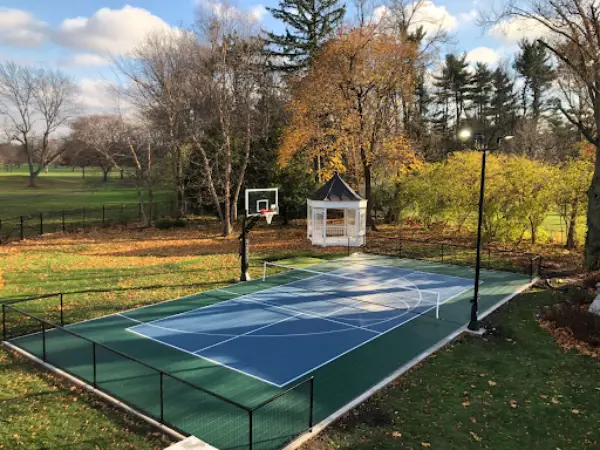
Adding a court is more than just pouring a slab of concrete on the floor. Getting the details right early makes a significant difference in how the finished court appears, plays, and holds up over time.
Skipping such considerations tends to show up later, either in maintenance headaches or a court that simply does not play as well as it should.
Not every contractor who pours concrete or lays asphalt understands the specifics that make a pickleball court actually play well. Court dimensions, surfacing choices, and drainage all require dedicated experience with the sport itself, not just general construction knowledge.
This is exactly why so many homeowners specifically search for a pickleball court builder rather than a general contractor, since the right team can walk through material options, layout considerations, and long-term maintenance needs from the very start of the project.
A successful backyard court begins with smart planning, which is why Keystone Sports Construction provides a complete service, guiding homeowners from the initial concept through final construction.
A dedicated court provides more than just a place to play. It becomes a great gathering spot for family and friends, adding to a property’s appeal for buyers already familiar with the sport.
Taken together, these benefits explain why so many homeowners view a backyard court as a genuine long-term investment rather than a passing trend purchase.
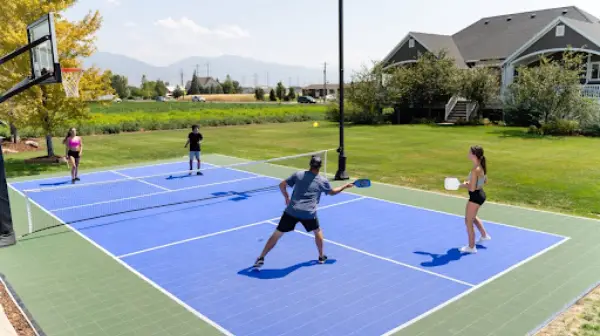
The rise of backyard pickleball courts showcases something bigger than just a fleeting trend. It reflects a sport that has transformed how millions of residents think about recreation, and homeowners are responding by translating that experience directly onto their own properties.
Between the sport’s accessibility, its compact footprint, and the real social and lifestyle value a dedicated court adds, it is easy to see why so many families choose to invest in one.
For anyone considering the same move, working with a builder who genuinely understands the sport, rather than treating it as just another paving job, tends to make the difference between a court that gets used for years and one that quietly becomes an afterthought in the backyard.
The following are the benefits:
Court dimensions, surfacing choices, and drainage all require dedicated experience with the sport itself, not just general construction knowledge. This is exactly why homeowners need the assistance of a reliable builder.
Hard courts offer durability and consistent bounce, whereas clay or synthetic surfaces provide softer, more forgiving play for casual and beginner use.