The 6-yard skip is the most common skip size for domestic and household purposes.

How Do You Estimate the Right Skip Bin Size for a Clean-Up
It often starts with cleaning mode on a free Saturday. When you try to open the garage door, pull out one box, and an hour later half the lawn is covered in old furniture, broken garden pots and cardboard you swore you would flatten. Then you start wondering: how big a skip bin do we actually need?
In Perth, people take weekend clean-ups, renovations and garden overhauls as a regular part of life. So, they think about it every time. If you choose a bag too small, then you end up paying for a second bin or leaving a pile behind. But the important thing is that a reasonable estimate does not need any special skills, just a few simple checks before you book.
Table of Contents:
Why Getting the Size Right Matters
Picking a bin is partly about money and partly about peace of mind. A bin that fits the job means the clean-up finishes in one go, the driveway is clear again immediately, and you are not stuck wondering what to do with the leftovers.
It also helps to remember that household waste adds up. According to the 2022 National Waste Report, Australia generated 75.8 million tonnes of waste in 2020–21, which works out to about 2.95 tonnes per person. Most of us will never see our share in one place, but a big clean-up is the time it becomes visible. Sorting your waste sensibly and booking the right size is a small way to manage that load responsibly.
Start With What You Are Throwing Out
Before you think about size, think about what is in the pile. Ignore bins are not priced or filled by volume alone. Heavy materials, for example soil, bricks and concrete, weigh far more than furniture or cardboard, so they are usually managed in separate bin categories with their own rules.
- General light waste: household junk, furniture, white goods, timber, metal, cardboard and suitable garden clippings.
- Mixed renovation or construction waste: a combination of materials like timber, plasterboard, tiles and cabinetry from a renovation.
- Clean heavy waste: clean concrete, bricks, tiles, soil or sand only, with no household rubbish mixed in.
- Soil only: clean soil or sand with nothing extra in the bin.
If your clean-up includes a bit of everything, it is worth noting the category that matches the whole load, and asking before you book if you are not sure. Mixing the incorrect materials can lead to extra charges later.
A Simple Way to Estimate Volume
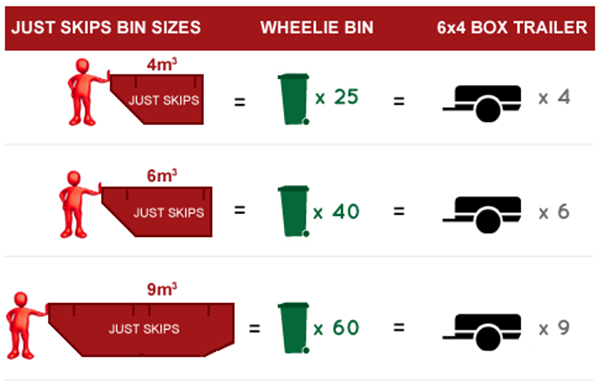
Ignore bin sizes are measured in cubic metres, which is not a number most of us picture easily. A handy trick is to translate it into things you already know. A 2 cubic metre bin holds around eight wheelie bins of rubbish, or about two trailer or UTE loads. Each additional cubic metre adds roughly four wheelie bins.
Walk around the area and count what you can: how many wheelie bins would the collection fill, and how many loads would it take in a ute? Then add a little space for the things you forgot about. Most people underestimate a clean-up by a surprising margin.
Rough Guide by Job Type
- Small jobs (2 to 3 cubic metres): garden tidying, a shed or a small apartment clear-out.
- Medium jobs (4 to 6 cubic metres): a single-room renovation, a moving clean-up or a larger household clear-out.
- Large jobs (7 to 12 cubic metres): big heavy loads, full-house clear-outs or major renovations, where you have the space to place the bin.
Treat these as beginning points rather than rules. If your estimate lands between two sizes, going one size up is usually the calmer choice, as long as the bin fits where you need it.
Check Your Space and Access
A bin that suits your pile might still not match your property. Larger bins can be over four metres long, and the delivery truck needs space to reach you safely. Look for overhead hazards such as low branches or power lines, narrow gates and steep driveways, and measure the location where the bin will sit.
If the only place for it is on the road or the verge, you may require council approval first. It is much easier to inspect this before the booking than on the morning the truck arrives.
Compare Your Estimate With a Size Guide
Once you have a little idea of your volume and waste type, it helps to compare your numbers with a published guide. Backyard Bins’ size and price guide sets out ten bin sizes from 2 to 12 cubic metres, with approximate dimensions, capacity in wheelie bins, and the type of job each one tends to match. Reading it side by side with your own wheelie bin count is an immediate way to confirm whether your estimate is in the right range or needs adjusting.
Keep in mind that some larger bins are only available for lighter waste, and that heavy materials may be limited even when there is room left in the bin. A guide like this is a helpful reference, but a simple phone call can settle anything that is unclear.
Working With a Local Skip Bin Provider
A friendly local team can make the complete process feel less guessy. Backyard Bins is a family-run Perth business that has been operating since 2003 from Beeliar, and it is locally owned and operated. Its published pricing covers GST, bookings can be made online or by phone, and the team is happy to talk through sizes, waste types, or access before you commit.
Services You May Come Across
- Skip bin hire in ten sizes, from 2 to 12 cubic metres.
- Domestic waste and rubbish removal for everyday household clean-ups.
- Green waste removal for garden clear-outs.
- Renovation, construction and demolition waste, including strip-outs.
- Heavy waste and soil-only bins for clean soil, sand, bricks and concrete.
- Delivery and permit guidance to help you prepare your site and check whether council approval is needed.
Standard hire often covers up to seven days, and extra time can often be arranged. It is worth confirming the information for your own booking, along with delivery availability for your suburb.
A Quick Checklist Before You Book
A few minutes of preparation can save a lot of back-and-forth later. Go through these points and you will be in good shape.
- Count your pile: check the load in wheelie bins or ute loads, then add a little extra.
- Sort the waste: decide which category fits the complete load.
- Measure the spot: check length, width, height, and truck access.
- Check permits: confirm whether the bin will be on the road or verge.
- Load carefully: keep waste below the rim and avoid prohibited items.
- Ask when unsure: phone ahead for mixed loads, odd access or unfamiliar materials.
Conclusion
Estimating a skip bin size is really about turning a messy pile into a few easy numbers. Work out what you are throwing away, translate it into wheelie bins or ute loads, inspect the space you have, and compare your result with a clear size guide.
If you land between two sizes, a short conversation with a local provider can help you make a decision. With a little planning, your next clean-up can be completed in a single weekend, with the garage clear and the lawn back to normal.
FAQs
What is the most common skip size?
How big is the biggest skip bin?
The biggest skip bin is roughly around 30 cubic metres.
What is the standard bin size?
The standard bin size is 240 litres that is 0.24 cubic metres.
Related Posts