The party responsible will depend on the construction contract and the project arrangement. The contractor usually presents the scope, cost, and supporting information, and the architect or the designated contract administrator may create the formal change order document.

Construction Change Order: Meaning, Types, Process, and Best Practices
Construction projects don’t always go smoothly. For instance, halfway through the renovation, a client decides they want to move to a different flooring material, a contractor finds some utilities below the surface, or an architect discovers a design problem that requires immediate attention. Even the tiniest change can impact the project’s budget, schedule, and tasks.
That is when the construction change order comes in handy. It is a good way to record changes made to the initial construction contract and keep everyone involved informed about the changes and their impact on the project. As a property manager, you can save yourself from payment disputes, cost control issues, and chaos on construction sites by understanding how to handle change orders.
Table of Contents:
- What is a Construction Change Order?
- Why are Change Orders Important in Construction?
- Types of Construction Change Orders
- Common Reasons for Construction Change Orders
- How Does a Construction Change Order Process Work?
- How Much Does a Construction Change Order Cost?
- Difference Between Change Order and Construction Change Directive
- Contractor’s Guide to Change Order vs Addendum
- Best Practices to Manage Construction Change Orders
- Final Words
- FAQs
What is a Construction Change Order?
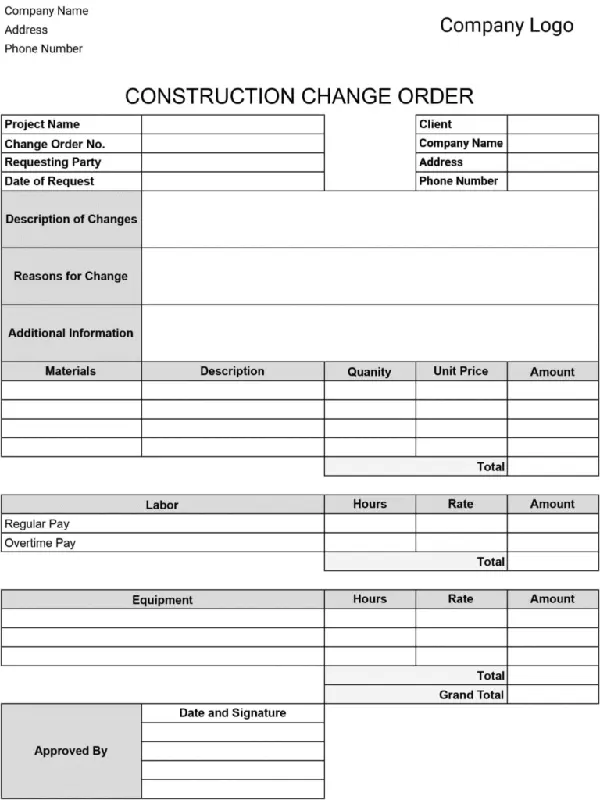
Construction change orders are documents that alter a construction contract, and are in writing. They document a consensus that the scope of work, contract price, project completion schedule, and other components of the original project scope will change.
Normally, change orders are given once the original construction contract is signed. They provide flexibility for new needs, unexpected site conditions, design changes, changes of material content, and other factors that could occur in construction.
For example, a homeowner is looking to upgrade their kitchen cabinets and laminate countertops or upgrade their outdated house to a modern look. However, after starting the project, a homeowner chooses to upgrade to custom cabinets and granite countertops. Because these materials require extra labor and cost, a change order is drawn up by the contractor, with a detailed description of the extra work, expenses, and as-needed time adjustments.
Before any additional work is done, both parties will look at and approve the document.
A construction change order usually contains the following elements:
- Details of the project and original contract reference.
- Detailed statement of the proposed change.
- Explanation of the need for the change.
- Extra or reduced labor and material expenses.
- Changes to the project completion schedule.
- Revised contract value.
- Approval and signatures of those concerned.
When it comes time to make a change, it is not just an administrative document. It will legally record the amended agreement and will be beneficial in the event of a dispute later.
Why are Change Orders Important in Construction?
As construction goes on, changes are inevitable, but if they are not documented, then they can cause a lot of confusion in a hurry. A contractor might think there is more work to be done; the property owner could think it was in the initial quote, etc.
Thus, a well-drafted change order can avoid such issues.
Here are more reasons why change orders are so important:
- Control Budget: Any change can result in increased or decreased costs for any project. They record the financial impact prior to taking up the revised work, which assists owners in making sound spending decisions, a type of change order.
- Avoid Contractual Conflicts: Written approval sets the expectation of what they agreed to. It will help to prevent conflicts over extra work, billing, and project expectations.
- Handle Project Schedules: When modifications such as material, labor, or construction methods are involved, the completion dates can be impacted. When scheduling changes are made, it is important to keep a record to inform contractors about the realistic timeframe for the project.
- Accountability: A change order will outline that work is to be done, who it is to be done by, the status of the change order, and the agreed terms. This will provide a reliable record for future reference.
- Better Project Coordination: This aspect can be enhanced as architects, contractors, and suppliers will all have access to the same up-to-date information rather than verbal instructions.
Types of Construction Change Orders
Construction change orders can be classified based on their impact on the project’s scope and contract price. Knowing these categories allows project teams to determine the value of changes and control the financial impact.
1. Additive Change Order
An additional scope of work that adds to the original is written in the newly drafted document. It typically leads to extra costs for the project since the contractor is required to bring in extra materials, labor, equipment, or services.
A building owner for a commercial building can decide to add a ground-floor restroom during construction. The contractor is responsible for covering the cost of new plumbing fixtures, electrical work, labor, and installation costs.
Any additional work and its effects on the budget and schedule are recorded in an additive change order.
2. Deductive Change Order
A deductive change order is when part of the scope of the original project is eliminated or cut. When the contractor no longer has to finish some of the park, the contract value is generally lower.
A property owner intending to do renovations on a residential property may choose to take out a built-in wardrobe from the bedroom to save money. The contractor can issue a deductive change order to record the omitted work and corresponding reduction in the contract amount.
The deduction, however, should include the cost of materials that have already been bought, work that has been done, or any other costs that will still be paid for under the contract.
3. No Cost Change Order
A no-cost change order is a change or alteration that does not affect the contract price. This could be a change in material, a slight design change, or a different building technique if there is no monetary impact.
For example, a contractor might change one accepted type of electrical fitting to another equivalent or upgrade a door lock to a higher-quality one during renovation, albeit more costly.
While the amount of the contract does not change, the change should still be documented if it alters the scope and the requirements of the contract.
Keep in mind that a change that costs nothing can have no impact on time. The project’s schedule might still need to be adjusted if the replacement materials are not delivered in time.
Common Reasons for Construction Change Orders
There may be several reasons that necessitate changes once construction is underway. Some are a property owner’s fault; others are due to technical problems or unforeseen conditions of a project.
Here are possible reasons:
- Unexpected Site Conditions: Contractors may find the soil is not suitable, that utilities are underground, that it is structurally damaged, or other conditions that were not observed during initial inspection.
- Design Errors or Omissions: Inadequate measurements or conflicting drawings and specifications can lead to revisions in the design.
- Availability: Approved substitutions may be required due to material availability issues such as shortages, discontinued items, or supplier delays.
- Regulatory Changes: Any new building code or safety requirements or local regulations may require further construction.
- Change in Method: If a different way of construction is identified that is more practical than the original agreement, a change may be necessary.
The identification of the cause of the change is crucial since it is important to know who should bear the extra cost and whether a time extension is warranted.
How Does a Construction Change Order Process Work?
A system of a structured change order process allows for every change to get reviewed, priced, approved, and executed properly. While the exact process will vary with the construction contract, most projects will go through these steps:
1. Identifying the Required Changes
The process starts with finding a change that impacts the original contract. This could be requested by the owner, contractor, architect, or project manager.
Let’s say, in a building renovation, the contractor could find that the wall in the building has a structure that is not included in the drawings. This finding might necessitate a redesign and rework.
The project team should now record the issue, define the impacted work, and communicate with the appropriate people as per the contract.
2. Prepare a Request
When a need for modification is determined, a change request is drawn up by the contractor or the responsible project participant.
The request should include reasons and what changes are needed. Revised drawings, photographs, site inspection reports, and technical specifications may help to determine the reason for the modification.
A well-prepared request will help to specify activities or risks that may need to be suspended.
3. Check the Cost and Schedule Impact
The contractor provides an approximation of the budget and schedule impacts of the proposed changes for the project.
The cost evaluation can comprise:
- Other labor and subcontractor costs.
- Cost of materials and equipment.
- The cost of transformation and delivery.
- Also, applicable taxes, insurance, and overhead.
- Contractor profit or markups agreed.
- Costs associated with removing or redoing completed work.
The contractor should also check if the change will impact the project’s critical activities or if it will cause delays in other activities.
For instance, the manufacturing process of custom windows may be pricier, and the delivery date may be longer than the standard window. The two impacts should have been included in the proposal.
4. Review and Negotiate the Proposal
The proposed modifications are reviewed by the owner, contractor, architect, or authorized representative.
They evaluate the need for the work, the budget, and the proposed new schedule timing. If the price or coverage is not specified, both parties can ask for clarifications or renegotiate the price and coverage terms.
The key point here is that this stage is very crucial, as it is understood that accepting the overall concept of a change does not mean accepting its costs or completion order.
5. Prepare Formal Change Order
Once all the necessary terms have been agreed upon, the formal change order document is created.
It must explicitly state the new scope, new resources, new costs, new time, and new contract value.
AIA G701 is a typical standard form for recording agreed-upon change orders in projects that use the AIA contract documents.
ConsensusDocs forms or their own forms for each project may be used for other projects. Depending on the agreement for the government, the type of document required is defined.
Also Read: Renovate to Rent: How Investors Finance a Property They Plan to Hold
6. Obtain Written Approval
The change order is presented to the authorized parties to view and sign.
The number of needed signatories is dependent upon the structure of the contract and project. The document is signed by the owner, contractor, and architect in a typical owner-contractor-architect relationship in accordance with the AIA change order procedure.
The parties should check the final version to ensure that it accurately represents the agreed scope, price, and timeline before they sign.
In the case of contractors, don’t assume or take informal conversations for granted as an approval to undertake additional work that will be billed to the client. If the work cannot be postponed while the pricing is being done, the required written directive, as per the contract, should be adopted.
7. Implement and Track the Change
Next, implement the change and track its effects. With the agreed authorization, the contractor can move ahead with the project terms agreed upon. Construction drawings, schedules, estimates, procurement records, and payment records should be updated by the project team to reflect any changes.
Also, a change order log should be kept and include all changes and whether they have been approved.
How Much Does a Construction Change Order Cost?
The price of a construction change order is not set. The price will vary based on the type of modification, size of a project, materials used, labor needs, and contract pricing.
An alteration that means just a couple of replacements will likely only affect costs a bit. Changes to a building’s structural design or the addition of a new floor, however, can prove to be a high cost.
A modification to the contract may be caused by:
- Labor and material costs of extra work.
- Rental and moving of equipment.
- Subcontractor charges.
- Demolition and rework costs.
- Contractor’s overhead and profit.
- All taxes and insurance.
A few building contracts also include allowances for overhead and profit. These percentages should be verified against the actual contract and are not necessarily applicable for every project.
Example of Construction Change Order
Let’s suppose a contractor is asked to add an upgraded ceiling in an office building. The estimated cost includes:
| Costing Elements | Total Amount |
| Additional material for new ceiling | $2000 |
| Extra labor time | $1500 |
| Construction equipment and transportation | $500 |
| Direct costing | $4000 |
| New overhead cost and profit (15%) | $600 |
| Total cost of change order | $4600 |
The basic change order construction equation is:
Change Order Cost = Direct Cost + Applicable Overhead and Profit
Difference Between Change Order and Construction Change Directive
A change order is a document that records the change in scope, cost, and schedule once the parties agree upon the scope of change, the cost, and the schedule changes.
Whereas in some situations, the work must continue, but the adjustments to the contract in terms of money or time have not been agreed upon, it is then necessary to use a Construction Change Directive (CCD).
The owner might, for example, give a contractor an authorizing written consent to continue work on a renovation if there is a serious issue that requires urgent attention until cost can be determined.
Under the applicable AIA contract procedures, a CCD can be utilized to maintain progress of the work until a change order has been properly negotiated.
Contractor’s Guide to Change Order vs Addendum
The basic difference between these documents is that they are issued at different times.
Addenda are issued after the bidding documents have been created but before the construction contract’s signature. It provides the information to the prospective contractors of the changes that should be considered for their bids.
A change order is a change in an existing construction contract once it has been executed.
An addendum deals with changes that occur prior to the agreement, and change orders deal with changes that occur after the agreement.
Best Practices to Manage Construction Change Orders
There’s a lot more that goes into managing change orders efficiently than documentation and signatures. It requires prompt design, quick communication, and proper monitoring. To help you handle it, we have given a few helpful tips for maneuvering the situation:
- Read through the Original Contract Thoroughly: Do not ask to make any changes until you have read through the procedures, notification periods, approval, and pricing rules.
- Record Changes as Soon as Identified: Record the reason for change, work affected, and site conditions when changes are identified. Waiting until finished will lead to a problem in determining the event.
- Break Down Costs in Detail: Don’t provide an undetailed cost. Breakdown of the costs of labor, materials, and equipment, plus other costs, simplifies the review of the proposal.
- Get Written Permission: Be sure that the person granting permission has the authority to do so. There should be a written record of the required information if verbal instructions are given.
- Keep Change Order Log: Record submitted, pending, approved, rejected, and completed changes. Add their personal costs and the total impact on the contract.
Final Words
In construction projects, where requirements or site conditions change over the course of the project or design decisions are made, construction change orders are an essential part of the project management process. They assist owners and contractors in keeping costs, schedules, and contractual obligations under control, as well as maintaining proper documentation of all modifications. The main points are to deal with changes early, to provide realistic cost quotes, to ensure the necessary written authorizations, and to have up-to-date project records.
Read Next: Moving With Valuable Furniture? How to Prepare Delicate Items for Transportation
FAQs
Who issues the construction change order?
Can a contractor refuse to execute a change order?
A contractor can raise questions if he does not agree with the modification terms, its scope, and pricing. But the contract might need to be carried out under an authorized change of direction until the conflict is addressed.
What is the time for signing a change order?
Where practicable and in accordance with the contract, a change order should be signed by the appropriate parties before the additional work is performed. This will help to build a shared understanding of scope, cost, and schedule.
Related Posts