Yes, with reduced airflow and elevated moisture, mold growth becomes simple.

What Are Soffits? How These Roof Components Help Prevent Mold in Australian Homes
A proper roofing system doesn’t end at fixing possible leaky parts and applying tiles to them. It also demands proper support through architectural elements that support the entire building.
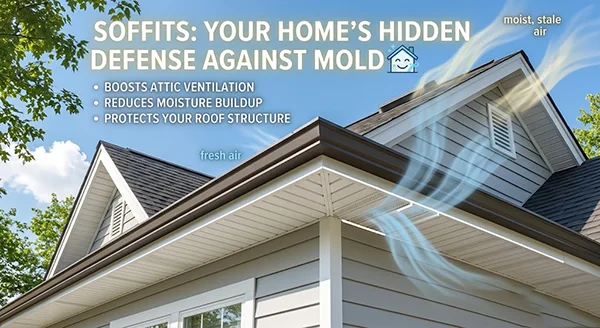
And this is exactly where soffits ensure things. They work behind the scenes and effectively prevent mold, support ventilation, and regulate the moisture. While being easy to miss, they play a crucial role in keeping the home dry, breathable and mold-free.
Read more to learn what is a soffit and how they help prevent mold in homes.
Key Takeaways
- Soffits are easy to ignore, but they play a big role in ensuring a safe and healthy home.
- Their main purpose is to ensure better airflow in the attic – that helps prevent mold growth.
- Cleaning mold without fixing the airflow is only a temporary solution for the problems.
Table of Contents:
What Is a Soffit?
In simple terms, a soffit is the flat surface that is visible to you underneath the overhanging part of your roof. Precisely, it is visible from the edge of the roof.
While it might look like a simple and traditional finishing thing. In reality, it often includes ventilation openings that ensure a proper flow of air into your attic and help to regulate the moisture and temperature in it.
How Soffit Helps Prevent Mold
Soffits are not just structural elements—they actively make considerable contributions to support your home’s health. Below are the three major aspects they help with:
1. Promoting Proper Ventilation
Soffits provide natural lungs to your home. They become capable of actual breathing. The fresh air enters the attic and maintains the right temperature and regulates humidity levels.
Without this, a warm temperature with moist air is trapped, which is an ideal case for mold to arise.
2. Preventing Moisture Accumulation
Routine activities such as cooking and showering add humidity to the space. And surprisingly, the air we breathe in is part of this.
When this moist air has no space to go outside, it collects in your attic. Soffits help push this air out and create an optimal environment.
3. Protecting Structural Timber
Moisture does not support the mold – it also weakens the structure of your home. By ensuring the dry attic, soffits protect wooden beams, rafters and insulation from long-term damage.
Signs of Mold Problems Related to Soffits
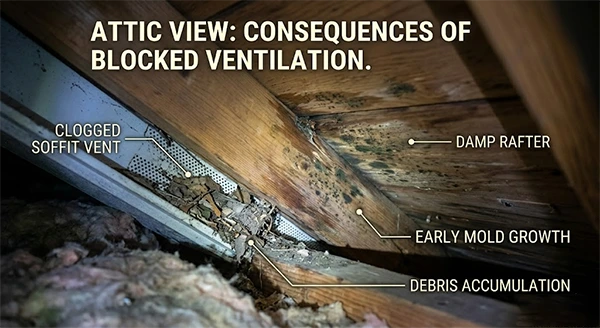
Mold issues are not something that appears overnight. They grow slowly and show very subtle things – both outside and inside your home. Being aware of these early can help avoid expensive repairs in the future.
Exterior Signs
- Cracked paint near the roofline
- Dark stains under eaves
- Slightly visible on soffit panels
These signs usually indicate that there are possible signs of trapped moisture.
Interior Signs
- A strange smell in the attic
- Damp insulation
- Dark spots on the walls
These are strong signs that moisture is building up.
Interesting Fact
According to the U.S. Environmental Protection Agency, most old attic issues don’t come from leaks—they come from poor ventilation.
Dealing with Mold When It Appears
Most folks feel uneasy spotting mold, yet handling it properly makes things easier. Tiny spots? They’re manageable on their own. Bigger areas call for slow steps instead of quick fixes.
Minor Surface Mold
For small spots, one can wear gloves and use a cleaning agent or solution like vinegar to clean them completely. Just remember that cleaning it completely without fixing the airflow may welcome it again.
When to Call Professionals
The moment you feel it cannot be controlled easily, requires major efforts, and is spread in significant areas, look for a professional mold removal service, such as https://kleenslate.com.au/mould-removal-perth/, who guarantee considerable results.
Minor efforts can’t actually fix the concern completely. It might control things for a while, but not for a long period.
Simple Maintenance Tips for Homes
While soffits do not require constant attention, a bit of regular care can avoid major issues. Ensuring some functionality keeps the home properly ventilated.
- Check vents for dust and dirt
- Inspect for damage after harsh weather
- Make sure insulation is not hindering the proper airflow in the attic
These are simple and easy-to-do tips for home maintenance.
Why Soffits Matter More Than You Think
For this reason, the soffit doesn’t interact with you every day, so it seems easy to overlook. But they quietly manage airflow, protect the structure and help to maintain indoor air quality.
Ignoring them can result in moisture issues that slowly damage your home over time.
Conclusion
Hidden spots often cause mold problems, even without visible leaks. Tiny parts – soffits, for example – can quietly lead to big effects.
Most folks overlook how soffits shield their house – yet airflow, steady temps, and dampness control play quiet but vital roles. Over time, just checking now and then keeps things from turning soggy or growing fuzzy spots.
In the end, it is not something to continuously worry about, but it should definitely be inspected on time.
FAQs
Can a damaged soffit lead to mold?
How often should soffits be checked?
If nothing else, at least twice a year and especially after heavy storms and unpleasant weather.
Is it possible to clean soffits by oneself?
Yes, basic cleaning can be done easily. But for major problems, a professional needs to be called.
Related Posts