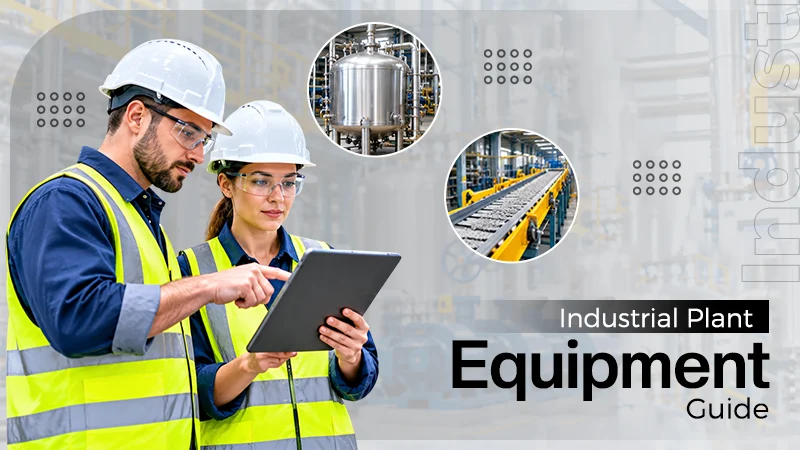
Industrial plant equipment includes pumps, compressors, boilers, generators, conveyors, motors, heat exchangers, and industrial machinery used in manufacturing and production.

What Is Industrial Plant Equipment? A Complete Guide for Facilities and Operations Teams
Industrial plant equipment is a very important part of every manufacturing process. It includes and adds the machines and system to turn the raw materials into a ready and finished product. The equipment that you choose defines how the safety, production and running cost will work for the coming years. This article will help you know what are the things that you should consider before buying, maintaining, and replacing the equipment.
Defining Industrial Plant Equipment
Industrial plant equipment is the collection of machines and systems installed in a plant to carry out production and take care of the activities. It ranges from bigger fixed installations such as boilers and compressors to smaller units like pumps, conveyors and control panels. Some of it take care of the product directly, while the other keeps the site running, supplying power, air, water, heat and cooling.
The term is wider than “machinery” alone. It includes the equipment itself, the connections between pieces, and the controls that coordinate them. A plant is rarely a set of isolated machines. It is a connected system, and the performance of one item mostly depends on the condition of another.
Main Categories of Industrial Plant Equipment
Most industrial plant equipment is divided into a handful of groups, each with its own role on the floor.
Process and Production Machinery
This is the equipment that actually changes material. Depending on the industry, it can include mixers, reactors, extruders, presses, mills, lathes, packaging lines and filling systems. Process machinery is mostly specified around all of it, precision and the kind of material being handled, and it tends to be the most specialized and cost heavy part of a plant.
Material Handling Equipment
Material handling moves product and components through the site. Conveyors, forklifts, cranes, hoists, pallet systems and automated guided vehicles all belong to this place. Good material handling lessens manual lifting, shortens cycle times and keeps work flowing between stages without bottlenecks.
Utility and Power Equipment
Plants depend on limited utilities. Boilers, chillers, air compressors, generators, transformers and water treatment units provides the energy and media that production equipment required. When utility equipment doesn’t perform well, the effects show up at all the places downstream, from inconsistent product quality to unplanned stoppages.
Pumps, Valves and Piping Systems
Fluid handling is directed to chemical, food, water and energy plants. Pumps move liquids, valves takes care of the flow and pressure, and piping takes all the things between points. These components are often unseen until a failure occurs, yet they have a large influence on efficiency and safety.
Control and Automation Systems
Programmable logic controllers, sensors, drives and supervisory software let a plant work with reliability and stability. Modern industrial plant equipment is mostly networked, giving operators real time figures on speed, temperature, pressure and energy that is getting used. Control systems also make it easier to increase production and to see the problems before they become failures.
Safety and Environmental Equipment
Dust collectors, fume extractors, fire suppression, emergency stops, guarding and effluent treatment helps people and the surrounding environment. This category is shaped very well by regulation, and it should be treated as an important part instead of an option.
Choosing the Right Industrial Plant Equipment
Selecting industrial plant equipment is a bigger commitment, so it pays to work through the decision methodically. The following ways keep the process grounded in real operating requirements.
- Define the production requirements, including volume, product range, tolerances and expected success over the next five to ten years.
- Assess the empty space, utilities and building constraints, since floor loading, ceiling height, power supply and ventilation can limit what is practically possible.
- Compare total cost of ownership instead of the purchase price alone, accounting for energy use, maintenance, spare parts and expected service life.
- Check equipment with the safety, environmental and industry standards that apply to your sector and region.
- Evaluate the supplier, looking at technical support, parts availability, lead times and references from similar operations.
- Plan installation, commissioning and operator training before the equipment comes down, so downtime during changeover stays shorter.
Skipping any of these steps is a common source of expensive surprises later.
New Versus Used Industrial Plant Equipment
Buyers often take care of the weight of the new machines against used or refurbished units. New industrial plant equipment offers the latest technology, full warranties, better energy efficiency and a predictable service life. It also costs more by paying directly once and can involve long manufacturer lead times.
Used and refurbished equipment can provide strong value, particularly for well built machines with a long record of stability. It is often available faster, which helps when a line is down or a project is on a tough schedule. The tradeoff is that condition changes, documentation may be not done properly, and older controls can be tougher to integrate or support.
A sensible approach is to inspect used machinery in person, review maintenance records, confirm that parts are still obtainable, and test operation under load wherever possible. For critical equipment where the failure would halt the whole plant, many operations favor new units, while using refurbished plant machinery for optional or lower risk applications.
Maintenance Strategies That Protect Your Investment
Even the best industrial plant equipment will underperform if not given the consistent care. Maintenance approaches generally fall into three different types.
Reactive maintenance means repairing equipment after it stops working. It requires no planning but takes up the highest cost, since breakdowns stop production and often cause secondary damage.
Preventive maintenance follows a schedule based on time or usage, not showing lubrication, inspection, calibration and part replacement. It reduces surprise failures and extends equipment life.
Predictive maintenance uses the condition to determine data such as vibration, temperature, oil analysis and power draw to choose when work is actually needed. It avoids unnecessary servicing while catching developing faults asap, and it is becoming more accessible as sensors and monitoring software get cheaper.
Most plants use a blend. Critical assets get predictive monitoring, routine items follow a preventive schedule, and low impact components may run to failure by design. Keeping exact records for every asset makes each of these strategies work flawlessly and smoothly.
Safety Considerations for Plant Machinery
Industrial plant equipment includes moving parts, high pressure, electrical hazards, heat and sometimes hazardous materials. Safe operation depends on a combination of good design, proper installation and disciplined procedures.
Machine guarding keeps people away from moving components. Lockout and tagout procedures make sure the equipment is fully separated and de-energized before anyone works on it. Regular inspections of pressure vessels, lifting gear and electrical systems catch wear before it becomes a problem. Clear signage, trained operators and well rehearsed emergency ways complete the picture.
Safety should be taken care of at the specification stage, not added afterward. Equipment chosen with safety features built in is mostly cheaper and more dependable than a retrofit.
Energy Efficiency and Sustainability
Energy is one of the largest running costs tied to industrial plant equipment, which makes sustainability a financial priority as well as an environmental one. Variable speed drives allow motors and pumps to match answers to demand instead of running flat out. Heat recovery systems capture escaped heat from compressors, furnaces and process exhaust and put it to use at other places. Compressed air systems, which are notorious for leaks, respond well to regular audits and repairs.
Upgrading older motors, improving insulation and tuning control systems can each give meaningful savings without changing entire machines. Over the life of a piece of equipment, energy often price far more than the purchase price, so efficient models tend to pay for itself.
Signs it is Time to Replace Equipment
Not every aging machine needs to be clear, but certain warning signs suggest that changing it altogether makes more sense than continued repair. Repair costs that approach a significant share of replacement value, frequent unplanned downtime, tough sourcing parts, falling product quality, and rising energy consumption all point in that direction. So does equipment that can no longer meet current safety or environmental standards.
Planning replacement ahead of failure gives you control over timing, budget and specification. Waiting for a breakdown mostly means paying more and accepting whatever is there quickly.
Building a Reliable Plant for the Long Term
Industrial plant equipment is more than a list of products. It is a system that has to be specified carefully, installed in a right manner, maintained consistently and updated as demands differentiate. The plants that perform best take care of their equipment as a long term investment, backed by good records, trained people and a clear plan for every stage of the equipment lifecycle.
Whether you are commissioning a new outlook, expanding an existing line or modernizing aging machinery, a clear understanding of the main equipment categories, ownership costs and maintenance options will take you to better decisions and fewer disruptions.
FAQs
What are examples of industrial plant equipment?
Why is industrial plant equipment important for daily operations?
It helps facilities run production processes smoothly, maintain product quality, reduce manual work, and improve overall efficiency.
How often should industrial plant equipment be maintained?
Maintenance depends on the equipment type, usage, and manufacturer’s guidelines. Regular inspections, cleaning, lubrication, and timely repairs help prevent unexpected breakdowns and extend equipment life.
Related Posts