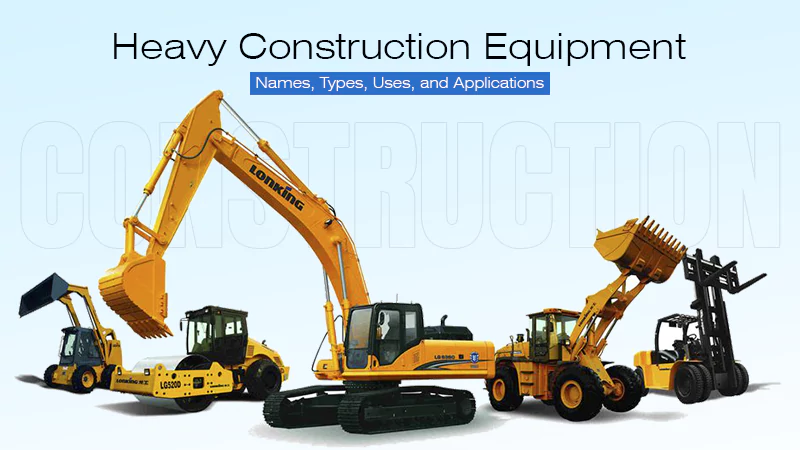
Ans: Construction vehicles are commonly referred to as heavy-duty equipment or construction machinery. The examples of types of construction vehicles are: excavators, road rollers, cranes, and dump trucks.

27 Types of Construction Vehicles with Their Names, Pictures, and Features
When it comes to building the world around us, construction vehicles are the real MVPs to support modern infrastructure. These powerfully engineered machines turn the blueprint into buildings.
We’ve prepared a list of 20 construction vehicle names and features, from the miniature construction vehicles to the most common ones found on job sites worldwide. Whether you’re a curious mind, an engineering student, or just want to know new facts, read this blog thoroughly to learn about the machines that make construction projects successful.
Table of Contents:
1. Excavator
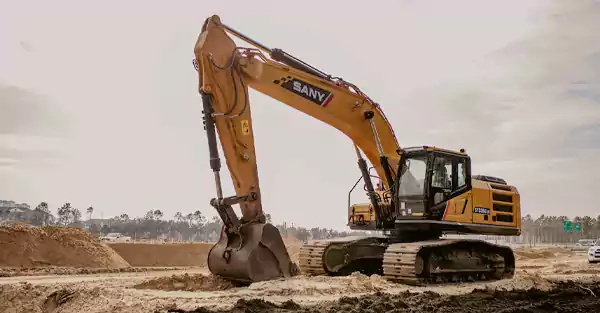
Excavators are found on every construction site-from building malls to roads. These vehicles are primarily useful for digging, lifting, and excavating soil and debris to clear out the area. Talking about the build, they are made of powerful hydraulic systems and have a bucket-like shape in front of the machine to dig up and carry the materials and are commonly seen among types of construction vehicles and types of heavy equipment names.
These are the powerful features of excavators:
- Made with a hydraulic-powered boom engine and arm at the end.
- Has a track and wheelbase for movement.
- Comes with interchangeable attachments for multiple job purposes.
| Starting Price (Approximation): $42,000–$72,000 Things to Consider While Purchasing:
|
2. Bulldozer
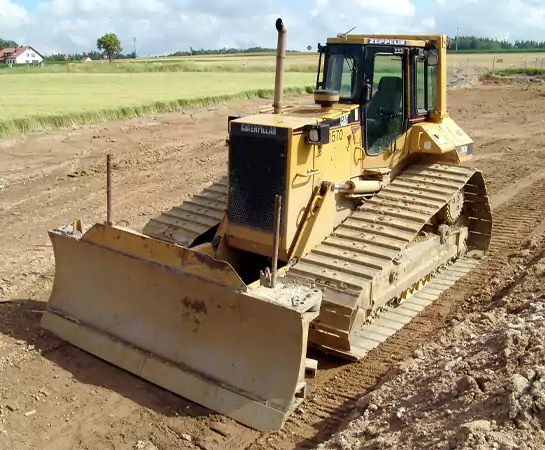
Bulldozers are strong, massive machines made to push massive quantities of materials, a common example in the types of heavy equipment. They have steel blades mounted in the front to level the area and clear the land. Bulldozers are heavy-duty construction vehicles that work best even on rough terrains and complex building projects.
Features of bulldozers are:
- Used for demolition and grading.
- Has a steel blade at the front for pushing heavy material.
- Built with a high-horsepower engine.
- Ripper attachments for breaking the surface.
| Starting Price (Approximation): $72,000–$145,000 Things to Consider While Purchasing:
|
Read more: 25 most expensive houses in America
3. Backhoe Loader
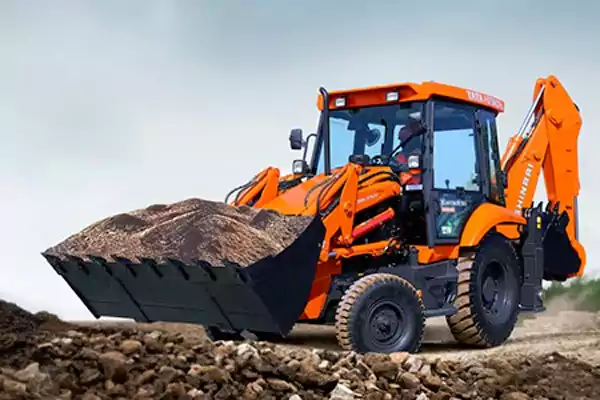
These are compact-sized and the most common types of construction vehicles used in making residential buildings or confined spaces. Backhoe loaders are multi-purpose; they can dig up land, carry the load, and clear out the space easily with the front-end loader and rear-mounted backhoe, making them highly reliable for various construction work machine tasks.
Features of a backhoe loader:
- Works best in tight spaces.
- Has a trunk-like shape to carry heavy loads.
- Has dual-function properties with front-end and backhoe.
| Starting Price (Approximation): $30,000–$54,000 Things to Consider While Purchasing:
|
Read more: Average square footage of a house
4. Wheel Loader
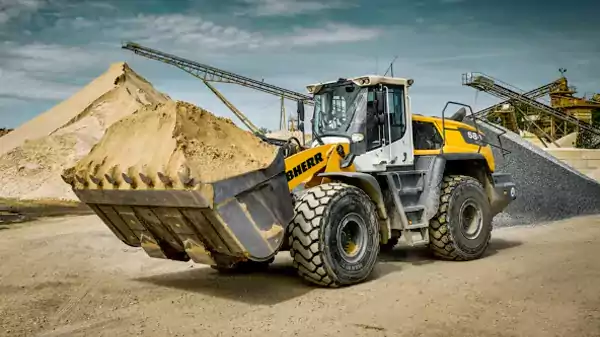
Construction sites need a lot of moving of materials, and wheel loaders do that job. These are utilized for gathering, elevating, and moving loose substances such as soil and gravel. They operate on wheels and have big bucket-like structures attached in the front , making them one of the necessary construction machines.
Features of the wheel loader are:
- Has a front-mounted bucket to lift material.
- Stand on wheels for faster movement.
- Powers multiple attachment compatibility.
| Starting Price (Approximation): $60,000–$120,000 Things to Consider While Purchasing:
|
5. Motor Grader
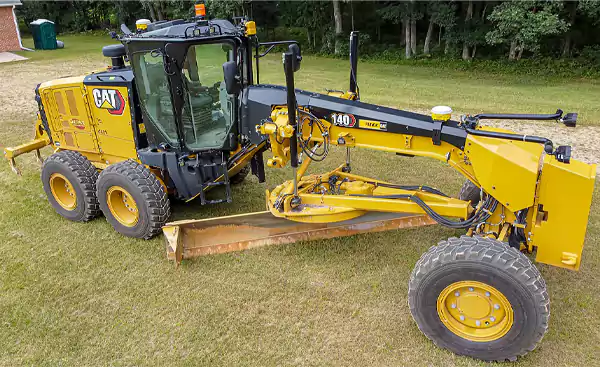
As one of the common types of construction vehicles, Motor graders are utilized to produce a level or sloped surface during the construction and upkeep of roads. These machines feature a lengthy adjustable blade positioned between the front and the rear axles, which can be precisely adjusted to achieve the desired surface level.
Features of the motor grader are:
- Has big adjustable blades.
- Built with a high-precision control mechanism.
- A combination of front loader and rear ripper for multiple construction works.
- Used for road leveling and fine grading.
| Starting Price (Approximation): $120,000+ Things to Consider While Purchasing:
|
6. Skid Steer Loader
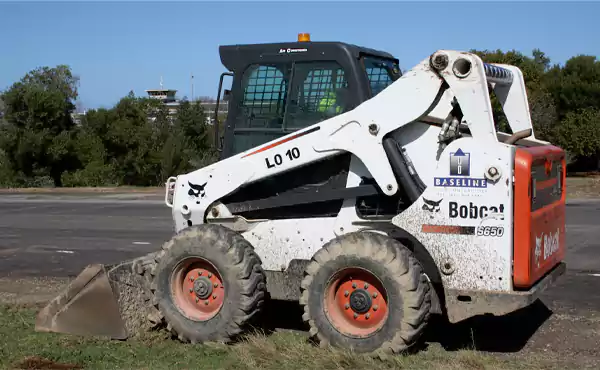
Skid Steer Loaders, a common addition to the types of heavy equipment used on job sites, are manoeuvrable, miniature construction vehicles that are highly versatile. They have built-in arms that can be interchanged according to the job’s needs, such as scraping, levelling, and lifting. In addition, these are designed with a small footprint and zero radius turning operating, making them a perfect fit for tight spaces.
These are the features of skit steer loader:
- Miniature-sized machines with zero-radius turning.
- Multiple tools and attachments that can be interchangeable.
- Useful in small projects.
| Starting Price (Approximation): $24,000–$36,000 Things to Consider While Purchasing:
|
Read more: Houses for Sale Under 300K
7. Dump Truck
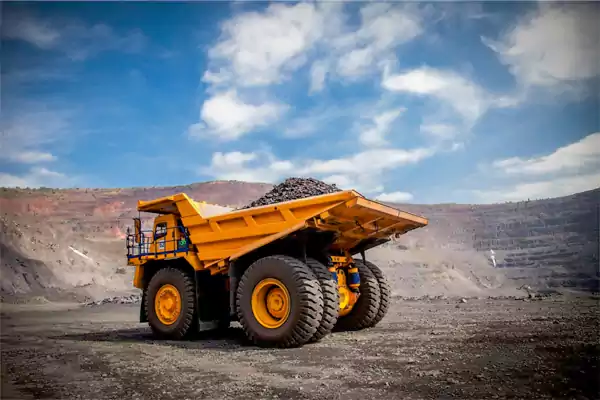
As the name suggests, these trucks are primarily used after demolition to pick soil and gravel away from the construction area. They have an open bed-like structure to store the material with the help of hydraulic rams, placing them among the widely recognized types of construction vehicles. Dump trucks are the most common construction vehicles you will see on the site for carrying in and out building materials.
These are the features of dump trucks:
- Heavy-duty, built to handle a massive amount of soil and debris.
- They are available in many sizes depending on the project’s capacity.
- Primarily used in excavation and demolition projects.
| Starting Price (Approximation): $48,000–$240,000 Things to Consider While Purchasing:
|
8. Concrete Mixer Truck
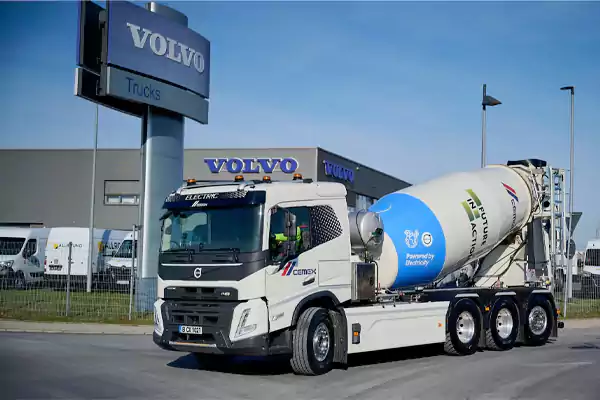
Concrete mixing is an intensive job that requires continuous mixing to avoid hardening waste. Thankfully, concrete mixer trucks were introduced to eliminate manual labor. These specialized trucks, an important construction work machine for rotating drums that blend cement, stones, and water and ensure a uniform mix.
These are the features of concrete mixer trucks:
- Attached the pump to deliver the ready-to-use concrete.
- Prevents the concrete from hardening with continuous rotation.
- Works for all types of construction projects.
| Starting Price (Approximation): $84,000–$180,000 Things to Consider While Purchasing:
|
9. Crane
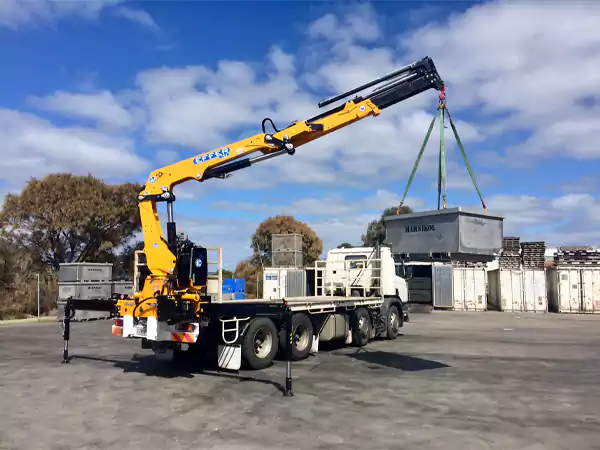
A crane is a big vehicle in the world of construction that moves horizontally and vertically. It has large sheaves and a wire rope attached with a hook to load up heavy material. As one example of a construction crane, this trunk-like structure operates via a lever and a pulley system, giving it a mechanical advantage, while many others fall under the broader types of construction vehicles used across job sites.
These are the features of a crane:
- Has a tall arm and boom.
- Has attached wire rope and hooks.
- The rotating base helps to move in all directions.
| Starting Price (Approximation): $90,000–$360,000 Things to Consider While Purchasing:
|
Check Out: What is RFI in Construction? A Naive-Friendly Guide
10. Tower Crane
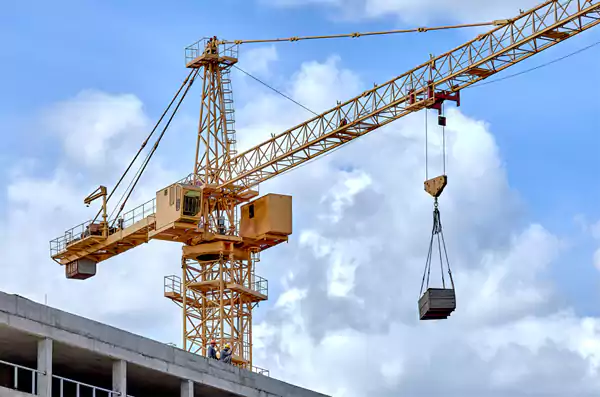
Tower cranes are large construction vehicles primarily used for tall and high-rise buildings. The long arms are attached with a wire rope, offering excellent lifting capability in the large spaces. As advanced construction machines, these were invented in 1949 to rebuild major cities in the post-war era, and today they stand among the essential types of heavy equipment used for vertical construction.
These are the features of a tower crane:
- 360-degree rotation capability.
- A cabin to control the operations.
- Can move objects counterbalancing.
| Starting Price (Approximation): $180,000+ Things to Consider While Purchasing:
|
11. Crawler Crane
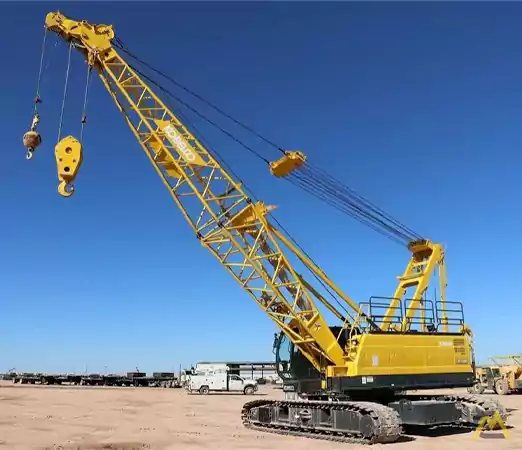
Crawler cranes are another heavy-duty construction machine differentiated from other cranes because of their crawler tracks. These are built to navigate the rough terrains where the wheels might get stuck. In the classification of types of construction vehicles, they consist of expandable and retractable booms and use hydraulic systems for lifting materials.
Some key features of crawler cranes are:
- Has wide tracks that distribute the weight evenly.
- It has a high lifting capacity of a thousand tons of load.
- Offers smooth movement around the rough area.
| Starting Price (Approximation): $240,000+ Things to Consider While Purchasing:
|
12. Truck-Mounted Crane
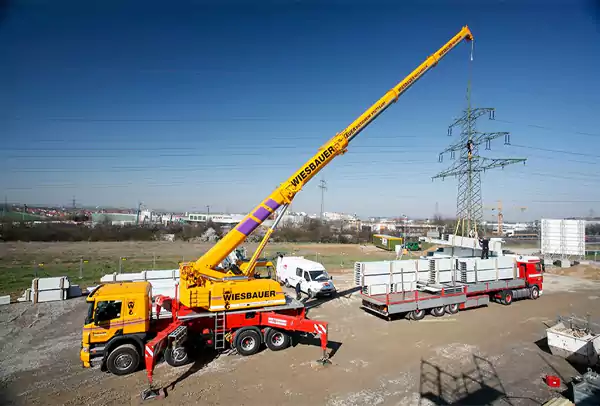
You can say that these machines are a combination of two vehicles: a truck and a crane. It can hoard material in its loading bed and even lift massive weights up in the air. Both the lifting power and road mobility make them versatile and real construction vehicles, often grouped among modern construction trucks.
Here are some key features of truck-mounted cranes:
- An expandable trunk on the head that moves 360 degrees.
- Quick setup and operation booth.
- Bed-like structure to hoard heavy material.
| Starting Price (Approximation): $96,000–$180,000 Things to Consider While Purchasing:
|
13. Paver
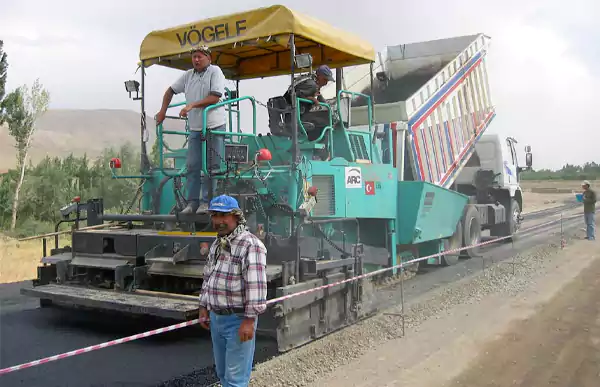
Paver finishers are different types of vehicles in terms of build and mobility. They are primarily used to pump out asphalt, concrete, or cement on the road, in parks, or in other paved areas. Often included in the list of construction vehicles, pavers lay an even layer of material on the ground and provide initial compaction, which is then followed by road rollers to smooth out the surface.
Here are some key features of the paver machine:
- Designed with a conveyor belt for mobility.
- Has adjustable screeds that allow precision and control over the material thickness.
- It has a minimal carbon footprint, contributing to eco-friendly practices.
| Starting Price (Approximation): $72,000–$145,000 Things to Consider While Purchasing:
|
14. Road Roller
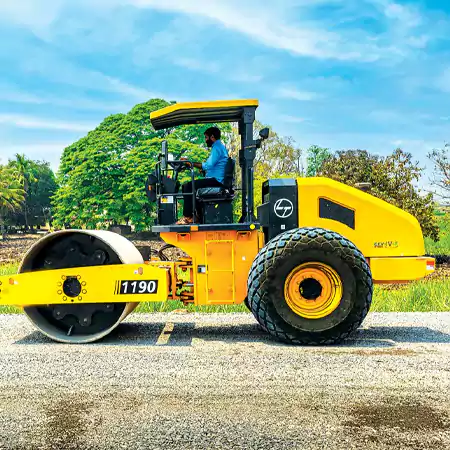
Road rollers are vital construction vehicles that have double drum rollers used for compacting soil and other heavy material, making sure the surface area has a smooth and uniform finish. They are widely recognised within the types of construction vehicles.
Its main applications are: road construction, pothole repairing, and asphalt maintenance. Its vibratory rollers effectively shake the particles together for denser packing and leveling of the surface.
These are key features of road rollers:
- They have adjustable scrapers to prevent material buildup.
- Has a control booth for efficient operations.
- Attach the water tank and sprinklers to lubricate the material while rolling.
| Starting Price (Approximation): $42,000–$60,000 Things to Consider While Purchasing:
|
15. Trencher
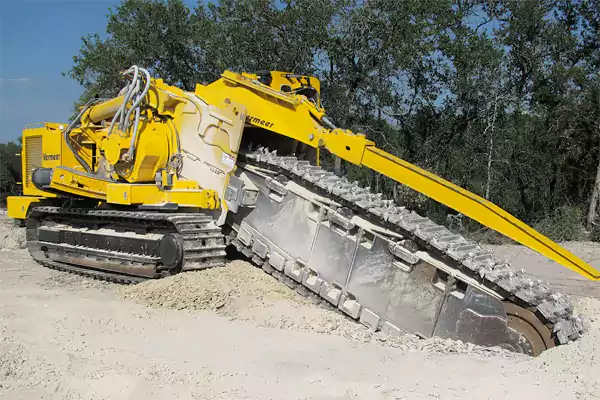
Trenchers are big excavating machines used to dig and excavate trenches in the construction area. They basically work best for laying pipelines, cables, and sewer systems. The powered engine enables them to penetrate and break through the ground, while the conveyor systems help to transport the excavated materials away.
Some key features of trenchers are:
- The modern types: wheel trenchers, chain trenchers, and micro trenchers have a GPS guidance system to remove transit errors.
- Has attached chain and wheel cutting tools.
- The portable trenchers can be used for utility installations.
| Starting Price (Approximation): $60,000–$180,000 Things to Consider While Purchasing:
|
Read more: Average bedroom size complete guide
16. Forklift
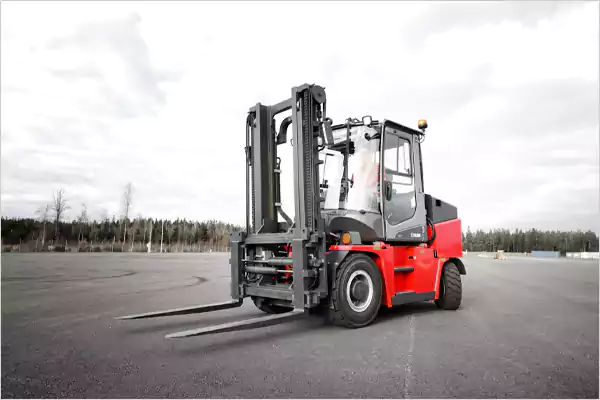
Forklifts are one of the most common types of construction vehicles found in all types of building areas, including warehouses. They are compact, highly maneuverable, and tough enough to lift bricks or steel pallets from one place to another. As versatile construction machines, forklifts come with multiple fuel systems and lifting capabilities, which makes them perfect for both indoor and outdoor projects.
These are the key features of these construction vehicles and their names:
- They are available in electric and fuel-powered engine variants.
- Have hydraulic systems to lift tons of weights.
- Designed in a counterbalanced way to ensure stability.
| Starting Price (Approximation): $18,000–$48,000 Things to Consider While Purchasing:
|
17. Telehandler
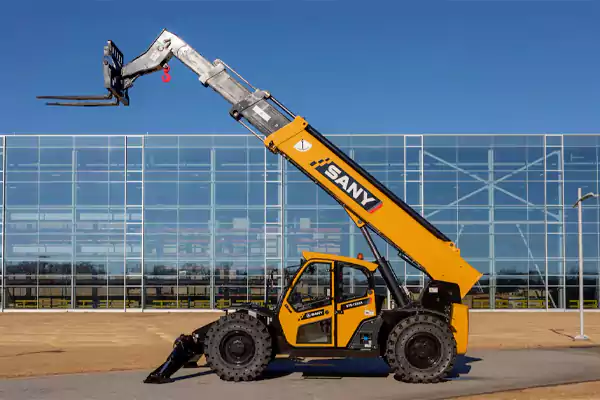
This one’s a versatile machine that merges the functionalities of a crane and a forklift. Featuring a telescopic boom arm used for lifting and positioning of material at height, telehandlers can work even on rough terrains. The expandable boom arm comes with various attachments like hooks, wires, and a bucket, which can be interchanged depending on the construction task.
The features of telehandler machines are:
- Expandable and contractable boom arm.
- Has various attachment abilities with a fork, bucket, or lifting hook.
- Offers greater reach and height compared to other forklift machines.
| Starting Price (Approximation): $48,000–$145,000 Things to Consider While Purchasing:
|
Check Out: Construction Bidding: Learn Meaning, Stages, Elements, Types, and More!
18. Scraper
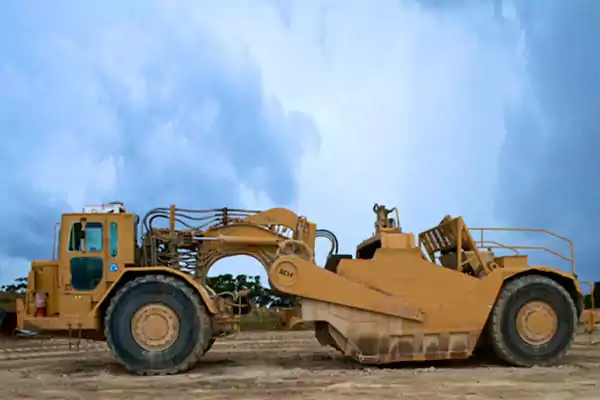
Scrapers are a specialized type of construction vehicle designed for earthmoving. They have the power to cut, gather, and transport massive amounts of soil and debris. The front blade of the machine can cut the soil, and the bowl-like structure then collects and places the material in the designated area. Considered a high-capacity construction work machine, scrapers are huge, and a single machine can handle levelling the large area alone.
These are the key features of scrapers:
- Attached blade in front for cutting and a bowl at the back for loading material.
- Moves a big chunk swiftly in one pass.
- Self-loading and unloading mechanism, reducing manual supervision.
| Starting Price (Approximation): $120,000+ Things to Consider While Purchasing:
|
19. Pile Driver
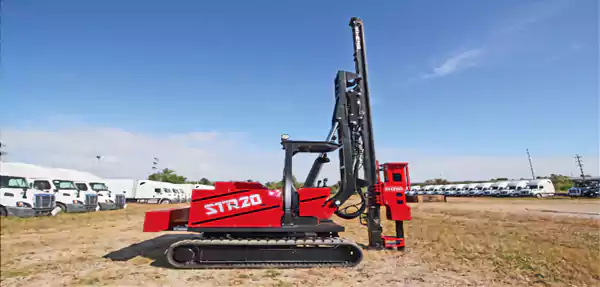
Pile drivers are essential in construction endeavors that require attention to building the foundation. The hammering system of the machine allows it to penetrate deeper and drive deep into foundational layers and place piles into the earth. Often listed within the types of construction vehicles, pile drivers are of chief use when building bridges or offshore platforms on unstable soil.
These are the key features of the pile drivers:
- They have a vibratory driver and a heavy hammer to break the surface.
- Works best against steel, concrete, or timber piles.
- It has a diesel engine and a hydraulic movement system.
| Starting Price (Approximation): $180,000+ Things to Consider While Purchasing:
|
20. Hydraulic Hammer
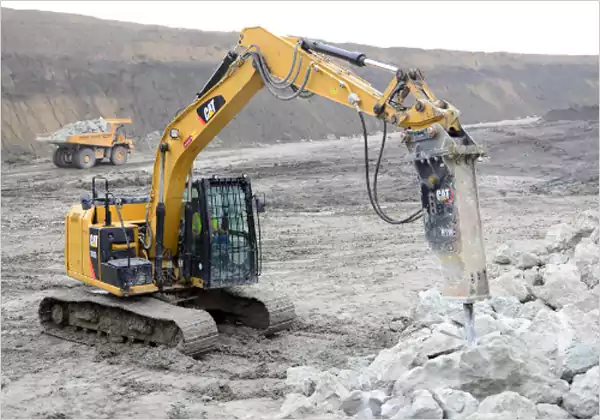
Hydraulic hammers or breakers are robust demolition machines with attached excavators. The hydraulic power engine supplies energy to break and penetrate concrete and rocks smoothly. The contractors or engineers generally use the machine at sites like mining and roadwork, where manual labor can be dangerous, placing them among the essential types of heavy equipment.
These are the features of these big construction vehicles:
- Long boom arms are controlled via an operating panel.
- Hydraulic pressure pumps generate powerful downward strokes.
- Adjustable speed to match the requirements of the task and optimize efficiency.
| Starting Price (Approximation): $60,000–$120,000 Things to Consider While Purchasing:
|
21. Articulated Dump Truck (ADT)
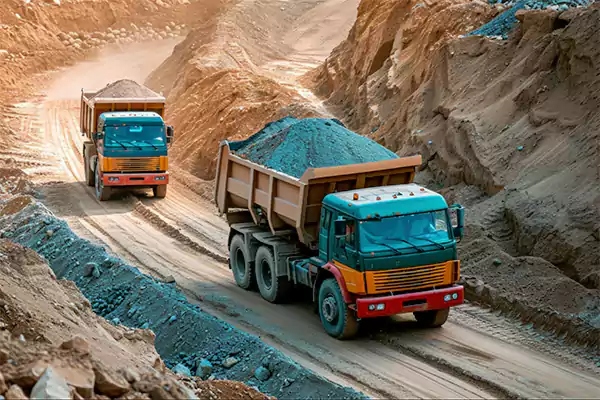
Articulated dump trucks are widely used on large construction and mining sites. Their jointed frame allows them to move easily across rough terrain, steep slopes, and tight corners. These vehicles are specifically designed for transporting heavy loads like soil, rock, and demolition waste from one point of the site to another making them a key part of the types of construction vehicles used for earthmoving tasks.
These are the powerful features of articulated dump trucks:
- Built with a pivoted joint between the cab and trailer for superior maneuverability.
- Designed with heavy-duty tires for high traction on uneven ground.
- Large hauling capacity for fast and continuous material transportation.
| Starting Price (Approximation): $150,000–$350,000 Things to Consider While Purchasing:
|
22. Concrete Pump Truck
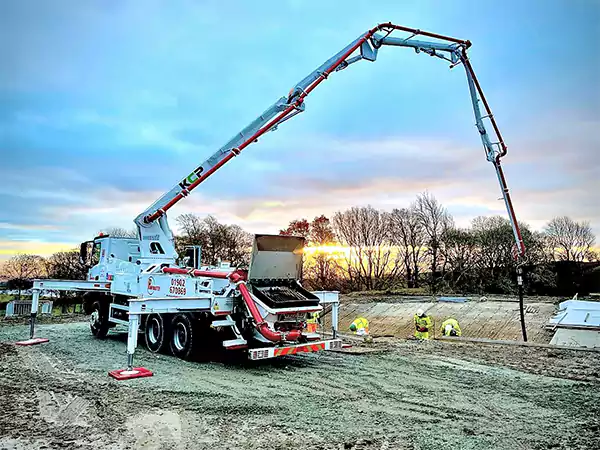
Concrete pump trucks are essential where concrete needs to be delivered to elevated or hard-to-reach areas. With a large extendable boom, these trucks make pouring concrete faster, cleaner, and far more efficiently than manual methods, placing them among the most specialized construction trucks used on modern job sites.
These are the powerful features of concrete pump trucks:
- Equipped with an extendable boom for high-rise and long-reach concrete placement.
- A continuous pumping system ensures smooth and uniform concrete flow.
- Reduces the need for manual labor and accelerates project timelines.
| Starting Price (Approximation): $100,000–$300,000 Things to Consider While Purchasing:
|
23. Compact Track Loader
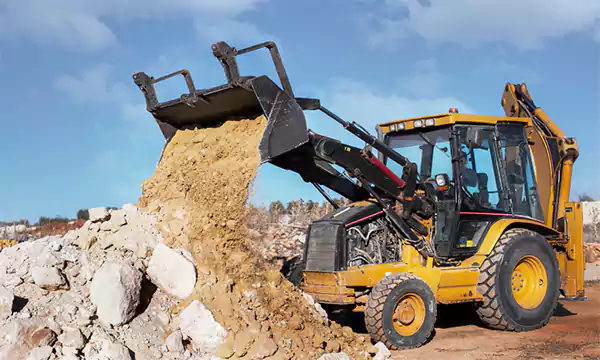
Compact track loaders offer exceptional stability and traction, especially on soft, muddy, or uneven surfaces. These machines are ideal for landscaping, grading, loading, and small-area excavation tasks and they are commonly included in the types of heavy equipment used across construction sites.
These are the powerful features of compact track loaders:
- Runs on rubber tracks for maximum ground grip and low surface damage.
- High-power lifting arms for loading and material handling.
- Supports multiple attachments like buckets, augers, and trenchers.
| Starting Price (Approximation): $40,000–$80,000 Things to Consider While Purchasing:
|
Heavy construction vehicles such as track loaders are frequently used when installing commercial heating and cooling systems because these projects require transporting large equipment, preparing foundations, and ensuring a seamless installation in large commercial properties.
24. Extended Arm Backhoe (Extendahoe)
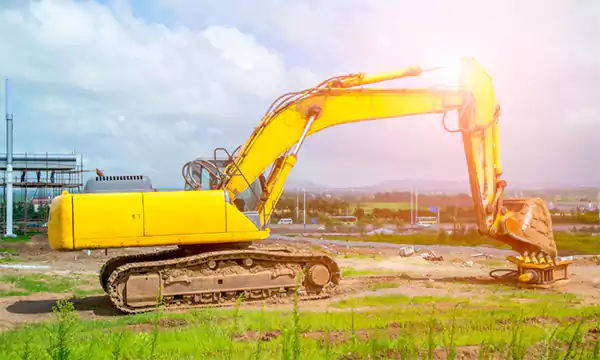
Extended-arm backhoes offer deeper digging reach than standard models. They are perfect for utility work, trenching, and foundation excavation, giving operators more flexibility and power on-site.
These are the powerful features of extended-arm backhoes:
- Extendable dipper arm for greater digging depth.
- Offers both front loader and backhoe functions in a single machine.
- Smooth hydraulic control for precision excavation.
| Starting Price (Approximation): $70,000–$120,000 Things to Consider While Purchasing:
|
25. Grader–Compactor Combination Machine
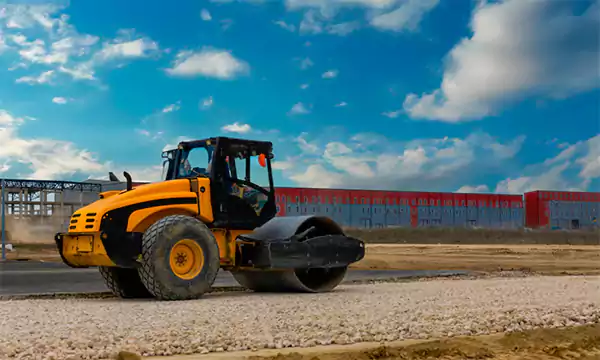
These hybrid machines combine grading and compacting in one unit, making them ideal for road construction and preparation work. They are also recognised within the types of heavy vehicles used for surface preparation, as they create level surfaces and compress material in fewer passes.
These are the powerful features of grader–compactor machines:
- Equipped with a grading blade and compaction drum.
- Saves time by reducing the need for separate machines.
- Effective in road base preparation and surface finishing.
| Starting Price (Approximation): $90,000–$160,000 Things to Consider While Purchasing:
|
26. Push-Pull Scraper (Scraper Dozer)
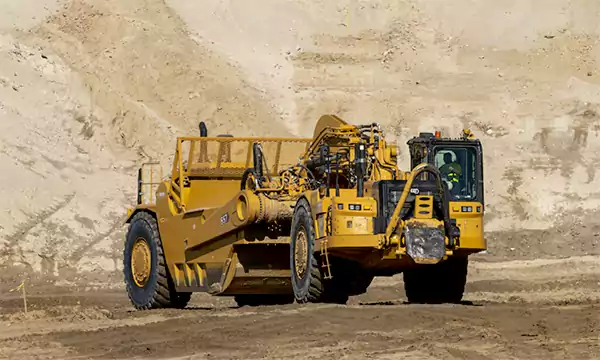
Push-pull scrapers are designed to handle large earthmoving tasks quickly. Two machines work together, one pushing and one pulling to load soil more efficiently than traditional scrapers.
These are the powerful features of push-pull scrapers:
- Dual-machine system increases loading speed.
- Massive bowl capacity for moving large volumes of soil.
- Ideal for highway, mining, and large land development projects.
| Starting Price (Approximation): $200,000–$500,000 Things to Consider While Purchasing:
|
27. Asphalt Milling Machine (Cold Planer)
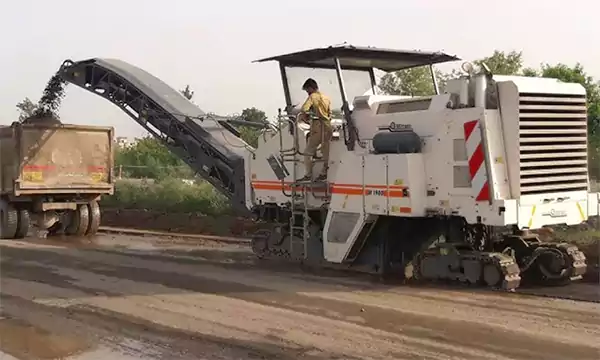
Asphalt milling machines remove old or damaged pavement before resurfacing. They grind the top layer of asphalt into fine material that can be recycled for new road construction.
These are the powerful features of asphalt milling machines:
- Equipped with a rotating milling drum for precise cutting depth.
- High-power engine to grind tough asphalt layers.
- Produces reusable milled material, reducing waste.
| Starting Price (Approximation): $60,000–$200,000 Things to Consider While Purchasing:
|
Wrapping Up on the Types of Construction Vehicles
There are different types of construction vehicles behind the high-rise and glimmering buildings that define modern skylines. From digging the ground to collecting dirt and dragging concrete, every construction vehicle plays a crucial role in building infrastructure.
Thanks to the engineering world, these machines can reduce danger and hours of manual labor, ensuring a safe working area. We have discussed the most common construction vehicles, names, and pictures in this blog. Hopefully, it has imparted valuable insights to you!
Read Next: 10 Biggest Construction Companies in the US to Know Before Hiring a Contractor!
Frequently Asked Questions
Q: What are construction vehicles called?
Q: What is the most common construction vehicle?
Ans: The excavator is the most common and versatile construction vehicle. It is useful for many purposes, like digging, lifting, transporting, and demolishing.
Q: Which car is best for construction?
Ans: The pickup trucks from Ford and Toyota with cargo spaces are best for construction settings. They can be ideal for loading and transporting material on-site.
Q: What is a vehicle in construction?
Ans: These specialized vehicles are designed for multiple construction tasks, like digging, grading, and transporting materials.
Q: What is the biggest construction vehicle?
Ans: The Caterpillar 797F is considered the biggest construction vehicle in the world. It can carry 400 tons, and its principal use is mining and earthmoving.
Related Posts