Ans: Yes, real estate research consistently indicates that improvements to curb appeal deliver the highest returns amongst any other home improvement category.

Why Mailbox Quality Actually Matters More Than You Think
Many homeowners buy a mailbox the same way they buy a garden hose: they pick the cheapest option that still works, install it, and forget about it until it fails. The problem with this approach is that a mailbox isn’t a regular piece.
It’s a federally protected piece of infrastructure that handles sensitive financial documents, gets exposed to all weather conditions, and forms the first impression of your property for every visitor, buyer, and neighbor.
Let’s understand why the quality of it matters at every level, and what it looks like in practice.
Key Takeaways
- The U.S Postal Inspection Service sees over 50,000 mail theft complaints every year
- The mailbox’s material determines how long it survives outside exposure without failing structurally or aesthetically
- Cheap plastic mailboxes crack easily in cold climates, warp in heat, and fade within a few years due to UV exposure
- A well-chosen, high-quality mailbox that goes well with the home’s architecture contributes to that first impression in a way that a warped plastic box actively does not
Security — The Difference Between Protected and Exposed
A standard residential mailbox has no security features. The door opens with a finger. Anyone walking or driving past can reach in, take what they want, and be gone in under five seconds. For most of postal history, this was an acceptable tradeoff — mail volume was low, identity theft was limited, and most residential neighborhoods had enough foot traffic to deter casual theft.
That calculus has changed. The U.S Postal Inspection Service sees over 50,000 mail theft complaints every year, and that number is actually less than the actual incidents, as most victims don’t realise their mail was stolen until weeks later, when a statement isn’t anywhere to be found.
A single stolen piece of mail containing personal information can lead to identity theft that can take years to fix.
A quality locking mailbox addresses this vulnerability at the source. The mechanism is simple and effective. A front-load slot allows USPS carriers to deposit mail without a key, while a separate locked retrieval door accessible only to the homeowner prevents anyone else from accessing the contents. Once mail enters a quality locking mailbox, it stays there until you retrieve it.
The lock quality within that mechanism matters as much as the mechanism itself. A cheap cam lock can be manipulated in under thirty seconds with basic tools.
A quality pin tumbler lock with anti-pick pins requires significantly more skill and time — enough to deter opportunistic theft entirely. The difference in cost between a basic cam lock and a quality pin tumbler is $15 to $30. The difference in protection is substantial.
Browse the full range of quality residential mailboxes built to last at mailboxavenue.com — USPS-compliant designs in steel, locking and non-locking configurations, for every home style and climate
Material Quality — What Survives and What Doesn’t
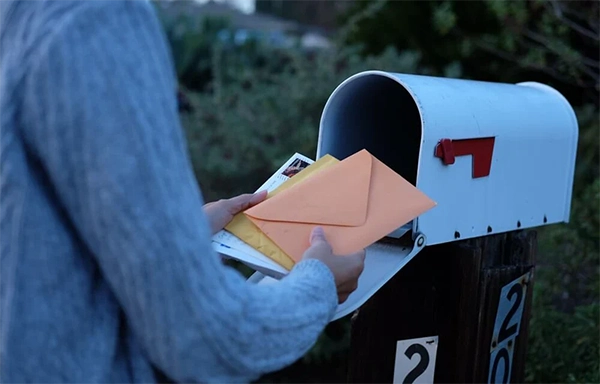
Mailboxes live outside. Heat, cold, UV radiation, humidity, rain, and physical impact all deteriorate the exterior continuously. The mailbox’s material determines how long it survives outside exposure without failing structurally or aesthetically.
Cheap plastic mailboxes crack easily in cold climates, warp in heat, and fade within a few years due to UV exposure. The door mechanism grows weak with time until it no longer closes fully, meaning that the mail sits exposed inside a box with a door that won’t seal.
The hardware corrodes. The flag bracket breaks. The entire unit needs replacement every three to five years in most climates.
Thin sheet metal mailboxes from hardware store bulk bins perform marginally better but rust within eighteen months in humid or coastal environments, dent from minor impacts, and lose their finish within a season or two in direct sun exposure. The internal volume is often insufficient for today’s mail volumes — packages get jammed, carriers fold documents that shouldn’t be folded, and delivery problems accumulate.
Quality steel mailboxes with powder-coated finishes perform at a different level entirely. Powder coating creates a chemical bond with the metal surface — not just a surface layer — that resists chipping, fading, UV degradation, and moisture penetration for years.
A quality powder-coated steel mailbox in a moderate climate lasts ten to fifteen years with minimal maintenance. In harsh climates — coastal areas, high UV regions, cold climates with road salt exposure — the gap between quality and budget materials is even more pronounced.
The construction details matter as well. Welded seams instead of folded joints prevent moisture accumulation at the corners. Reinforced door hinges sustain alignment over the years, even after repeated opening and closing.
A door that seals fully protects contents from rain and wind in a way that a warped plastic door simply cannot.
For everything you need to know about mailbox selection, installation, USPS compliance, and maintenance, the Mailbox Avenue blog covers every topic in detail — from choosing the right lock to seasonal care to curb appeal upgrades.
USPS Compliance — Quality Has Dimensions
USPS Standard T-1 specifies minimum interior dimensions for approved curbside mailboxes — 18 inches long, 6 inches wide, 6 inches tall, with a door opening of at least 5 by 5 inches. Budget mailboxes sometimes meet these minimums on paper but fail in practice because the interior volume, while technically compliant, doesn’t accommodate the range of mail formats that USPS actually delivers.
A quality mailbox built to exceed minimum standards — with 7 to 8 inches of interior height and a generous door opening — accepts standard shipping envelopes, thick catalogs, padded packages, and oversized flats without the carrier having to fold, force, or skip delivery.
Fun Fact
The red flag on a mailbox isn’t for receiving mail. It’s a signal to the mail carrier that there is outgoing mail inside to be picked up.
Every skipped delivery is a trip to the post office. Over the life of the mailbox, that adds up to a significant inconvenience that a larger, better-built box would have prevented entirely.
The structural integrity requirements in USPS standards also favor quality construction. The mailbox must withstand mechanical testing — door opening force, latch retention, and weather resistance.
Quality mailboxes are engineered to these standards. Budget mailboxes often pass initial testing and degrade within the first year due to material fatigue.
Curb Appeal — Quality Is Visible From the Street

A mailbox is visible from the street every day. It appears in every photograph of your property — listing photos, Google Street View, neighborhood photography.
It’s the object a buyer sees before they’ve formed any impression of the house itself. The condition and quality of your mailbox signal something about the overall maintenance standard of the property.
This isn’t a subjective aesthetic preference. Real estate research consistently indicates that improvements to curb appeal deliver the highest returns amongst any other home improvement category.
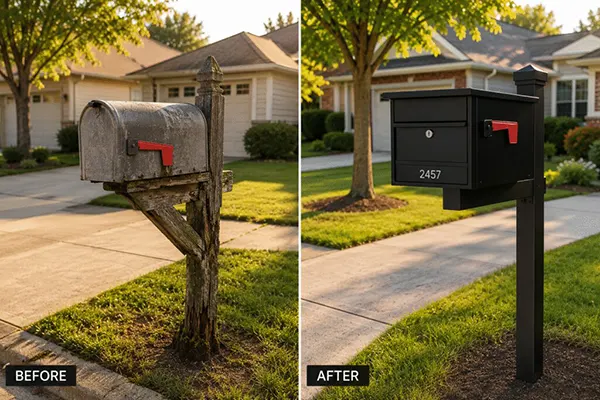
A well-chosen, high-quality mailbox that goes well with the home’s architecture contributes to that first impression in a way that a warped plastic box actively does not.
Premium mailboxes also maintain their appearance over time, much better than other budget options. A powder-coated steel mailbox looks just the same in year seven as it did in the beginning.
A plastic mailbox looks faded and worn within three years. The ongoing visual cost of a cheap mailbox — the steady degradation of curb appeal — never appears on the original purchase receipt but accumulates every day.
The Long-Term Cost Argument
A budget mailbox at $30 to $50 replaced every four to five years costs $75 to $125 over a decade, plus installation time. A quality mailbox at $120 to $200 purchased once lasts ten to fifteen years — lower total cost, better performance throughout, and no replacement installation effort.
When security features are factored in — the cost of identity theft remediation is measured in hundreds of hours and thousands of dollars — the economic argument for quality becomes overwhelming. The mailbox is not a place to optimize for upfront cost.
The mailbox is the first thing people see. Make sure it’s telling the right story.
FAQs
Q1) Does a better mailbox help in increasing the real estate appeal?
Q2) How many years does a mailbox usually last?
Ans: A quality powder-coated steel mailbox in a moderate climate lasts ten to fifteen years with minimal maintenance.
Q3) How does a better mailbox assist in enhancing security?
Ans: A quality mailbox has better quality materials that last longer and prevent the breakage of the seal and other components with time, thereby enhancing security.
Q4) What is the USPS standard for the interior dimensions of a mailbox?
Ans: USPS Standard T-1 specifies that the minimum interior dimensions for approved curbside mailboxes are 18 inches long, 6 inches wide, 6 inches tall, with a door opening of at least 5 by 5 inches
Related Posts