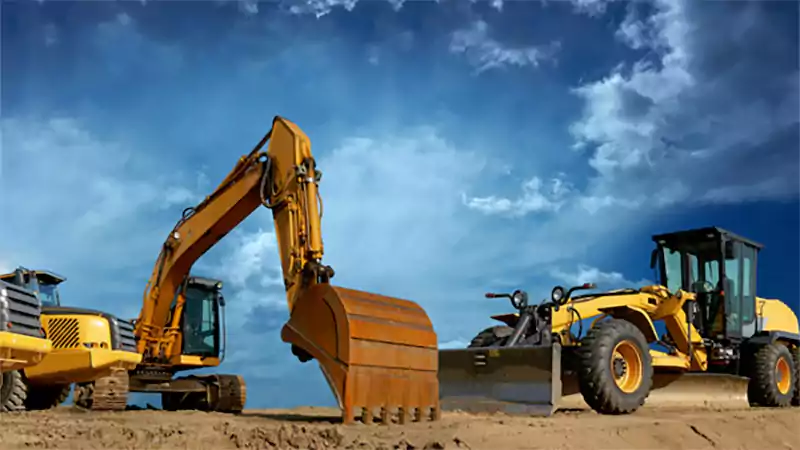
Ans: The full name of JCB is Joseph Cyril Bamford, which is nothing but the backhoe loader.

43 Heavy Equipment Names, Types, Uses, and Applications in Construction & Other Activities
In today’s fast-growing construction and industrial sectors, understanding different machines and their purposes has become more important than ever. Many professional workers in the construction and other industries struggle with the heavy equipment names because there are so many of them, and they also have complicated functions. Additionally, some are just fillers without any actual usage.
Thus, when in the market, one must know in detail which one will truly be worth picking and selecting. In this listicle, we have analyzed and included 43 major heavy vehicles, tools, and systems that all construction professionals or the biggest construction companies in the US must consider.
Table of Contents:
What is Construction Equipment?
Construction equipment is heavy machinery, vehicles, or tools designed to assist in or execute various construction tasks, ranging from earthmoving, excavation, and material handling to site preparation.
Such equipment can be classified into three major categories: light, heavy, and specialized equipment. Consider them in brief before considering the various types of heavy equipment names discussed in the article below.
- Light equipment: Skid steer loaders, plate compactors, and mini-excavators are major examples of this type.
- Heavy equipment: Bulldozers, excavators, tower cranes, etc., fall under this category.
- Specialized equipment: Asphalt pavers for roadwork, tunneling machines, or concrete pumps for structural work are types of specialized equipment.
These machines are typically used in all construction types, such as infrastructure, commercial, and residential construction.
What are the Different Categories of Construction Equipment?
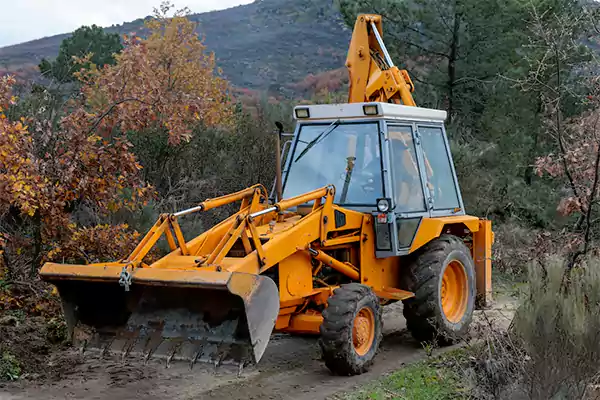
The major categories in which the construction equipment names can be divided are earthmoving equipment, material handling equipment, construction vehicles, compaction equipment, road construction equipment, and concrete & construction support equipment.
1. Earthmoving Equipment
Such equipment is used in construction projects for digging, grading, and excavation. Major examples of machines in this category are excavators, bulldozers, backhoe loaders, wheel loaders/front loaders, skid-steer loaders, etc.
2. Material Handling Equipment
Cranes, telehandlers, forklifts, hoists, conveyor systems, and concrete pumps are the most common machines in this category. These are used to lift and move essential materials in development projects, such as various types of houses or commercial buildings.
3. Construction Vehicles
Dump trucks (or tippers), concrete mixer trucks, articulated haulers (or dumpers), flatbed trucks, and water trucks are other construction equipment names. Primarily, they are used for hauling and transportation.
4. Compaction Equipment
Such a category of machines is used for soil and surface compaction so that the ground can be made strong and levelled. Common examples are plate compactors (vibratory plates), rammers (jumping jacks), smooth drum rollers, padfoot/sheepsfoot rollers, pneumatic rollers, and trench rollers, which are all included under heavy equipment names.
5. Road Construction Equipment
Asphalt pavers, cold planers, road rollers, asphalt plants, and slipform pavers are major types of road construction machines. These are commonly used for paving and surface finishing.
6. Concrete & Construction Support Equipment
Other building construction equipment names are concrete mixers, power trowels, power buggies, light towers, drilling rigs, and generators. These are often used for concrete work and site support.
Also Read: What is a Submittal in Construction? Learn How Submittals Work and Why You Need to Focus on Them
What are the Different 43 Heavy Equipment Names and Their Uses?
There are various types of construction equipment names that are available to make human work highly efficient. Out of them, the most useful 43 ones are briefly discussed below under 6 categories, such as:
- Earthmoving equipment
- Material handling equipment
- Construction vehicles
- Compaction equipment
- Road construction equipment
- Concrete & support equipment
I. Earthmoving Equipment
- Excavator
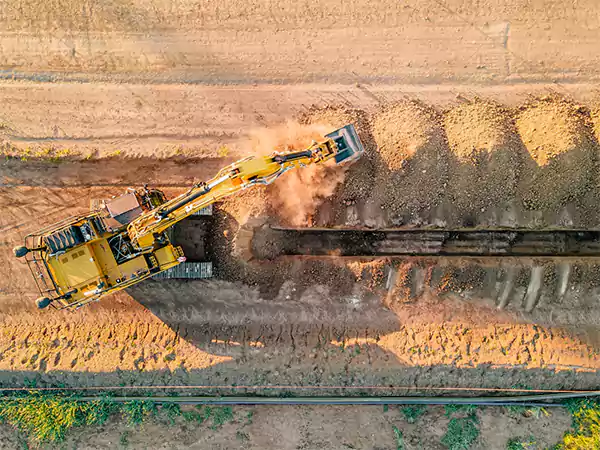
What it is: The excavator is a powerful machine with a boom, dipper, bucket, and a rotating cab on tracks or wheels. its listed among the most essential construction equipment names used across projects.
Where it is used: It is primarily used for deep digging, trenching, material handling, and demolition.
- Backhoe Loader
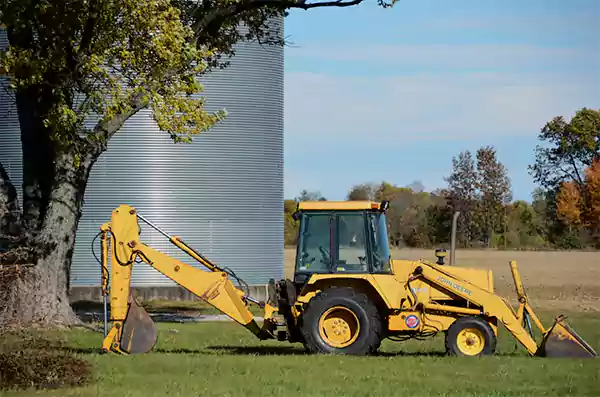
What it is: The backhoe loader is a versatile vehicle featuring a tractor-style body, a loader bucket on the front, and a backhoe for digging on the rear, making it one of the most commonly used heavy equipment names in construction.
Where it is used: It is ideal for smaller jobs like digging ditches, backfilling, and moving materials in tight spaces.
- Bulldozer
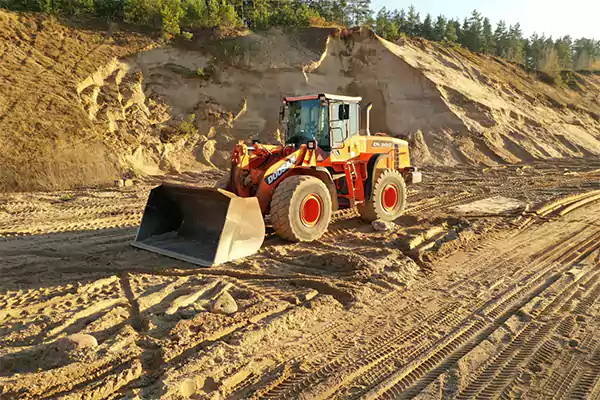
What it is: A bulldozer is a strong tractor equipped with a large metal blade at the front to push massive amounts of soil, sand, debris, or other materials. Some models also come with a rear “ripper” claw to loosen the hard ground.
Where it is used: It is commonly used for land clearing, grading, and leveling surfaces during early site preparation.
- Skid Steer Loader
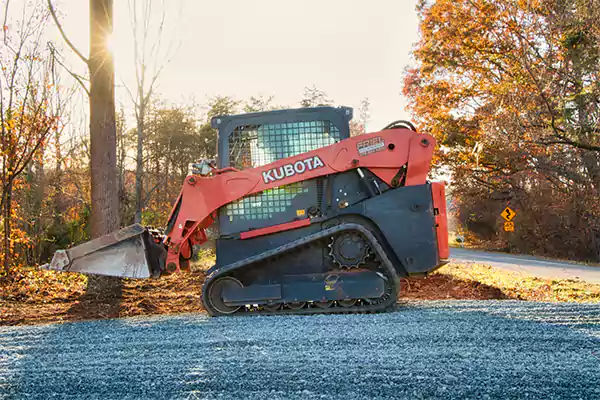
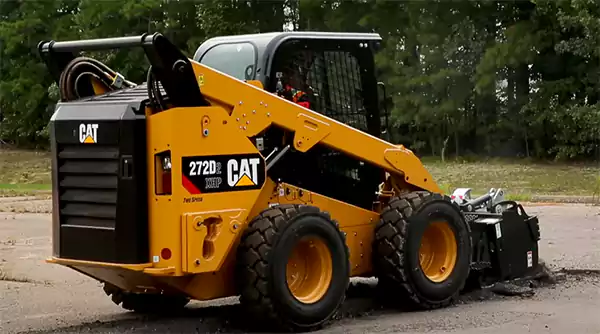
What it is: The skid steer loader is also counted among the heavy equipment names. It is a small, engine-powered machine with lift arms. These arms can be fitted with a wide variety of labor-saving attachments, which are specialized tools to make the task less physically demanding. The structure of this machine features a very compact body.
Where it is used: Primarily, it is used for landscaping, snow removal, minor excavation, drilling, and other such tasks.
- Wheel Loader
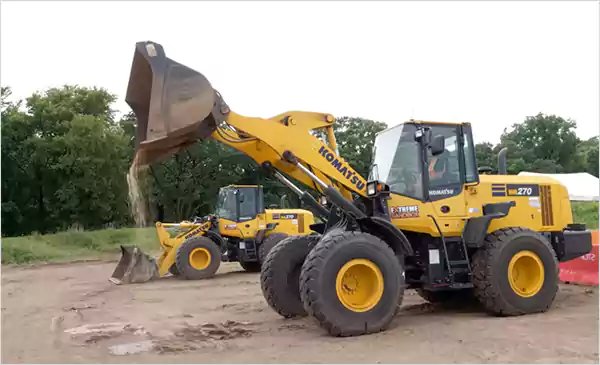
What it is: Looking like other vehicles, the wheel loader is another item on our list and is counted among widely recognized construction equipment names .It is a very heavy piece of machinery, featuring a large but very useful front-mounted bucket used to scoop, lift, and transport loose materials like gravel or dirt.
Where it is used: This machine is commonly utilized on construction sites, quarries, and waste management facilities to load materials into dump trucks.
- Trenching Machine
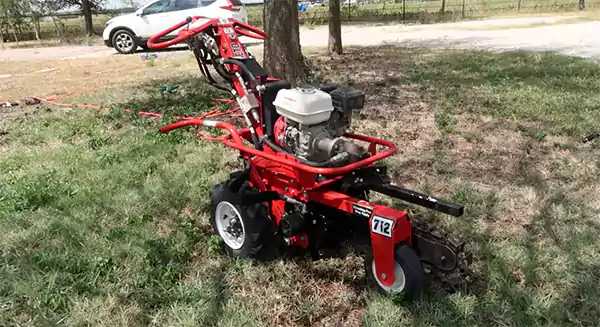
What it is: A trenching machine features a digging chain/boom, a motor, and a conveyor. Such equipment comes in three major types: wall-behind (small), attachment-based (tractor/skid loader), and large tracked, self-propelled machines.
Where it is used: This machine is used in construction activities or otherwise to efficiently dig narrow, uniform, and precise trenches in soil or hard surfaces. And, it is ultimately done for the purpose of installing underground utilities, pipes, and cables.
- Dragline Excavator
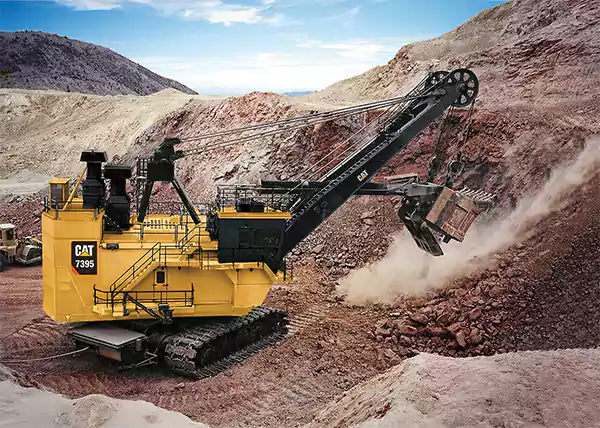
What it is: The dragline excavator is another one of the various useful construction vehicles and is counted among important heavy equipment names. The key components of this machinery are a huge boom, a drag bucket, hoist ropes, and a strong swing system, which together constitute a large and heavy piece of machinery.
Where it is used: Dragline excavators are used for surface mining, large-scale civil engineering, environmental reclamation, and dredging. Majorly, during large infrastructural construction projects, it is used, for example, for building canals, ports, dams, etc.
- Motor Grader
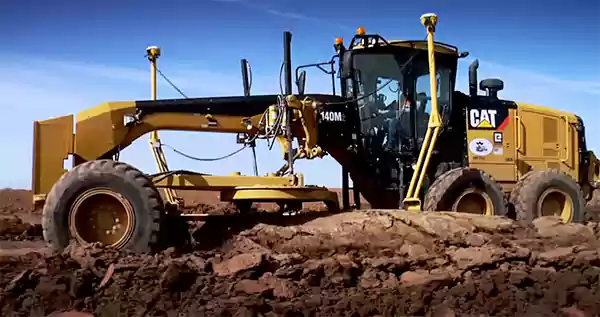
What it is: The motor grader is also included in our list of heavy equipment names. It is a self-propelled and very heavy machine equipped with a long, adjustable blade, or moldboard.
Where it is used: The key uses of this equipment are road construction, maintenance, surface leveling, drainage & slope work, and material spreading like gravel, dirt, sand, etc. Other work includes mining, forestry, clearing, and preparation.
- Scraper
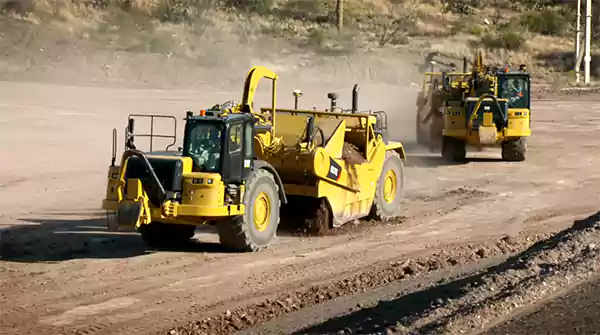
What it is: A scraper is a specialized and professional vehicle with a tractor unit that is attached to and thus towing a large and movable bowl, and it is included among well-known construction machine names. The bowl is also called the hopper and features a cutting edge at the front bottom. Self-propelled, towed scrapers, and elevating scrapers are three major types of this equipment.
Where it is used: It is fit for use everywhere where there is a need for transporting soil or other ground material from one place to another. This vehicle scrapes thin layers of the earth, which are then collected into the bowl above. Once filled, the bowl or hopper is raised, and then the material is dropped wherever needed.
- Mini Excavator
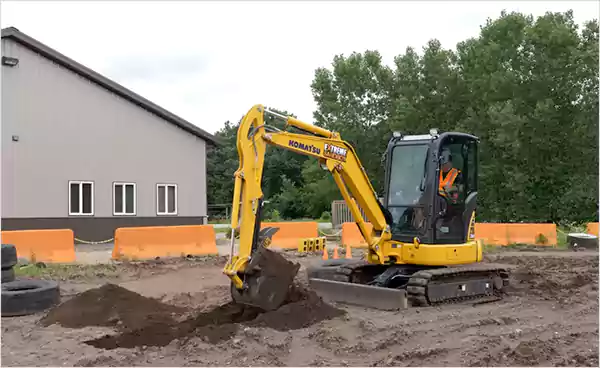
What it is: These are smaller, lighter versions of standard excavators, also called “compact excavators” or “mini diggers.” Such equipment features a zero-tail-swing design that facilitates a smooth swing and effortless work.
Where it is used: Due to its light weight, the machine is ideal for soft and delicate surfaces and projects such as residential construction sites, landscaping, gardening, utility work, and small demolition, which is why it is included among versatile construction equipment names for compact and sensitive job sites.
- Rock Breaker
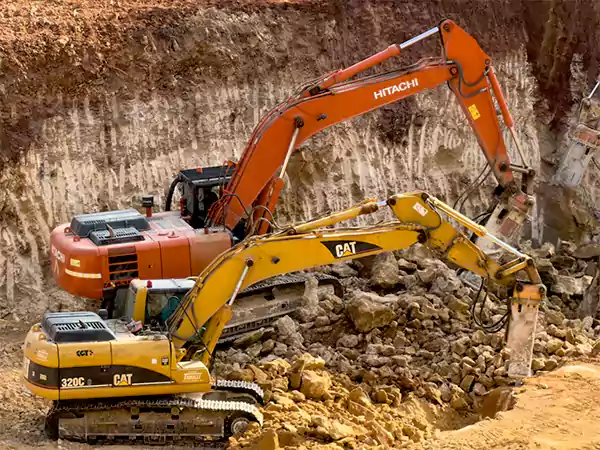
What it is: The rock breaker is another type of heavy equipment, and its purpose is amply clear from its name, which is to break the rock. Structurally, it is a powerful hydraulic hammer, mounted either on an excavator or a backhoe.
Where it is used: Construction, demolition, mining, quarrying, trenching, excavation, tunneling, and metallurgical plants are some major areas where this piece of equipment is utilized, making it one of the most essential heavy equipment names in industrial operations. In the metallurgical plants, the machine is used to break slag or lining. This tool replaces manual labor and ensures 100% worker safety on the job.
- Dredger
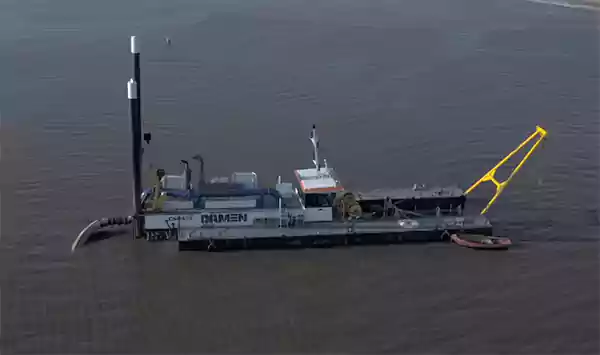
What it is: It is an efficient machine whose prime work is to excavate, remove, and transport underwater sediments like sand, silt, and rock from the bottom of water bodies. Based on their work or needs, this piece of equipment is divided into three major categories: mechanical dredgers, hydraulic dredgers, and specialized dredgers.
Where it is used: A dredger is commonly used in activities like navigational maintenance (or deepening and widening channels, rivers, and harbors for shipping), land reclamation, coastal protection, mining, and construction, making it one of the important heavy equipment names in marine and infrastructure projects.
II. Material Handling Equipment
- Forklift
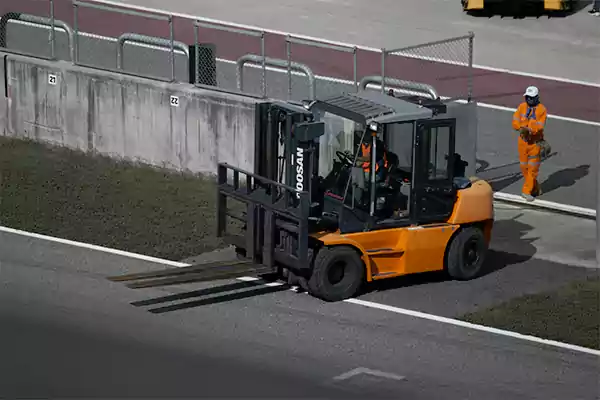
What it is: A forklift is a PIT, which stands for powered industrial truck, that is designed to lift and transport goods. This small piece of equipment comes with a mast, carriage, load backrest, and forks and is driven by hydraulic controls.
Where it is used: This tool finds its applicability in warehousing, distribution, manufacturing facilities, construction sites, ports, logistics, and other areas where the need for frequent localized material transportation is always present.
- Telehandler
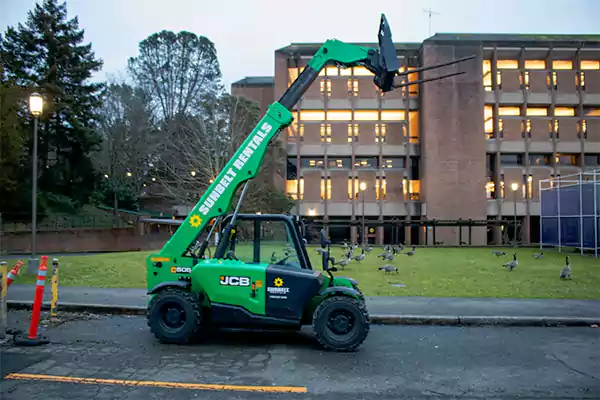
What it is: The telehandler is a four-wheel-drive machine with a boom (or telescoping arm). The boom is the flexible point that easily fits with attachments like buckets, pallet forks, or lifting jibs. Its key functions are to lift, move, and place loads at various heights and distances.
Where it is used: Telehandlers, due to their versatility, are used in various fields of labor-intensive activities, such as construction sites, agriculture, industrial units, waste management, landscaping, roadwork, and also snow removal during extreme weather conditions, which is why they are included among widely recognized heavy equipment names.
- Crane
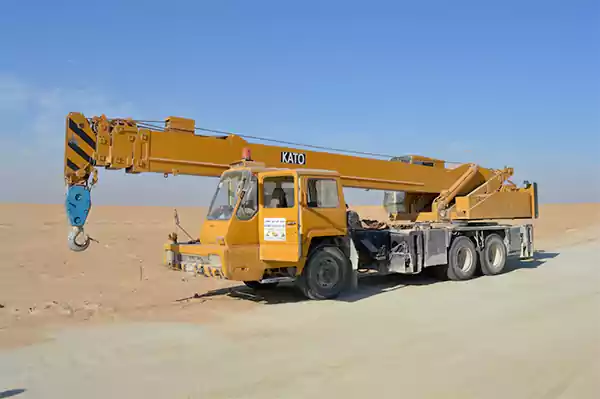
What it is: Next, there is the crane in our list of heavy equipment names. Many of you must have heard of its name. This large and very massive piece of machinery features a huge hoist, ropes (or chains), and a boom. Such parts are essential for lifting, lowering, and horizontally moving heavy loads.
Where it is used: Cranes are commonly used in construction, manufacturing, mining, shipping, and logistics. In construction, tower and mobile cranes are typically utilized for assembling high-rises, bridges, and infrastructural components. Furthermore, loading, unloading, and moving mechanisms are other key functions.
- Tower Crane
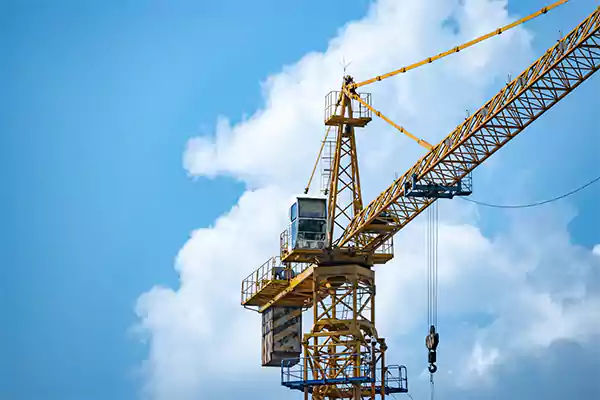
What it is: The tower crane is an immovable piece of equipment, fixed at a place and used to lift heavy materials both horizontally and vertically. Its tall mast and 360-degree rotating jib is capable of transporting heavy materials such as steel, concrete, and large tools to high elevations and long-distance points.
Where it is used: Majorly, these lifting structures are used in high-rise building construction, infrastructure projects, industrial sites, and urban development, which is why they are counted among important heavy equipment names in the construction industry.
- Boom Lift
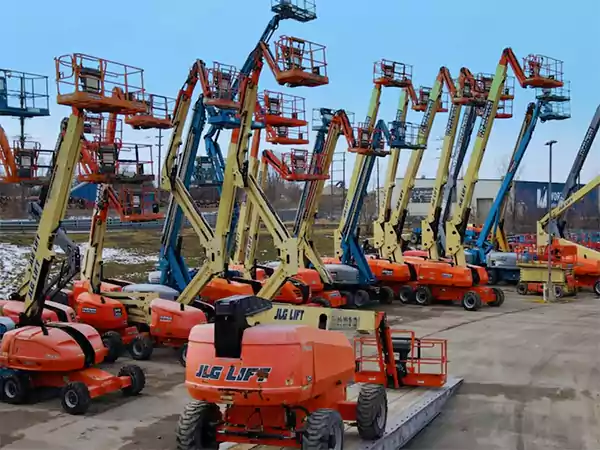
What it is: The boom lift is a type of aerial work platform (AWP), featuring a hydraulic arm and a movable base. This machine is used to lift personnel and tools to high, hard-to-reach, or complex areas, facilitating vertical and horizontal reach, and is listed among essential heavy equipment names in construction and maintenance industries.
Where it is used: Construction, maintenance, utility, infrastructure, and industrial enterprises are major regions where this equipment is used. Otherwise, the boom lift is also used in specialized tasks such as film production, fruit picking, etc.
- Scissor Lift
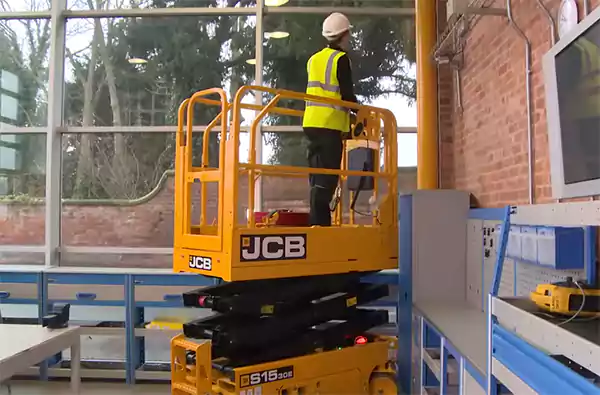
What it is: A scissor lift is another AWP or aerial work platform or mobile elevating work platform (MEWP), and it is listed among commonly used construction machines names. Again, the key function is to lift workers or professionals, tools, or materials vertically. This machine uses a crisscross pantograph mechanism that extends upwards through hydraulic, electric, or diesel power, whichever is available.
Where it is used: This uplifting machine is typically the most preferred in construction and maintenance activities such as installing drywall, lighting, signage, HVAC systems, painting, cleaning, and repairing high ceilings or walls, which is why it is included among commonly used heavy equipment names. Other fields where it is used are warehousing, logistics, manufacturing, retail, and commercial places.
- Hoist
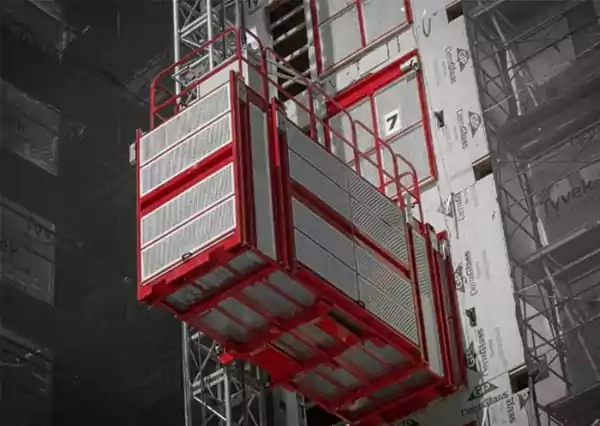
What it is: The hoist is an indispensable aspect of material handling equipment used in high-rise projects. Thus, it is included in the list of heavy equipment names here. It is nothing but a mechanical structure that is used to lift the weight upward from a downward point.
Where it is used: Typically, such an uplifting tool is used in activities where materials are to be transported from a lower point to extreme elevations, such as during the construction of a multi-story apartment building. Furthermore, it is also used in manufacturing units, warehousing facilities, logistics, mining, etc.
- Conveyor System
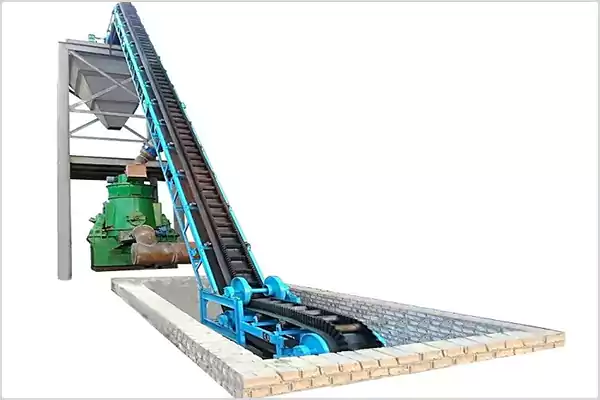
What it is: The conveyor system is a considerably lengthy and huge mechanical handling apparatus. It automatically takes materials from one point and drops them at another. The length of the conveyor belt or system depends on the length of the distance to be covered in transportation.
Where it is used: This is the most useful piece of equipment for local transportation of heavy objects. Thus, its applicability finds a way in several fields such as manufacturing, warehouse, logistics, food, beverage, mining, construction, and consumer applications, i.e., airport baggage handling, supermarket checkouts, etc.
- Aerial Work Platform
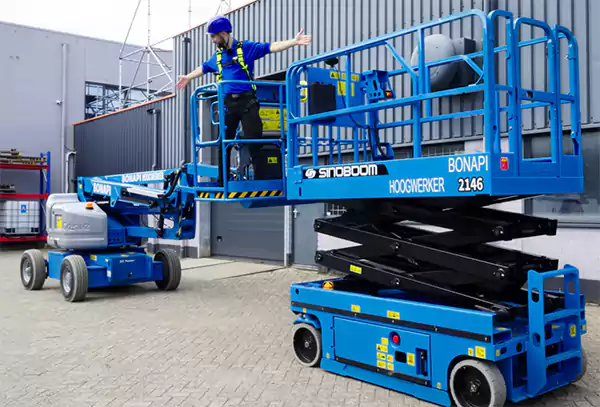
What it is: An aerial work platform, or AWP, is a powered, mobile machine that comes equipped with a platform or basket. It is driven by hydraulic, pneumatic, or mechanical systems. This provides a highly secure alternative to ladders and scaffolding.
Where it is used: Whenever there is a need to work at a high altitude, this platform comes in handy, ensuring maximum security. Such equipment is typically used in construction sites, industrial maintenance, warehousing, logistics, events, decoration works, utilities, and infrastructural projects.
III. Construction Vehicles
- Dump Truck
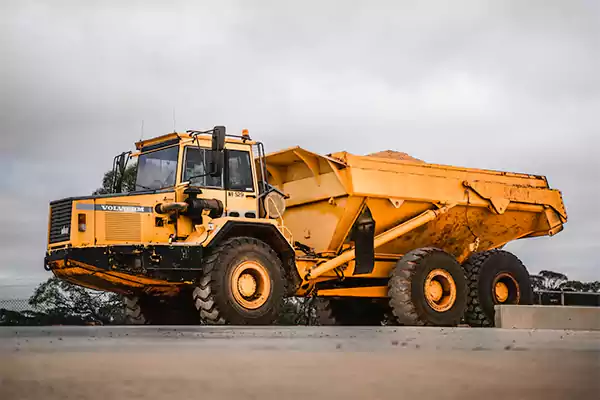
What it is: The dump truck is a huge vehicle with a large, high-capacity container behind, and it is one of the most recognized construction equipment names in the industry. This container is used to load, transport, and unload or dump large amounts of materials such as soil, sand, etc., from one place to another.
Where it is used: This truck is a must in all types of construction projects, making it one of the most recognized heavy equipment names in the industry. Furthermore, in the mining, quarrying, and material handling industries as well, such large equipment, or a dump truck, is used.
- Articulated Truck
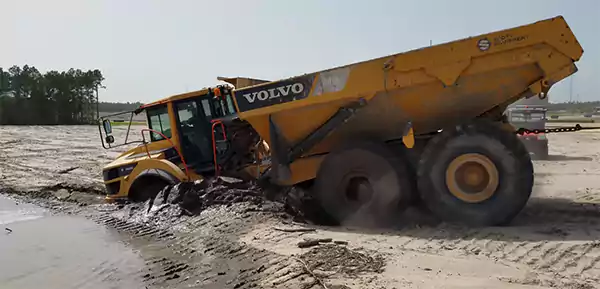
What it is: It is a two-part machine with a tractor unit and a dumping trailer. This truck has great off-road capability, making it the best vehicle for hauling a variety of materials over rough, soft, or steep terrain.
Where it is used: The articulated truck is the best in uneven areas for various material hauling needs. Thus, it is typically used in construction, mining, quarrying, infrastructure, and demolition projects.
- Concrete Mixer Truck
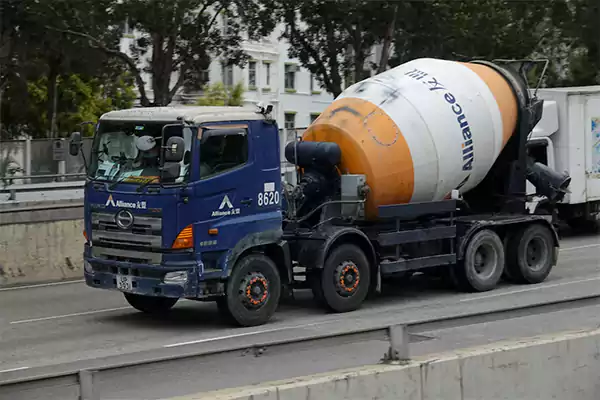
What it is: The concrete mixer truck is another in the list of heavy equipment names. Its primary function is to transport ready-mix concrete from a batching plant to construction sites for building purposes.
Where it is used: This vehicle is an essential part of all construction-related projects, as without concrete, no development work is possible, which is why it is included among fundamental construction equipment names in the building industry.
- Water Tanker
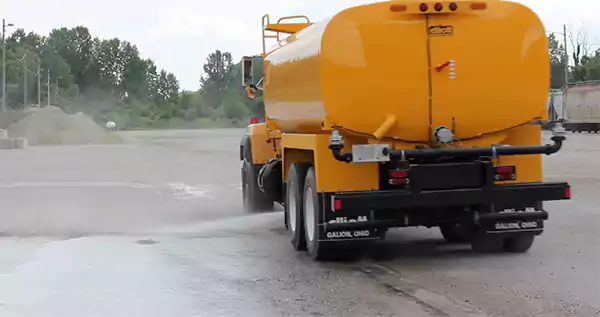
What it is: A water truck is an engine-powered vehicle that contains an attached vehicle behind the driver’s compartment in the front. It is categorized among practical heavy equipment names used in construction and industrial sites.
Where it is used: This truck can be used in all collective enterprises initiated by human beings where large quantities of water are required, such as construction activities, cleaning projects, maintenance work, etc.
- Flatbed Truck
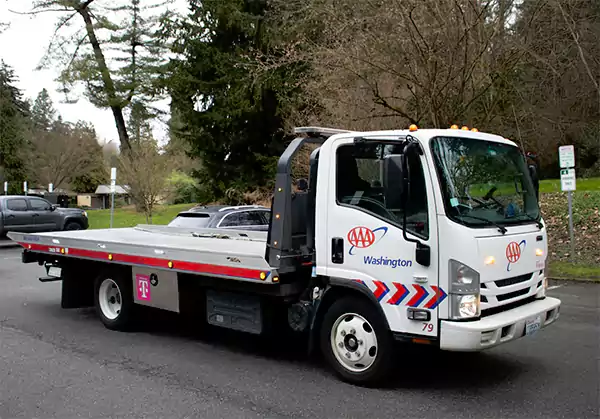
What it is: The flatbed truck is called so because it features a flat space behind the front driver’s section, as shown in the image above. It is often counted among heavy-duty commercial vehicles.
Where it is used: This truck is used in a variety of industries to carry things from one location to another. These things can be heavy machinery, industrial or manufacturing items, or even construction materials, i.e., lumber, steel beams, pipes, scaffolding, etc.
- Fuel Truck
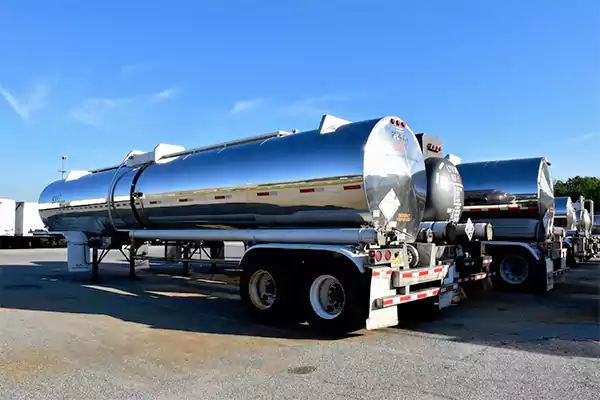
What it is: A fuel truck (or tanker truck) is a specialized commercial vehicle that possesses a large cylindrical tank where liquid fuels like gasoline, diesel, or kerosene can be safely stored, transported, and dispensed.
Where it is used: This truck is typically used in service stations, commercial & industrial sites, aviation, agriculture, and emergency services.
- Utility Vehicle
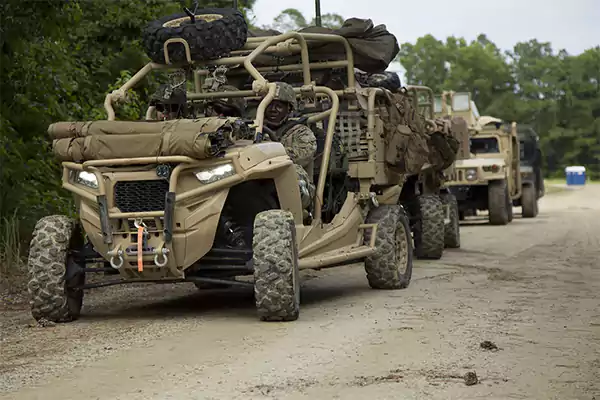
What it is: Utility vehicles are for the ground labor-intensive work, often featuring high versatility with cargo beds, rugged tires, and robust towing capabilities, and they are also included among commonly used heavy equipment names in construction and industrial sectors. Such automobiles are known for their off-road transport efficiency.
Where it is used: From agriculture, ranching, construction, industrial sites, property management, and recreation & specialized transport to emergency & utility services, such vehicles are used everywhere due to their high versatility.
IV. Compaction Equipment
- Soil Compactor
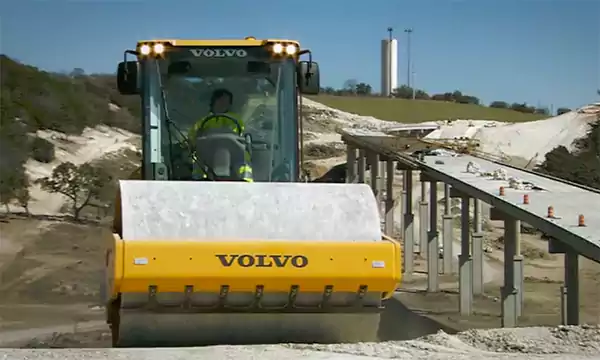
What it is: The soil compactor is one of the heavy construction equipment types. This is for what its name suggests. Its key function is to make the loose soil or ground as compact and tight as possible.
Where it is used: Road construction, building foundations, landscaping, utility work, and infrastructure projects are the major areas where this vehicle is indispensable.
- Vibratory Roller
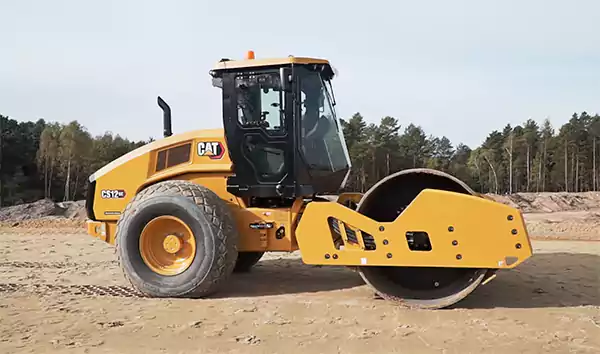
What it is: The vibratory roller is a very heavy piece of construction equipment that helps make the ground strong and extremely compact. It is better than the simple compactor, as strong vibrations are involved in the process.
Where it is used: This roller is often used on soil, gravel, sand, and asphalt for deep compaction. Furthermore, the machine can be used in a variety of projects, such as roads, highways, construction, site preparation, trench & backfill work, etc.
- Tandem Roller
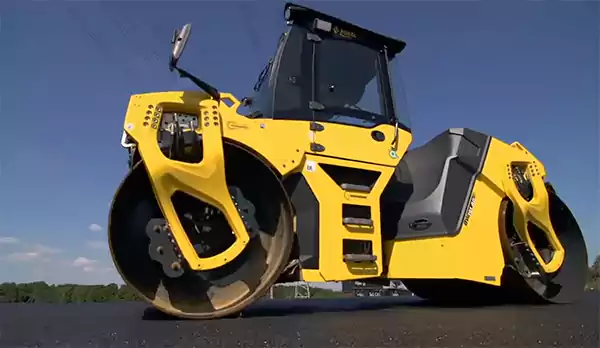
What it is: The tandem roller, also in our list of heavy equipment names, features two large, smooth steel drums in the front and the back. This arrangement helps in the even weight distribution and the effective ground leveling.
Where it is used: Whenever there is a need for quick and deep compaction, this equipment is put to use. Major projects that require this type of vehicle are road construction, asphalt paving, maintenance, repair, commercial & residential developments, airport/port infrastructure work, etc.
- Pneumatic Roller
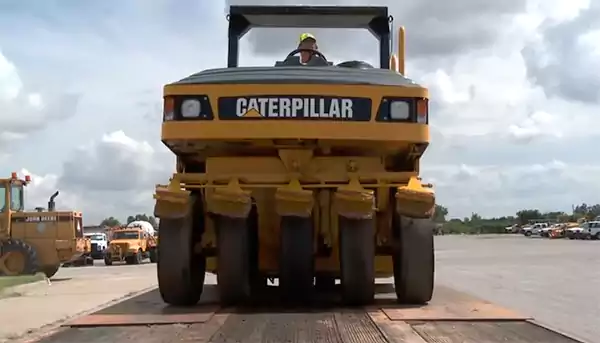
What it is: The key difference between a pneumatic roller and other rollers in our list is that this one features multiple, air-filled rubber tires instead of steel drums to compact materials over a piece of land.
Where it is used: This vehicle is typically used in projects like asphalt/bituminous concrete, road construction, earthwork, and site preparation.
- Plate Compactor
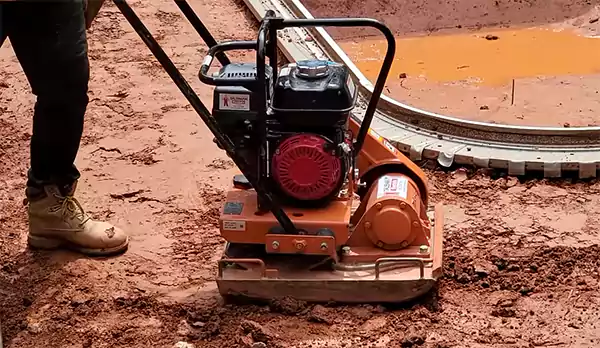
What it is: The plate compactor is used in small-to-medium-sized projects. It can also be used in conjunction with other rollers discussed above to work on localized areas for added precision after the heavy rolling machinery has done its work. Its rapid up and down movements eliminate the air completely from the soil and compress it to a maximum.
Where it is used: Landscaping, hardscaping, construction projects, road maintenance, and soil stabilization are the major areas of work where it is specifically used, making it one of the commonly referenced heavy equipment names in ground preparation work.
- Rammer Compactor
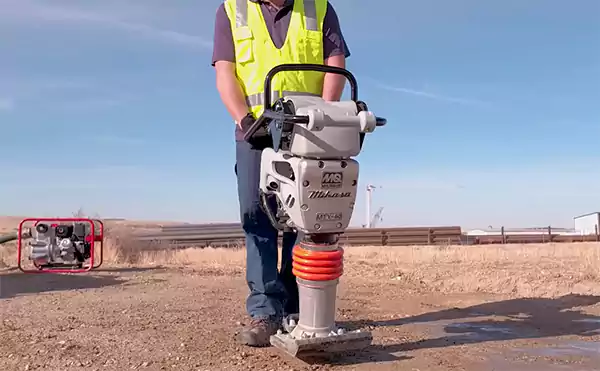
What it is: A rammer compactor is another tool for making the ground compact and strong. The rammer works by using a small gasoline or diesel engine. This engine gives power to a large piston, which in turn provides intense blows to the ground. The air comes out, and the soil becomes highly dense.
Where it is used: This machine is mainly used in places like trench compaction, foundation work, road/patch repair, and landscape construction projects.
V. Road Construction Equipment
- Asphalt Paver
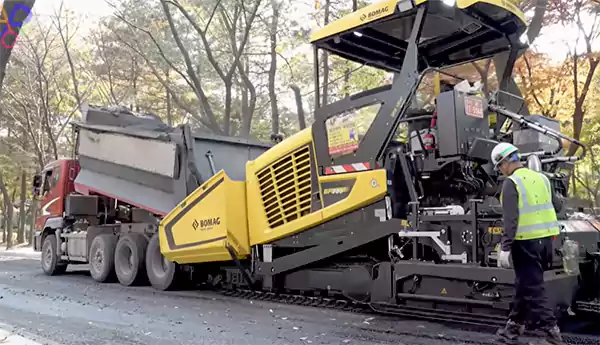
What it is: An asphalt paver is the main road construction equipment that is also counted among different types of heavy equipment. This vehicle is composed of a tractor and a screed. The tractor tows the screed that then levels, shapes, and provides compaction to the asphalt surface. There are also heaters and sensors attached underneath the screed for extra precision in the work.
Where it is used: The key function of this vehicle is to create, resurface, and repair roads, highways, parking lots, and bridges.
- Cold Planer
What it is: The cold planer is a heavy-duty machine used in construction. A cold planer features a rotating drum with tungsten carbide teeth. With their help, project owners can easily grind and remove layers of asphalt or concrete from paved surfaces. All of it happens without the use of heating. The operating mechanism works here without the use of heating. That is why it is called the cold planer.
Where it is used: This equipment is primarily used in work such as road restoration, surface leveling, trenching, pavement recycling, etc.
- Bitumen Sprayer
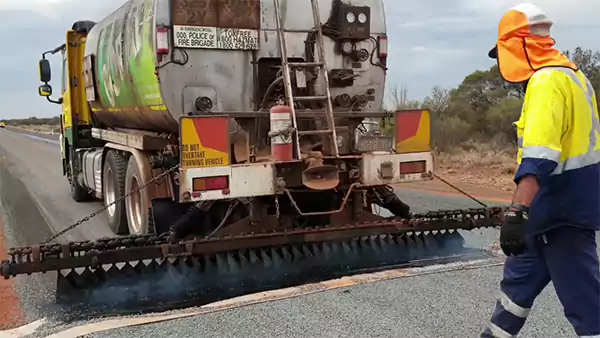
What it is: The bitumen sprayer is also part of the list of heavy equipment names, and its work is amply defined by its name. Bitumen is a hot, black, and liquid substance or tar that is applied to the road surfaces. Thus, a bitumen sprayer helps distribute these materials evenly and effectively over the required surfaces.
Where it is used: Like most of the paving equipment, it is also used in similar activities such as road construction, maintenance, surface dressing & sealing, etc., to name a few.
- Road Roller
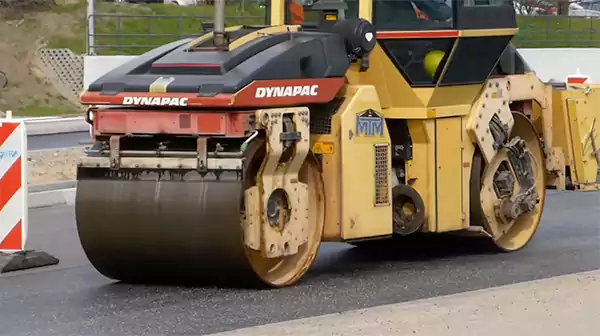
What it is: The road roller is another heavy piece of machinery that uses weight, vibration, or pressure for surface compaction with its voluminous roller-cum-wheels. It is a highly specialized construction vehicle due to its limited use, i.e., compaction via rolling.
Where it is used: It is mainly used in projects where there is a need to compact soil, gravel, concrete, or asphalt for the purpose of creating flat, smooth, and stable surfaces.
- Milling Machine
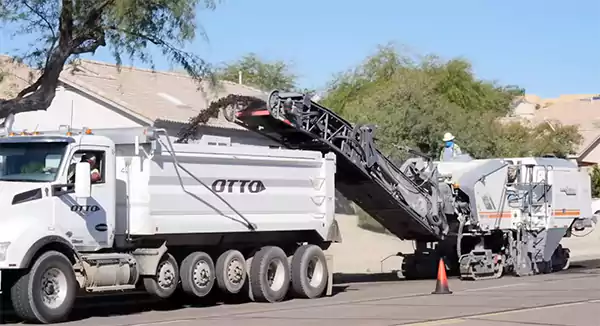
What it is: A milling machine is a specialized vehicle that is used in construction for the sole purpose of removing, grinding, and smoothing concrete or asphalt surfaces, and it is recognized among important heavy equipment names in roadwork and infrastructure projects. That is done with the help of a rotating, tooth-containing drum.
Where it is used: This machine is used in projects such as road rehabilitation, resurfacing, surface leveling, concrete preparation, trenching, slotting, etc.
VI. Concrete & Support Equipment
- Concrete Pump
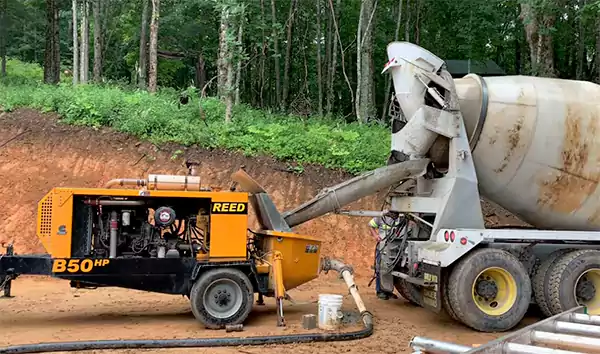
What it is: Another item in the list of heavy construction equipment names is this concrete pump. Its function is sufficiently clear by its name, as it is used to pump liquid-form, fresh concrete from one location to another, often hard-to-reach places.
Where it is used: This tool finds its applicability in all types of construction projects where concrete needs to be transported to various parts of the development site.
- Concrete Batching Plant
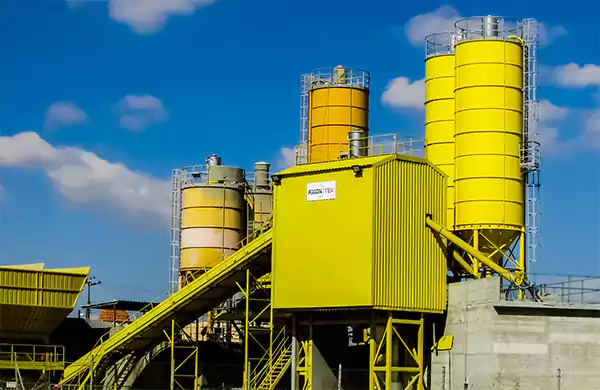
What it is: The concrete batching plant is one of the most heavy equipment names that are indispensable in construction projects. This plant’s primary function is to produce quality concrete by mixing key raw ingredients such as cement, sand, gravel, water, and admixtures in the right proportions.
Where it is used: Such plants are often seen in infrastructure projects, the development of commercial or industrial buildings, and the ready-mix concrete supply.
- Trash Compactor
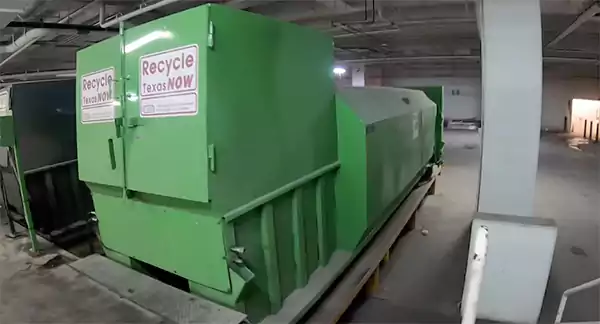
What it is: A trash compactor is a handy tool that helps in waste management. With its help, all types of waste materials can be compressed together and then converted into highly condensed, smaller, and thus more manageable blocks.
Where it is used: This equipment can be used in all fields of human endeavors, and thus not just in construction sites. A trash compactor finds its usefulness everywhere there is a need for trash management.
- Light Tower
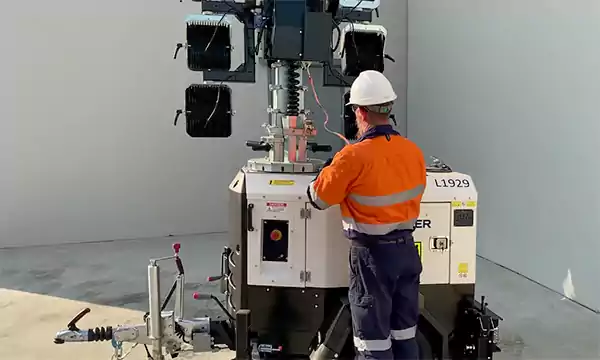
What it is: A light tower is a portable facility that features a vertical and extendable mast, lamps, a generator (usually diesel), and a mobile base (trailer or skid). With its use, construction and other activities can be eased even at night or in places with minimal to no sunlight.
Where it is used: Specifically, construction sites, mining & energy, roadwork, infrastructure projects, emergency & disaster recovery, etc., are some major areas for its applicability.
Also Read: Complete Guide Showing How to Get a Florida Contractor’s License Quickly
Why Construction Equipment Is Important
Various construction machines names have been discussed above. Now, let’s look at the benefits of these vehicles and tools in terms of speed, safety, productivity, and affordability.
- Speed: Highly specialized construction equipment helps complete tasks faster than manual labor. It leads to time-saving without compromising quality work.
- Safety: Certain activities in construction or otherwise, like rock breaking, demolition, mining, etc., are highly dangerous, which is why many heavy equipment names are designed specifically to reduce risk and improve operational safety. Thus, various specialized machines help operate with high safety and minimal risk of danger.
- Productivity: When the same task is done in less time, more is bound to get done in the same amount of time as used in pure labor. Hence, it leads to a higher output level.
- Affordability: Speed gives rise to productivity, which ultimately leads to cost-effectiveness.
How to Choose the Right Construction Equipment?
Consider the following tips and choose the right construction machinery under budget for maximum efficiency.
- Evaluate project needs: Break the entire project into doable tasks, and then find out how many tools you might need for high efficiency.
- Analyze site conditions: Carefully inspect site situations, whether rocky, uneven, tight, or otherwise, and then only reflect on your equipment needs from a wide array of available tools and vehicles.
- Assess total cost of ownership: For a complete analysis, also consider operational and maintenance costs along with the initial purchase price.
- Choose multitaskers over too specific equipment: For cost-effectiveness, make sure you put emphasis on versatility wherever possible, especially when comparing different construction equipment names for your project needs. For example, a backhoe loader is a perfect example of this, being a three-in-one piece of equipment.
Conclusion
Knowing the heavy equipment names and learning about their varied usage will help project owners do their jobs in a more efficient way, saving time, money, and limited resources. Thus, having a general understanding is a must for all contractors. Additionally, one must always select such machines or tools based on the project needs, which in turn calls for a deep and careful analysis in advance.
FAQs
Q: What is the JCB machine name?
Q: What is equipment?
Ans: It is any tool or piece of machinery that makes human work simple, boosting productivity.
Q: What are the 10 common tools?
Ans: The following are the 10 common tools.
- Screwdrivers
- Hammers
- Utility knife
- Pliers
- Wrenches
- Flashlight
- Tape measure
- Level
- Saw
- A versatile power tool like a drill
Related Posts