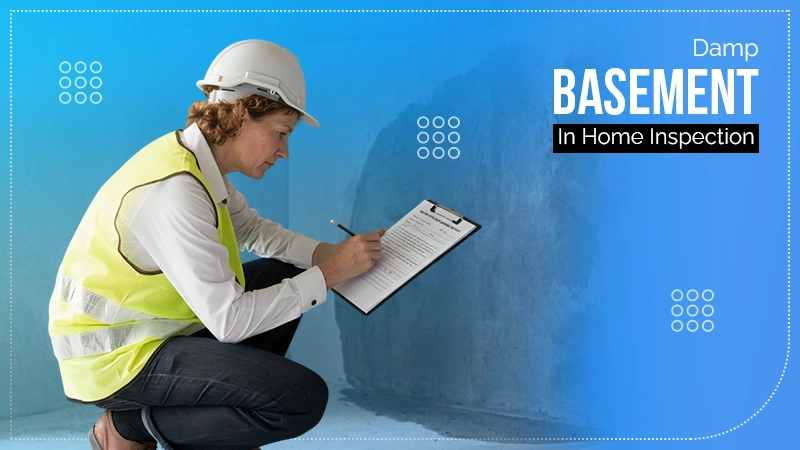
Fixing moisture in a basement typically costs between $2,000 and $7,000.

What a Damp Basement Really Means During a Home Inspection
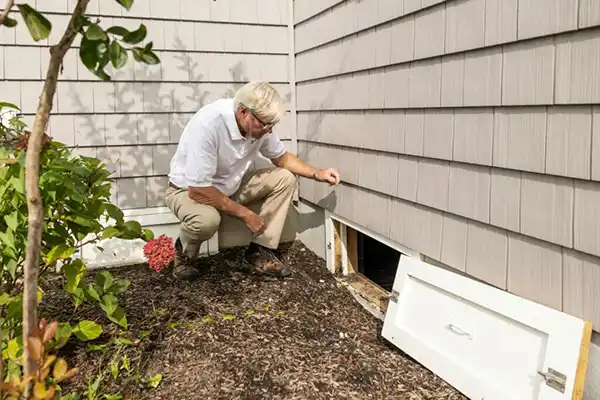
A home inspection tells you much about the house you’re considering to buy. And it becomes even more important when 60% of U.S. homes have wet basements.
However, many just run away seeing trivial signs of moisture, while some even accept the offer, even when the problem is massive. Both of the reactions sit at extremes.
In this guide, I’ll explain the problem of the damp basement in detail. This will help you accurately evaluate the house condition and react accordingly. The following sections also discuss inspector discretion, easy-to-spot signals, and the credit trap.
KEY TAKEAWAYS
- A house inspection tells you almost everything about the condition of a house.
- But the basement moisture issue is somewhat hard to evaluate.
- Some signals of major problems are easy to spot, which you can spot by yourself.
- Clarity empowers you to decide when to walk away and when to go ahead with the deal.
Table of Contents:
What the Inspector Can and Can’t Tell You
A home inspector tells you the major problems with the house. He’s not a fortune teller who can predict whether your basement will be infested by mold in the coming months.
They can tell you things like:
- Staining on walls or floors
- Efflorescence on concrete
- Visible cracks
- Evidence of past water infiltration
- Whether the sump pump activates
- Whether the discharge line is clear
What they typically can’t tell you is how serious the underlying issue is, what’s causing it, how long it’s been present, or what it would cost to fix properly. That limitation matters enormously when you’re trying to decide what to do with the finding.
A report that says “evidence of moisture infiltration noted along the north wall” is the beginning of the investigation, not the conclusion. The conclusion requires someone who can assess the foundation specifically — identify the water entry point, evaluate the drainage conditions around the exterior, determine whether the issue is active or historical, and give you an accurate picture of what’s involved in resolving it. The team at Aquatech Waterproofing in Kitchener provides exactly this kind of targeted assessment — and in a purchase situation, having that information before you close is significantly more useful than having it after.
Reading the Signals Yourself
You can manage even without a home inspector. Just look out for some simple signals.
Efflorescence — white chalky mineral deposits on concrete — means water has been moving through the wall and evaporating on the surface. It’s not harmless, but it’s also not the same as active seepage. It indicates a history of moisture migration that may or may not be ongoing.
Active staining — dark patches on walls or floors that feel damp to the touch, or a floor that shows water marks at the base of the wall after recent rain — means the problem is current, not historical. That’s a different conversation than past staining in a basement that’s otherwise dry.
Fresh paint on the basement walls, particularly at the base, warrants attention. Repainting before a sale is normal. Repainting specifically over areas of staining or efflorescence is a disclosure question. If the walls are freshly painted and the inspector still flagged moisture, something showed through.
Mold or musty odour is the finding that carries the most immediate health and remediation implications. Visible mold in an inspection report triggers disclosure requirements in most jurisdictions and means the remediation conversation is no longer optional.
The Credit Trap
People often accept an adjustment in the final price as compensation for the basement moisture issue. But that’s a wrong decision, most of the time.
A credit gives you money. It doesn’t give you a dry basement. What the credit covers depends entirely on how accurately the repair cost was estimated — and seller-commissioned estimates have a consistent tendency toward optimism. The buyer accepts the credit, closes, hires their own contractor, and discovers the actual scope is larger than the one they negotiated.
The better approach is to make the credit conditional on a waterproofing specialist’s assessment before closing. That assessment gives you an accurate repair cost, tells you what you’re actually dealing with, and puts you in a position to negotiate from a real number rather than a seller’s number.
INTERESTING STAT
The value of a home with a wet basement can decrease as much as 10-25%.
When to Walk and When to Proceed
You need not walk away in case of minor basement moisture. Historical staining in an otherwise dry basement can be easily remediated with a drainage improvement and proper grading correction.
Active infiltration through foundation cracks, horizontal wall cracking indicating structural loading, or evidence of long-term mold in finished wall cavities are more serious findings that require specific expert input before you can accurately assess what you’re taking on.
The rule of thumb worth applying: the more hidden the evidence, the more concerned you should be. Surface staining you can see is easier to evaluate than moisture working through wall cavities you can’t. An inspector who notes a musty smell but no visible mold is pointing at a problem that has established itself in places the inspection didn’t reach.
A damp basement in an inspection report isn’t an automatic no — but it’s never an automatic yes either. What it is, always, is a question that deserves a specific answer before you sign.
FAQs
How much does it cost to fix moisture in a basement?
What decreases property value the most?
Structural damage like foundation issues, major roof failures, and water damage decreases property value the most, often reducing it by 15-25% or more.
What draws moisture out of a basement?
The number one reason a house doesn’t sell is improper pricing, specifically overpricing the home.
What is the number one reason a house doesn’t sell?
The number one reason a house doesn’t sell is improper pricing, specifically overpricing the home.