Below 1.0. The industry average is 1.0, and lower means fewer workers’ comp losses than similar firms.

Safety
Our target is zero incidents. On every job
Safety isn’t a poster on the wall for us. It’s a written plan, regular training, inspections, and daily habits that protect our crews, our clients, and the neighbors around the site. It begins before we break ground and applies to everyone, including our subcontractors. If anyone on our site spots something unsafe, they have the authority to stop work.

Need to prequalify us?
Here’s our program and how to request our safety documents.

Living at home during a remodel?
Here’s how we protect your home, your family, and your pets.
What our safety program includes
Big job or small, these are the building blocks we rely on every time, from a kitchen remodel to a commercial build-out.


Site-specific plan
One written plan per job: risks, controls, who’s in charge, nearest hospital.
Focus Four controls
Plans for falls, struck-by, caught-in/between, and electrical.

Subcontractor checks
Trades prove license, insurance, and training before starting.

Orientation
Everyone gets a site briefing before day one.

Stop-work authority
Anyone can pause unsafe work. No penalty.
PPE on every task
Head, eye, ear, and hand gear, plus fall protection.

Daily inspections
We check and log the site daily. Fixes come first.

Toolbox talks
Quick weekly huddles on the week’s risks.

A Day On A Houseura Job Site
-
Toolbox Talk
6:30 AM
Plan the day and name the hazards. -
Heat Breaks
Every 2 hours in summer
Cool down with water, rest, and shade.
-
Site Walk
6:45 AM
Check the site before tools come out. -
Clean-up and lock-up
3:30 PM
Clear debris and secure the site.
Is it safe to live at home during a Remodel?
With the right plan in place, your family, pets, and home stay safe before, during, and after the work.
Before we start
- Walk-through, then agreed access
- Valuables out of harm’s way
- Kid and pet zones decided early
While we work
- Dust walls and zip doors keep the work area contained.
- We protect your floors and air vents
- We tidy up every day and lock our tools away at night.
When we finish
- We give the work area a final clean.
- All debris leaves with us.
- We walk through the finished work with you before you sign off.
Living in a pre-1978 home? We work lead-safe
Homes of that age may contain lead paint, so we follow the EPA’s Renovation, Repair and Painting (RRP) rule whenever paint is disturbed.
- We’re an EPA Lead-Safe Certified Firm, no. [NAT-000000], led by certified renovator [Renovator Name]
- Before work begins, you receive the EPA’s “Renovate Right” pamphlet
- The work area is sealed off, and we confirm it’s clean when we finish

The Hazards we plan for
Three risks shape safety on East Valley job sites.
Falls and the Focus Four
In 2023, falls, slips, and trips caused this share of US construction deaths. We plan for all of OSHA’s Focus Four: falls, struck-by, caught-in, and electrocution.
Silica dust
50 µg/m³ This is OSHA’s limit over a workday. When we cut concrete, tile, or stone, or demolish, we use wet cutting or dust extraction.
Arizona heat
Water, rest, shade Arizona’s safety agency (ADOSH) has a heat emphasis program. We schedule breaks, shade, and acclimatization for summer work.

How to judge a contractor’s safety record

EMR
Experience Modification Rate
It compares a company’s workers’ comp claims with similar companies, usually over 3 years. A score under 1.0 beats the 1.0 average.
TRIR
Total Recordable Incident Rate
It’s recordable cases × 200,000 ÷ hours worked. In 2024, construction averaged 2.2 per 100 full-time workers. With small companies, ask about the hours behind it.
OSHA 10/30
Safety training cards
OSHA 10 gives workers safety awareness, and OSHA 30 trains supervisors. Both are training cards, not certifications.
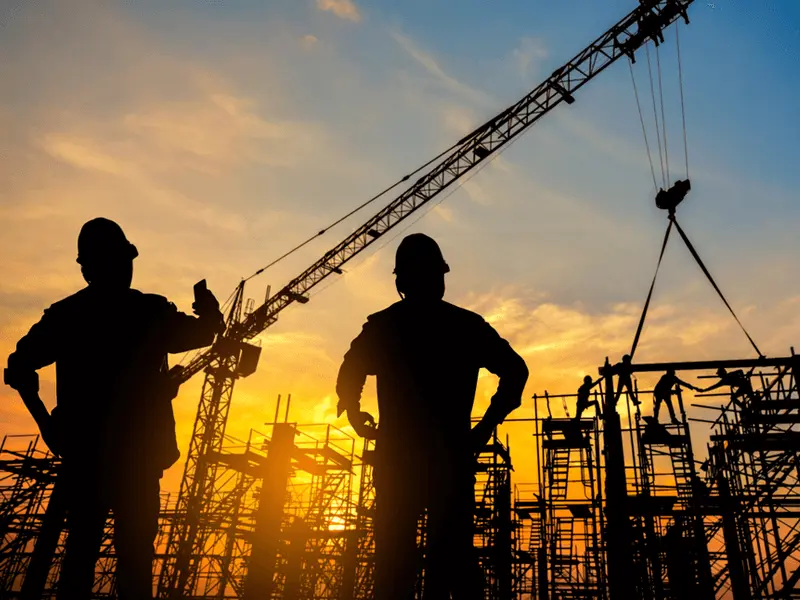
What we require from every subcontractor
- A valid Arizona ROC license in their trade
- Current certificates of insurance on file with us
- A signed copy of our site-specific safety plan
- A site orientation before they start work
- Crews and supervisors with OSHA training
- The same stop-work authority our own team has
Are you a trade partner? Find the requirements and prequalification on our credentials page.
FAQs
Q1. What is a good EMR for a contractor?
Q2. How is TRIR calculated?
Recordable cases × 200,000 ÷ hours worked. Construction averaged 2.2 per 100 full-time workers in 2024.
Q3. What is the difference between OSHA 10 and OSHA 30?
OSHA 10 is for workers. OSHA 30 is for supervisors. Both are training cards, not certifications.
Q4. Do lead-safe rules apply to my home?
Yes, if it was built before 1978. We follow the EPA’s lead-safe RRP rule whenever we disturb painted surfaces.
Q5. How is silica dust controlled during demolition?
With wet cutting or dust extraction. OSHA’s limit is 50 µg/m³ over a workday.
Q6. What are the heat rules for construction in Arizona?
ADOSH runs a heat emphasis program. Summer work needs planned breaks, shade, and acclimatization.
Q7. How do I get your safety records for a bid?
Use the “Get our safety documents” link on this page and send us a request. If you’re prequalifying us, our prequalification packet also includes the EMR letter.