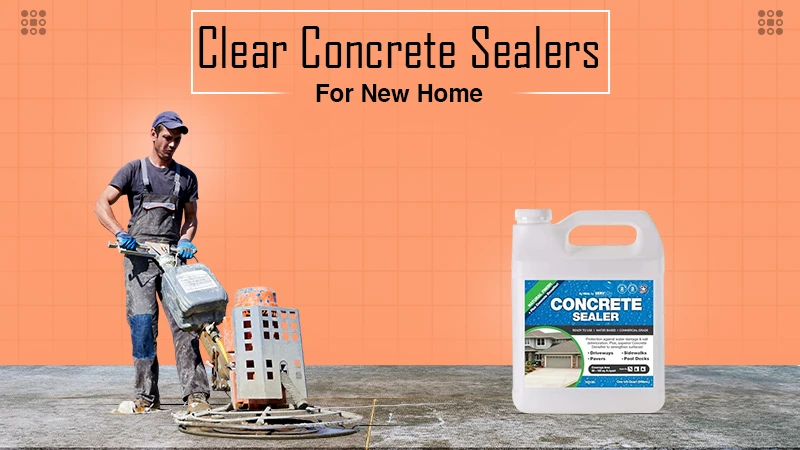
Yes, it is very crucial for protecting your home from harmful air toxins, dust, and excessive rainfall.

Clear Concrete Sealers: A Necessity More Than a Choice for Any New Home by Protecting Your Investment
Unquestionably, one of the most distinctive features of new homes is concrete. Concrete is no longer only functional; it is now a design statement, as seen in polished floors in homes, driveway exposure, patios, walkways, and garage floors, to mention a few examples.
Because it is so contemporary and low-maintenance, people adore the look!
Concrete is still far from being impenetrable, despite its strength. For one, the first few years of use are the most vulnerable to damage to freshly poured concrete.
A good quality, clear concrete sealer not only helps in preservation but also maintains appearance and integrity. Through this article, we are going to understand how to revamp your home with the strength of concrete without sacrificing the sleek, contemporary look that today’s homeowner demands.
Let’s begin!
Key Takeaways
- Understanding the current home design trends
- Uncovering why homes need concrete protection
- Looking at the ways to find the perfect solution
- Decoding some application basics and the impact of clear sellers
Current Home Design Trends in Australian Society Today
Australian architecture emphasizes indoor-outdoor living, functionality, and minimalism. Open living, natural materials, and easy transitions between indoor and outdoor spaces have become integral components of most Australian homes, as depicted above.
Concrete is also a perfect fit into this trend. It can be found in:
Polished Concrete Flooring in Living Areas
- Exposed Aggregate Driveways and Pathways
- Concrete patios and alfresco areas
- Garage floors and utility areas
- Specific: Concrete Bench tops & Feature Walls
The beauty of it is that it easily blends well with modern, industrial, beach-themed, and even luxury home styles. But as the level of exposure increases for the concrete, so does its necessity for protection.
It can also easily get dirty as it tends to absorb dirt, oil, moisture, and stains, which could affect its otherwise sought-after neat appearance.
Interesting Facts
UV-resistant sealers prevent surface degradation and color fading.
Why New Homes Need Concrete Protection
Many people consider concrete to be a ‘set and forget’ option, but Australia’s climate can be unforgiving to exposed surfaces, particularly during the early years.
Climate Challenges Facing Australia
Concrete used in homes in Australia is exposed to various environmental factors, such as:
- UV exposure that causes fading & surface degradation
- Heavy rain and humidity, which allows for moisture penetration
- Heat fluctuations resulting in cracking and surface stress
- Salt-laden air in coastal regions, which hastens decay
Hence, it is more susceptible to cracking, efflorescence (the formation of white powder on its surface), mold growth, etc., due to water absorption.
Preventing Early Damage
Sealing concrete early:
- Block Moisture Absorption
- Reduce cracking and surface dusting
- Prevent staining from oil, food, and dirt
Maintain a consistent color and finish. This means that new homebuyers will have fewer maintenance and repair bills to worry about, as well as a new home that will look new for longer.
Clear Concrete Sealers: The Basics
A clear concrete sealer is a transparent coating applied to concrete to protect it from environmental damage while maintaining its original natural look.
What Clear Concrete Sealers Do
These clear sealers actually function in the following way:
- Repels water and liquids
- Prevents Staining and Discoloration
- Reduces surface wear
- Increases durability without changing appearance
In contrast to other decorative coatings, clear sealers preserve the original look of concrete while adding color, making them ideal for contemporary homes.
Finishing Options According to Different Styles
Clear concrete sealers are available in different sheens for various home designs:
- Natural matte finish ideal for modern and minimalist designs
- For subtle enhancement, use a satin or low sheen finish.
- Usually found in upscale design settings: “Gloss/wet look finishes.”
Hence, such adaptability makes it ideally suited to different uses, from internal floor areas with glossy finishes to external pavement with weather conditions.
Sealing: Finding the Appropriate Sealing Solution for Your New Home
Note that not all the products are created equally to perform well on the concrete surface, and the product itself can be important.
Crucial Elements to Take into Account
Considerations When Selecting a Sealer The following factors are crucial to take into account when selecting a sealer:
- Indoor use refers
- Foot and Vehicle Traffic Levels
- Weather and UV exposures
- Finish: Matte, satin, or glossy finish desired
If outside, for example, as used on driveways and patios, a penetrating sealer resistant to ultraviolet rays is considered an indispensable choice.As far as indoor locations are concerned, film-forming sealers assist with providing a finer finish.
Matching the Sealer to Your Home’s Design
A good sealer will enhance, rather than overpower, the look of your home. In minimalist, architectural, and luxury styles, invisible and matte finishes work well, but glossy finishes can also be applied for luxury houses, giving them an enhanced look.
Companies that deal with new home design solutions, such as clear concrete sealer, know exactly how to go about designing a home so that it blends well with the architectural design of the building.
Application Basics for Homeowners
While many people choose to have this done professionally, knowing some basics will inform you what to expect and secure a better outcome.
What the Application Process Looks Like
Typically, the process includes:
- Allowing new concrete to cure properly
- Cleaning the surface thoroughly
- Using a roller or sprayer to apply it uniformly
- Allowing ample drying and curing time
This also ensures consistent coverage, correct usage of the product, and curing by professional installers, especially for larger installations.
Tips for Maintenance: Long-Term Care
One of the largest benefits of using sealed concrete is that it’s so easy to maintain.
To keep surfaces looking great:
- Clean often with mild cleaners, which are pH-neutral.
- Avoid harsh chemicals and abrasive tools
- Application of sealer as recommended, usually every few years
Sealed concrete lasts for decades before repairs are needed and little upkeep is necessary, making it suitable for a lively family atmosphere.
Why Clear Sealers are a Smart Investment in New Homes
Sealing a concrete surface, particularly, may seem like an unimportant practice while undertaking the process of construction or shifting, but it is worth it in the long run.
Financial Benefits
- The reduced repair and resurfacing costs
- Extend the lifespan of concrete surfaces
- Helps maintain property value
Aesthetic Benefits
- Keeps concrete looking clean and uniform
- Prevents Unsightly Stains and Fading
- Enhances the modern appeal of the home
For homeowners such as these who invest substantially in creative new home designs, keeping visible materials such as concrete protected is just good sense.
Conclusion
Concrete plays a vital role in modern Australian home construction due to its utility in structure and aesthetics. While it is well known for being a durable building material, it is still in need of upkeep, even when its use is appropriate for Australia’s harsh conditions.
High-quality, clear concrete sealer is one of the key elements in ensuring that concrete looks good, lasts long, and requires little to no maintenance from the very beginning. Whether your concrete is glossy in a living room, aggregate in a driveway, or exposed to sunlight in an entertainment area, sealing it now will pay off later.
For new homeowners looking to build their homes from scratch, or even new homeowners looking to settle in a new house, sealing concrete early on is not just about maintenance; it is about investing in the future of your house. You are essentially ensuring your concrete elements continue to support the functionality and aesthetic value of your house.
FAQs
Is a concrete sealer necessary?
Are water-based concrete sealers any good?
These offer a lower odor, lower VOCs (volatile organic compounds), and easier cleanup with soap and water.
How often should new concrete be sealed?
New concrete should be sealed after it has fully cured, typically around 28 days after installation.
Related Posts