Ans: A larger footprint, higher construction cost, and limited vertical space are the three major disadvantages of a single-story house.

Single Story House Plans in 2026: Smart Living, Lower Costs, & Better Resale!
Modern living in 2026 does not involve large homes but rather practical and smarter designs. Today people living in houses can appreciate comfort, productivity and areas that do not introduce complexity to their daily lives. Open floor plans, free flow of rooms, and a low-care lifestyle have become the number one priority of both families and professionals and retirees.
Increasing costs of construction and altered lifestyle demands have increased the significance of thoughtful planning as never before. Buyers are seeking affordable to build homes, which are energy efficient and future adaptable. Such attributes as more economical use of space, designs that are friendly to accessibility, and easy integration of indoor and outdoor areas are no luxury but necessities. Meanwhile, the value of resale has become a significant consideration, with purchasers giving preference to houses that are attractive to more people and age brackets.
Single-story house plans are an intelligent selection in 2026, and this blog outlines all queries pertaining to designing, price, and their resale value. On the next page you can find practical, easy-to-understand answers that can enable you make the right decision when planning your single-floor house plans.
Table of Contents:
- Why Single Story House Plans Are Dominating Home Design in 2026!
- Key Layout Trends in Single Story House Plans for 2026
- Cost Breakdown of Single Story House Plans in 2026
- Technical Considerations Most Blogs Ignore
- Single Story House Plans Comparison Guide
- 10-Point Checklist Before Choosing a Single-Story Plan
- Are Single Story House Plans Right for You in 2026?
- Conclusion
- FAQs
Why Single Story House Plans Are Dominating Home Design in 2026!
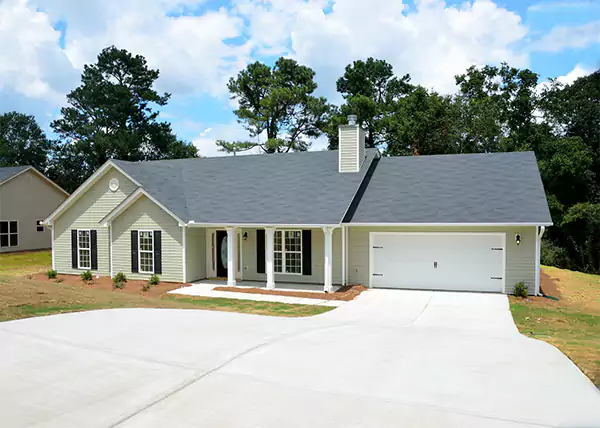
Why single story house plans are dominating home design in 2026 has multiple reasons, such as accessibility, family-friendly design, energy efficiency, cost-effectiveness, better outdoor connectivity, and resale value.
- Accessibility: The aging population always prefers home layouts where each component of the residential construction can be accessed without stairs. This aspect is often neglected in multi-story construction types.
- Family-friendly design: For kids, single floor house plans offer a safe and secure environment. To be precise, there is no risk of falling off the stairs while rushing up or down.
- Energy efficiency: Heating or cooling a one-story house is faster than a multi-story building, resulting in lower electricity consumption and reduced cost of living.
- Cost-effectiveness: Constructing and maintaining a multi-story residential building is often pricier than a single-floor structure.
- Better outdoor connectivity: Most houses with one story are built on an open-plan concept, offering enhanced connectivity with outdoor areas.
- Resale value: With high accessibility, this is the most suitable home type for the aging population, increasing its value among senior citizens.
Key Layout Trends in Single Story House Plans for 2026
Key layout trends or floor plans in one-story residential houses are typically of three kinds, namely open yet zoned floor plans, compact footprint-maximum usability, and indoor-outdoor integration.
1. Open Yet Zoned Floor Plans
Most single story house plans are open-plan, which is the uninterrupted floor design/layout without any walls. However, this open-plan design is now being implemented with a twist. For compartmentalization, design elements like furniture, lighting, and raised platforms are being used instead of full-fledged concrete or wooden walls, allowing for functional zoning.
2. Compact Footprint, Maximum Usability
This is another trend in single-story house plans where the focus is on maximizing the usability or functionality of the average square footage of a house; in other words, making the given space as functional as possible. Here, the vertical aspect of the construction is utilized rather than the horizontal one. A wooden wall that also features a bookshelf or storage inside with a sliding door is an aspect of such compact architecture!
3. Indoor-Outdoor Integration
The integration of indoor-outdoor spaces has also been growing in the context of house plans single story. In this layout, the exterior is treated as an expansion of the interior living space. Thus, a sense of connection is established with the supplementary outdoor units, such as courtyards, patios, sliding walls, glass walls, gardens, etc.
Also Read: How Much Does a Home Inspection Cost? Know All The Factors Behind It
Cost Breakdown of Single Floor House Plans in 2026
Although it depends on several factors, the average construction cost of a single-story house ranges from $150 to $300 per square foot. There are basically three types of construction with varying costs, namely basic builds, mid–range homes, and high–end and custom buildings.
Consider, in the table below, the average construction cost breakdown associated with all single-story house plans in 2026.
| Single Story Home Plans’ Construction Cost Breakdown | |||
| S. No. | Items | Costs | |
| Estimated % of the total expense | Estimated Cost in USD | ||
| 1. | Site work & permits, i.e., site prep, excavation, etc. | 6% – 8% | $15,000 – $30,000 |
| 2. | Foundation, i.e., concrete, excavation, footings, etc. | 10% – 12% | $20,000 – $45,000 |
| 3. | Framing, i.e., trusses, roof, walls, sheathing, etc. | 15% – 18% | $40,000 – $70,000 |
| 4. | Exterior finishes, i.e., siding, roof, windows, etc. | 13% – 15% | $30,000 – $60,000 |
| 5. | Major systems, i.e., plumbing, electrical, HVAC, etc. | 14% – 19% | $30,000 – $80,000 |
| 6. | Interior finishes, i.e., drywall, paint, trim, flooring, etc. | 20% – 25% | $50,000 – $100,000 |
| 7. | Cabinets & countertops | 5% – 7% | $10,000 – $20,000 |
| 8. | Appliances & fixtures, i.e., plumbing, lighting fixtures, etc. | 3% – 5% | $10,000 – $20,000 |
| 9. | Other, i.e., landscaping, cleanup, final touches, etc. | 3% – 7% | $10,000 – $25,000 |
Let’s now compare the average construction cost of building a single-story house with that of a two-story structure.
| Comparison of Average Construction Cost | |||
| S. No. | Components | Single-Story House (Max) | Two-Story House (Max) |
| 1. | Site work & permits, i.e., site prep, excavation, etc. | $30,000 | $60,000 |
| 2. | Foundation, i.e., concrete, excavation, footings, etc. | $45,000 | $90,000 |
| 3. | Framing, i.e., trusses, roof, walls, sheathing, etc. | $70,000 | $140,000 |
| 4. | Exterior finishes, i.e., siding, roof, windows, etc. | $60,000 | $120,000 |
| 5. | Major systems, i.e., plumbing, electrical, HVAC, etc. | $80,000 | $160,000 |
| 6. | Interior finishes, i.e., drywall, paint, trim, flooring, etc. | $100,000 | $200,000 |
| 7. | Cabinets & countertops | $20,000 | $60,000 |
| 8. | Appliances & fixtures, i.e., plumbing, lighting fixtures, etc. | $20,000 | $40,000 |
| 9. | Other, i.e., landscaping, cleanup, final touches, etc. | $25,000 | $50,000 |
Note: These average figures don’t apply to small structures. For example, a single-story tiny house costs even less than a medium-sized single-story house. Furthermore, if you take up the construction as a DIY project, never proceed further if you don’t know the essential steps to building a house.
Technical Considerations Related to Single Story House Plans
You mustn’t consider 1 story house plans without considering the key aspects, as elaborated below, related to zoning, setbacks, plot efficiency, HVAC & energy code compliance (2026), and resale value trends in the future.
1. Zoning, Setbacks & Plot Efficiency
One story house plans need wider plots due to the following four reasons.
- A single-story house is more horizontally involved than vertically, unlike a two-story house, needing a larger footprint.
- Meeting the setback and zoning restrictions reduces the house footprint. That is why, too, a single story house requires a wider lot. This helps keep an adequate area for house development, along with leaving the required space between the buildable envelope and the property lines in single story house plans.
- Creating a single-story house in a small footprint often leads to too narrow a structure, preventing natural light and proper ventilation.
- Finally, wider plots are required for enhanced indoor-outdoor connectivity, i.e., so that outdoor living spaces like yards, gardens, or garages can be built comfortably.
However, footprint optimization solves this problem completely, attempting to build a highly functional living unit even on a small piece of land. Thus, even if you don’t have a large plot, you can create a comfortable and functional lot without any problem.
2. HVAC & Energy Code Compliance (2026)
Key areas related to HVAC and energy code compliance in the context of single story house plans are as follows.
- Thermal envelope ductwork or HVAC equipment and ducts must be located fully within the building thermal envelope.
- Only a maximum of 10 feet of ductwork is allowed outside.
- Heat pump dominance is to be of a high-efficiency air source.
- Mandatory smart controls are now crucial to manage high-efficiency equipment.
- The HRV or heat recovery ventilation, has to offer at least 66% efficiency
3. Resale Value Trends (2026–2030)
In most developed countries, there is a rise in the aging population compared to the young ones. It is due to the effects of higher education and commitment to a career-oriented life. Thus, single story house plans in residential construction is going to face a surge in demand in the coming years. This will increase the resale value of such houses immensely.
Single Story House Plans Comparison Guide
The following table compares three major single-story house plans, including key aspects such as typical size, layout, common features, construction cost, energy/utility, maintenance, and best for.
| S. No. | Feature | Small Plans | Mid-Size Plans | Luxury Plans |
| 1. | Typical size | Under 1,500 sq. ft. | 1,500 – 2,500 sq. ft. | 2,500+ sq. ft. |
| 2. | Layout | Minimalistic, open-plan, and compact but functional due to footprint optimization | Balanced, 3-4 bedrooms, along with essential amenities | Expensive, customized, often horizontally sprawling |
| 3. | Common features | Built-ins, clever storage, vaulted ceilings & large windows | Open-concept living/dining, split-bedroom designs, and attached garage | High-end finishes, gourmet kitchens, outdoor living spaces, 3+ car garages |
| 4. | Construction cost | Lowest upfront cost, fewer materials/labor | Moderate & high value for money | Highest cost per square foot |
| 5. | Energy/utility | Highest efficiency; cheapest to heat/cool | Efficient, especially with modern design/insulation | Higher energy consumption due to size |
| 6. | Maintenance | Easy to maintain | Manageable for families | High |
| 7. | Best for | Downsizers, first-time buyers, or vacation homes | Growing families, standard suburban living | Entertaining, large, or high-budget buyers |
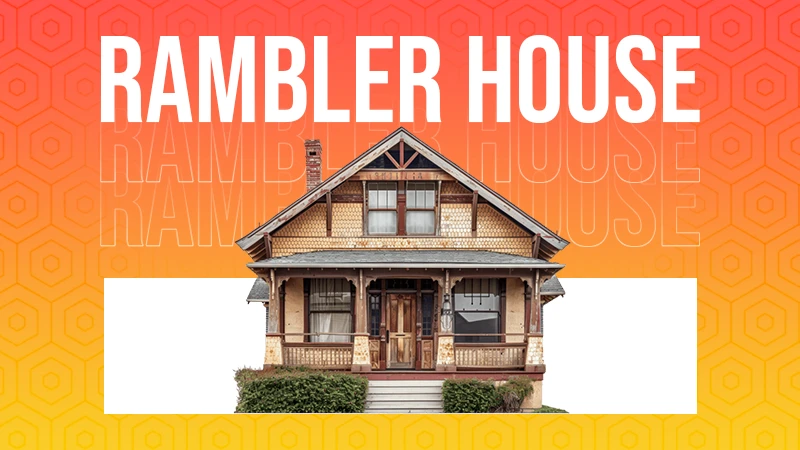
Note: The rambler house is also a type of single-story house, which is entirely built on an open-plan floor design. The architecture can either feature a completely wall-free interior or a space compartmentalized through furniture or other design elements, creating different zones for different functions.
10-Point Checklist Before Choosing a Single-Story Plan
Consider the 10-point checklist in this section below and then choose any of the common one story house plans. The list touches upon lifestyle, accessibility, budget, layout/plot size, local code compliance, light, storage, the future, the outdoors, and energy.
- Lifestyle: Ask yourself, “Does it serve your lifestyle needs better? Or, does this style of construction fit your lifestyle?”
- Accessibility: If your age lies in the senior bracket or you live with senior citizens, this plan will ensure high floor accessibility in single story house plans.
- Budget: Analyze all the costs before making your decision. And make sure that before development, your contractor has provided you with the most accurate construction estimate to avoid cost overruns.
- Layout/plot size: Single-story homes rely heavily on open-plan, where there is no internal compartmentalization with walls like all traditional homes. If you introduce compartmentalization through walls, i.e., concrete or wood, it will reduce the space, plus you cannot build vertically here. So, a single-story house ideally requires a wider lot than a typical two-story house.
- Local code compliance: The setback limits reduce the size of the plot or the buildable envelope. Thus, always decide on land after including this compliance.
- Light: These structures typically offer plenty of natural light in the morning, which can be a cause of disturbance for night owls in single floor house plans. It is especially true with glass-based structures.
- Storage: If you live in a joint family, this plan might pose storage challenges.
- Future: Don’t just see if the house design suits your lifestyle needs at the moment, but if it is future-proof as well.
- Outdoors: For a single user, you must plan your interior along with outdoor living spaces for seamless connectivity.
- Energy: Strategically plan your HVAC systems for the most efficient use of the resources.
Are Single Floor House Plans Right for You in 2026?
Single story building plans are right for you if they serve your needs better than other types of available architecture. Its suitability depends on several factors, but the major consideration involves how well it aligns with your individual or family needs. Other factors are long-term living plans and current budgetary constraints. Furthermore, land availability is also a challenge.
Also Read: Construction Bidding: Learn Meaning, Stages, Elements, Types, and More!
Conclusion
That is the end of our discussion on single-story house plans. This design of residential space is the most suitable, thus the smartest investment, when it is for a single-use purpose. It is so because most such houses are small. However, if you have a large and wide area, single-floor house plans can easily accommodate a large family as well. So, whether it works for you depends entirely on the plot size.
FAQs
Q: What are the disadvantages of a single-story house?
Q: What are common floor plan mistakes to avoid?
Ans: Bad traffic patterns, poor room placement, and too much openness are some major mistakes people make while dealing with floor plans.
Q: How big a house can I build for $100,000?
Ans: A small house with an average size ranging from 500 to 1,000 sq. ft or so can be built with this many financial resources.
Q: What are the two main types of construction?
Ans: Residential and commercial buildings are two major types of construction.
Q: What is the most expensive part when building a house?
Ans: The foundation and the structure are the most expensive parts when building a house.
Related Posts