Ans: Repetitive tasks are given to the robots in construction so that workers can focus on other important areas. This helps achieve the greater outcome, combining human skills and artificial intelligence.

Robotics in Construction: Implications, Reasons for Adaptation, Applications, Key Benefits, and Much More!
As technology evolves day in and day out, automation becomes a must in all fields of human endeavor. The construction industry is thus no exception. With labor shortages, safety needs, and efficiency demands, robotics in construction is the new reality.
However, it is still in the transitional phase. With evolving artificial intelligence, the future is still dynamic. Learn about how robots are taking on bricklaying, demolition, hazardous activities, surveying, site inspection, and other crucial tasks, streamlining construction and its key aspects.
Table of Contents:
- What is Construction Robotics?
- What is Dusty Robotics?
- Why Dusty Robotics Matters?
- Why Robotics is Growing in the Construction Industry?
- What are the Real-World Applications of Robotics in Construction?
- What are the Key Benefits of Robotics in Construction?
- What are the Challenges and Limitations of Construction Robotics?
- The Future of Robotics in Construction
- Conclusion
- FAQs
What is Construction Robotics?
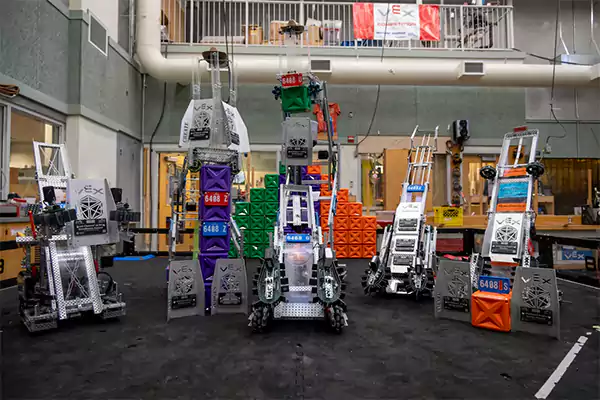
Robotics in construction is an effort of humanity to simplify hard work and achieve high perfection in the work performed, reducing cost and time by eliminating major inefficiencies.
These robots are simply machines that can perform a variety of tasks, streamlining the construction process. Such automation majorly involves bricklaying, excavation, demolition, layout marking, etc.
Automation in all construction types isn’t going to fully replace laborers or other key workers in the industry. Rather, the technology is here to assist workers in ensuring better precision and quality work.
What is Dusty Robotics?
Dusty Robotics is an American construction technology firm that manufactures robotic construction tools to enhance precision and capabilities on construction sites.
The company is most famous because of its field-printing robot named FieldPrinter that is used to print digital building plans directly on the concrete floor at a job site. Rather than manually measure and mark layouts by chalk lines, contractors can transfer CAD drawings on the floor with high precision with the help of Dusty’s robot.
What Dusty Robotics Does:
- layout Prints plans on the concrete slabs.
- Enhances the precision of construction.
- Eliminates human error and rework.
- Saves time and labor costs
- Interface syncs with digital design files (BIM and CAD).
Why Dusty Robotics Matters?
Conventional layout marking may cause errors in measuring and time wastage and expensive revisions. Dusty Robotics assists contractors in expediting and fulfilling the digital plan for the actual construction by closing the distance between the digital plan and the physical construction.
It belongs to the expanding field of construction robotics ( ConTech) dedicated to building project automation, robotics, and digital transformation.
Why Robotics is Growing in the Construction Industry?

The robotics in construction is on the rise majorly due to reasons such as speed, safety, labor shortage, and quality demand.
- Speed: Owners want their projects finished faster, which puts pressure on the contractors to complete them before the stipulated time limit. It is so because they also need to perform the final quality checks before the handover.
- Safety: Often, workers have to be involved in dangerous activities in construction, thus leading to a call for high safety. Such activities include working at heights, excavation & trenching (cave-ins), electrocution, demolition or structural collapse, etc.
- Labor shortage: Day by day, as people prefer high-profile work, the labor supply is decreasing, finally leading to a considerable shortage. Thus, giving way to a huge opportunity for automation.
- Quality demand: Nobody can match the accuracy and perfection in work as ensured by computerized and AI-powered machines or robotics.
What are the Real-World Applications of Robotics in Construction?
Dusty layout robots or other robotics have become an integral part of the construction industry. Common aspects that the technology has made easy are bricklaying & masonry work, demolition & hazardous site work, surveying & site inspection using drones and robots, and material handling & automated transportation.
1. Robotic Bricklaying and Masonry Work
- The brick laying robots help lay bricks faster and more consistently, without leaving any room for errors, and thus eliminate the need for corrective work.
- This ability is useful for constructing large-scale types of houses or commercial projects.
- With robotic bricklaying and masonry assistance, workers experience less fatigue.
2. Robotics in Demolition and Hazardous Site Work
- Demolition robots can safely handle demolition in unstable buildings.
- The same technology can also be used in dangerous settings such as fire-damaged structures, toxic areas, etc.
- Such an innovation helps ensure a high level of safety for workers against the risk of injury.
3. Surveying and Site Inspection Using Drones and Robots
- One of the best tools in construction robotics is Dusty robotics field printer, which helps automate the construction site layout process.
- Furthermore, drones and robotic systems help map construction sites better.
- With their help, accurate measurements and progress tracking become easy and streamlined.
- The automation in this part of the construction saves time and reduces costs. compared to manual surveying.
4. Material Handling and Automated Transportation
- Factorio construction robots are also capable of moving heavy materials like cement, steel, and tools from one place to another.
- This helps reduce physical and mental strain on workers, requiring less manpower and yet boosting productivity.
- Ultimately, the workflow becomes streamlined, and tasks get completed faster with better accuracy.
What are the Key Benefits of Robotics in Construction?
The key benefits associated with Dusty robotics or any other category of automation machinery in construction are improved worker safety, higher accuracy & quality control, increased productivity & faster completion, and long-term cost efficiency.
1. Improved Worker Safety
Robots are now fully qualified to take on dangerous tasks on the construction site, such as working at heights or demolition. This makes the cherished goal of fewer workplace accidents possible.
2. Higher Accuracy and Quality Control
Robotic house buildings often exhibit the best structure and quality of build. This is because robots perform tasks with consistent precision and reduce human errors in repetitive work, such as laying bricks, always making mortar with the same consistency, etc.
3. Increased Productivity and Faster Completion
Machines are known to automate the work in less time with a higher level of output. The same rule also applies here when we discuss robotics in construction. For example, robots can work longer without fatigue, which is a major plus point when it comes to completing large projects in time and meeting deadlines, especially residential construction projects.
4. Long-Term Cost Efficiency
Robotics leads to higher efficiency, which means minimal to no waste in construction and thus no requirement for rework. This culminates in cost reduction in the long run.
What are the Challenges and Limitations of Construction Robotics?
The challenges and limitations in the context of robotics and construction are multifaceted but can be subsumed under the following three heads: high initial costs & investment, need for skilled operators & training, and limited flexibility in complex job sites.
1. High Initial Costs and Investment
- Robotics equipment is expensive to purchase and maintain because it has high upfront costs.
- As a result, such tools for automation are not affordable for small contractors.
- However, this challenge is easily offsettable, given the fact that automation boosts efficiency in the long run, reducing human errors in repetitive work and thus minimizing the potential for structural collapse and rework. All of it results in cost reduction and profit margin maximization.
2. Need for Skilled Operators and Training
- Even though you own robotics and construction projects, you also need skills to handle the machinery and get the work done in the desired way, or you will have to hire someone competent to handle, operate, and manage the equipment.
- If you have recently introduced the power of automation to accomplish better quality in construction projects, training is a must. The workforce needs to be trained, and that takes time and resources, adding to the upfront costs.
3. Limited Flexibility in Complex Job Sites
- Apart from all the complexities present in the development work, there is another issue that the needs of the construction vary from project to project.
- Thus, the construction site changes daily, and as a result, the robots struggle with unpredictable environments compared to humans, who are highly flexible to change according to the prevailing situations.
The Future of Robotics in Construction
The future of robotics in construction, whether it is a Dusty layout robot specifically or any other brand-based equipment, is bright. Key possibilities are integration of AI & smart automation, smart construction sites & connected technology, and human-robot collaboration instead of replacement.
1. Integration of AI and Smart Automation
- Now, robotics isn’t just limited to or concerned with performing repetitive tasks based on pre-loaded instructions but also being able to process steps mindfully, mimicking human intelligence to a great extent.
- This change is being driven by revolutionary innovations in the emerging field of artificial intelligence, leading to the cherished goal of smart automation.
2. Smart Construction Sites and Connected Technology
- Dusty robotics field printers and other equipment, such as sensors, drones, and BIM systems, are increasingly making construction sites smarter day by day.
- This change will bring about a revolution, making project sites more data-driven in the near future.
3. Human-Robot Collaboration Instead of Replacement
- With the discussion of automation, the replacement scenario is always feared.
- However, the introduction of robots in construction and the resultant automation isn’t going to replace all the human beings from the industry.
- Rather, the situation will be one of cooperation. The AI-powered machines will assist workers so that the best human skills can be combined with robotic efficiency, reducing costs and taking productivity to the next level.
Also Read: Average Bedroom Size: Complete Guide to Dimensions, Layouts & Design Tips
Conclusion
Robotics in construction is becoming a need rather than an optional addition, as the technology evolves to perfection day by day. Smart automation boosts safety, productivity, and accuracy in less time and money, taking efficiency to the next level.
Furthermore, although high initial costs of purchase and installation often come across as a major challenge among small to medium contractors, it is offsettable. The long-term efficiency produces a counteractive effect that balances the high upfront investment with the long-term rise in revenue or profit margins.
FAQs
Q: How are robotics used in construction?
Q: What are the 4 D’s of robotics?
Ans: 4 D’s stand for Dull, Dirty, Dangerous, and Dear. These are types of tasks that are delegated to the robots due to their ability to deal with them better or in a highly efficient way.
Q: What do construction robots do?
Ans: They automate dangerous, repetitive, or time-consuming, and highly strenuous tasks in construction projects.
Q: What are the big 4 of robotics?
Ans: The “Big 4” in industrial robotics traditionally refers to ABB, Fanuc, KUKA, and Yaskawa. These giants have dominated the markets for decades now with significant shares.
Q: What is Elon Musk’s robotics company?
Ans: Elon Musk’s robot company is Tesla, Inc., which is developing a general-purpose humanoid robot designed to carry on dangerous, repetitive, or boring tasks in factories and at home. On completion, this robot might also find applicability in the field of construction.