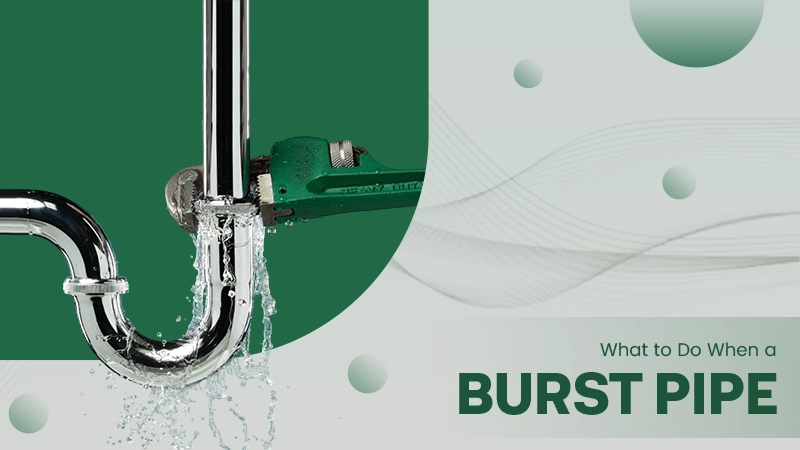
The most common reason behind a pipe burst is when the pressure inside the pipe becomes too high for the pipe material to hold.

What to Do When a Pipe Bursts – 9 Crucial Steps
KEY TAKEAWAYS
- Understand the most typical reasons for pipe bursts
- Discover the first steps to take when a burst pipe is found
- Find out what to do to avoid future pipe bursts at your house
A pipe bursts, and suddenly there’s water everywhere. You just stand there thinking, “Really? Right now?” It’s annoying, stressful, and usually happens when you least expect it. And here is a stat that makes it even crazier: burst pipes cause nearly £50 million ($63M+) in damage per year in the UK alone.
The good news? In a few cases, you don’t need to be a plumbing expert to handle it. A few simple steps, like turning off the main water, keeping an eye on electricity, and acting quickly, can prevent the mess from getting worse. But in situations where handling all this alone is not possible, contacting an emergency plumbing Vancouver service is a smart move.
Let’s dive into this informational article and understand what one should do when a pipe bursts, following 9 crucial steps.
What are the Most Typical Reasons for Pipe Bursts?
It is a good idea to know what triggers pipes to burst before getting so much into the steps to be followed in response. It is better to be well aware of the causes so that you can predict and avoid the issues ahead.
Freezing Conditions:
Water in pipes might freeze and break in colder environments. When water becomes ice, it causes a strain on the walls of the pipes. When this pressure is so strong that the material used to construct the pipes cannot handle it, then the pipe may crack or break. Pipes in the unheated part of the home, such as attics, basements, or outside walls,s are especially susceptible.
Excessive Water Pressure:
Pipes are designed with the capacity of holding up to a certain degree of water pressure. Under the pressure that goes above the safe limits caused by blockages, defective valves, or malfunctions of pumps, the pipe may break at its most vulnerable points. This risk is greatly decreased by maintaining balanced pressure and frequent inspection of your water system.
Corrosion and Ageing:
With the passage of time, pipes get weakened due to material fatigue, rust, and general wear. The aged plumbing systems that were constructed out of iron or old materials are more vulnerable. When done regularly, professional check-ups may help in identifying parts that require replacement before failure.
What Should the First Steps Be to Take When a Burst Pipe is Found?
In the event of a pipe bursting, react promptly and systematically. The nine steps will help you in the initial containment, safety, clean-up, and damage documentation.
Turn Off Your Running Water in the House:
This is the first and most crucial step to take. Find your main water shut-off valve at your home and switch it off. By halting the movement of water, one is able to avoid further flooding as well as minimise the damage. Each is a different house; however, typical places to find this valve would be in utility rooms, airing cupboards, garages, under kitchen sinks, or at the point of entry of the supply line into your home. Familiarise yourself with this place, in case there is an emergency, and be quick.
Switch off Electricity in Affected regions:
Water and electricity are a lethal mixture. In case the leak is close to electrical outlets, appliances, or power points, turn off power to the same circuit with your circuit breaker panel. When there is standing water around the outlets, do not touch anything metal, as you may get electrocuted, so make sure to switch off the power safely, or summon an electrician, in case of necessity.
Find and Intact Recoverable Objects:
Take out furniture, electronic appliances, paperwork, and treasures. When wet items are to be moved, they must be moved to a dry location, dried, and washed within the shortest time possible to minimise the irreparable damage. A timely response in this case can help preserve valuable and emotional items.
- Determine and alleviate Water Damage Fast:
Evaluate the level of water dissemination immediately, when it is safe to do so. Towels, mops, fans, and dehumidifiers should be used to start drying out the affected areas. Professional water extraction equipment might be required in bigger incidents. Quick relief assists in avoiding mould and decay.
Remove Standing Water:
Standing water is a dangerous practice that introduces several risks such as mould growth, structural damages and slips. Move water away with buckets, wet/ dry vacuums, or pumps. Dispose of water where possible to drain or outside. The quicker you get the standing water off, the less the chance of subsequent problems.
Get in touch with a Professional Plumber:
Once an initial containment is done, the second step should be to call a professional plumber. Although halting the supply of the water will help, fixing the burst pipe is not a DIY task unless one is adequately trained. A qualified plumber would be able to troubleshoot and repair permanently, and check the remaining part of the system to ensure stability.
Carry out Temporary Repairs and Emergency Repairs:
In case a plumber is not able to reach on time, temporary solutions can be made to minimise leakage until permanent solutions are made. Short-term solutions are emergency patches, pipe wraps, or clamps. They are not substitutes for professional repair, although they may reduce the water loss in the meantime.
Get the Record of the Loss to Your Insurance Policy:
Photographs and videos of all the affected areas, the burst pipe itself, and any damaged items should be taken before any serious cleanup is done. Note dates, narrate the events, and retain receipts of materials you may buy in case of an emergency. This paperwork is critical for insurance payments.
File Your Insurance Claim:
Immediately get in touch with your household insurance company to report the water loss and initiate the claims process of claims. Present your documentation and act on insurer guidelines on assessments and estimates. Writing down records and schedules will assist your claim to run smoothly.
What to Do to Avoid Future Pipe bursts at your house?
Once the present crisis is solved, work on preventing future problems. Prevention will save a lot of money and stress in the future.
Line Pipes against Freezing:
Cover exposed pipes with proper insulation, particularly the ones in cold areas such as attics, garages or outside walls. This will minimize the chances of freezing during colder seasons.
Monitor Water Pressure:
Periodically monitor the water pressure in your house and add a pressure regulator where needed. Excess pressure increases the risk of failure of pipes.
Set Plumbing schedules regularly:
By hiring a certified plumber to perform inspections annually, the weak points, as well as corrosion or any other issues, will be identified before a break occurs. Preventive maintenance can be less costly than emergency maintenance.
It is important that every homeowner understand what to do in case a pipe explodes. A speedy and composed response, combined with preparedness and preventive steps, will significantly minimize damage and help restore normalcy more quickly. With these 9 tips and by securing your plumbing systems as part of a well-planned home structure, you will be able to manage a bursting pipe with ease and prevent such water disasters in the future, while also taking better care of your house through informed construction and maintenance decisions.
What causes pipes to burst?
What is your first response in the event of a pipe break?
Immediately turn off the main water supply to your home to stop further flooding.
Is a burst water pipe an emergency?
Yes, it is a major plumbing emergency that needs instant action to prevent situations like flooding, ruined flooring, and mold growth.
Related Posts