Ans: A living space that utilises interconnected systems and devices that enhance security, provide automation, and offer convenience to its residents is called a smart home.

The Rise of Smart Homes: What Builders Need to Know
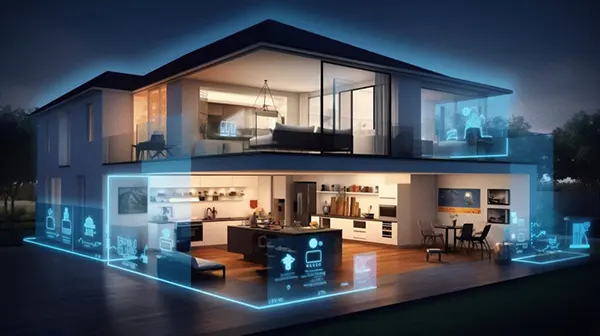
A modern lifestyle doesn’t just involve smarter workflows, better devices, and the use of new technologies for work. It also consists of building a home that integrates connected living smoothly.
Furthermore, smart features in a home do not just appear out of thin air. They need a proper plan and layout during construction to provide inter-connectivity without interruptions, which only a builder can make possible.
Let’s understand this further from a builder’s perspective and how they can ensure the modern construction of your home with planned infrastructure right from its inception.
Key Takeaways
- Smart homes consist of various devices and technologies, all interconnected with each other, providing control and ease of access to all functionalities in the home
- Connectivity, AI integration, and remote management accessibility are a few of the key technologies that comprise a smart living space
- A house’s design and infrastructure must be studied by the architect or the builder to make these additions possible and feasible in a house
- Energy management, safety, and security are some of the many challenges that a builder must consider before entering the execution phase of a living space
What Smart Homes Mean for Modern Construction
Smart homes use interconnected devices for automation, offering convenience, security, and efficiency to their residents, mostly controlled by smartphones or devices.
Now, some homes already include highlights of it, like smart lighting, thermostats, and security cameras, but a full-fledged smart space needs much more than that.
It requires a definite plan during its construction. A builder must be experienced in dealing with the management of multiple devices and gadgets across the house, cable management, network connectivity, and energy management to create a smart living space.
Key Technologies Driving Smart Home Demand
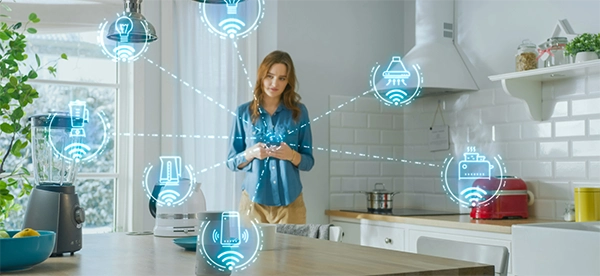
A perfect mix of core technologies must be maintained to fulfil the demand of a smart home. The following are a few of them:
- Connectivity – Devices use a network to contact and interact with each other, making connectivity a vital part of a house. Wi-Fi, Bluetooth, and protocols like Zigbee form the foundation of this.
- AI and Machine Learning – Modern systems are capable of making decisions automatically by learning user behaviour, patterns and routines. This functionality is a must for homes that look to automate and bring ease of access into their living.
- Remote Management – This technological feature allows the user to remotely control the functions of their space, such as cameras, security locks, or lighting.
The combinations of these three basic technologies ensure that the design and expectations of a smart space are clear to the users and builders.
Planning Infrastructure for Connected Living
Onto the practicalities and setup of the functionalities, a definite infrastructure design and clear execution are paramount for a connected living experience.
Managing power outlets, cable setups, calculation of network ranges, and safety and security management of the house fall under this.
Additionally, builders must be aware of the limitations of the structure of the house and also how they can take advantage of the many pros of a space and seamlessly integrate smart applications without sacrificing convenience.
A well-thought-out architectural plan always produces the best results for a home.
Fun Fact
The ECHO IV, developed in 1966, was one of the earliest “smart” devices capable of controlling digital clocks and air conditioning of a home.
Integrating Smart Features Into New Builds
A builder must know the end-to-end uses of smart features used in the home. An experienced and knowledgeable architect knows that AI must not only be limited to a user’s device but should be able to connect to many different gadgets at once.
The same AI that executes your work-life tasks must also be able to configure your smart fridge according to your preferences, like sorting your drinks according to the beverage labels and reflecting your available grocery details on your smartphone.
This is why seamless integration is a must-have feature for new builds constructed with a smart home design in mind, as it provides endless functionalities to its users.
Challenges and Considerations for Builders

Builders may face many challenges and roadblocks while they work their way towards creating a smart space capable of integrating ways of connected living into the mix.
Energy efficiency remains a major concern amongst residents, and to incorporate that, builders will have to optimize certain networks and apply cost-saving methods to manage the electricity expenditure of the home.
This can include auto-turn off of unused appliances during the night, enabling battery-saver mode of certain devices when a set limit of energy use is reached, and more.
Additionally, health and safety must be prioritised with the installation of smoke detectors, air quality monitors, and other health-related sensors that send out alerts in times of emergencies.
Furthermore, accessibility can be a challenge, and configuring them for elderly individuals provides them with decreased dependency on other residents of the house.
Final Thoughts
Though smart spaces and home automation can provide multiple benefits and options to the residents, the quality of execution and finishing depends entirely on the builder and their knowledge of all the interconnected systems.
Hence, a builder or an architect must plan, consider, visualize, and tackle various challenges to ensure that safety, security, connectivity of all systems and functions are maintained throughout the life of the home.
FAQs
Q1) What is a smart home?
Q2) How does AI help in the functioning of a smart space?
Ans: Artificial intelligence is capable of automating various routine processes of a house, providing ease of access to individuals in the home.
Q3) What are the challenges faced by builders when constructing a smart home?
Ans: Health and safety issues, energy usage management, cable routing, and connectivity hurdles are some of the challenges that builders face while designing a smart living space.
Q4) How is the integration of smart features ensured in a home?
Ans: The proper integration of smart systems in a home completely depends on the connectivity and network range that the house’s structure supports, making every feature appear seamless and risk-free.
Related Posts