Ans: Higher initial costs and the unavailability of skilled workers can be considered the two most important disadvantages of this construction method.

What Is ICF Construction? Benefits, Cost & How It Works!
Have you ever lived in traditional homes, made of only wood or concrete? If yes, you know that they need constant conditioning for controlled temperature. It is so because these homes are least insulated or airtight. That is why the cooling or heating escapes faster. As a result, the electricity bill increases, adding to the overall household expenses.
But there is a solution to this problem, and it is ICF construction. This is a way of building walls that combine form panels with reinforced concrete. It helps ensure high insulation as well as strength for better durability. Learn more about it in the following article.
Table of Contents:
- What is ICF Construction and How Does it Work?
- Why is ICF Construction Becoming Popular?
- What is the Step-by-Step Process of ICF Construction?
- What are the Key Benefits of ICF Construction?
- ICF Construction Cost: Is It Expensive?
- ICF Construction vs Traditional Wood Construction
- Common Applications of ICF Construction
- Is ICF Construction the Future of Home Building?
- FAQs
What is ICF Construction and How Does it Work?
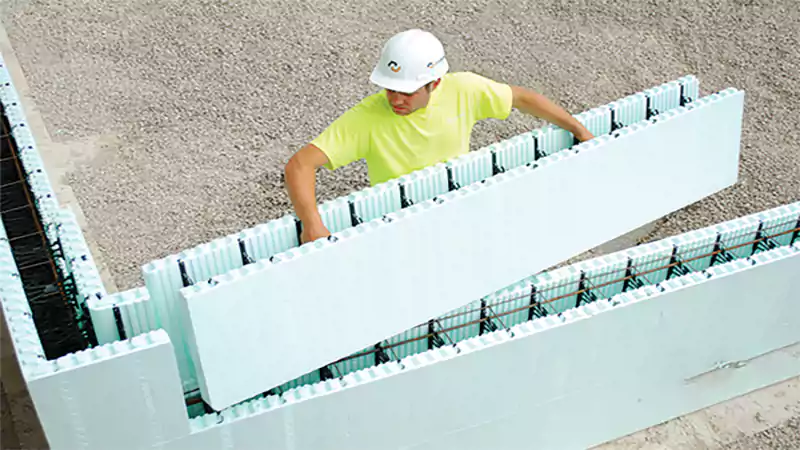
ICF construction is a type of building method in which insulated concrete forms are used. These form materials make walls energy-efficient. There is also concrete involved with steel reinforcement bars. It is a highly durable structure.
If we analyze its making, such walls often have a threefold structure.
- Form pairs: First of all, these walls consist of hollow, lightweight forms. They are stacked in pairs without mortar. These units resemble interlocking Lego bricks.
- Interlocking: Second, each wall contains two panels. Both of them are internally connected through plastic interlocking. It helps maintain cavity width perfectly, like two hands holding both panels tightly together!
- Reinforced concrete: Finally, the concrete is used inside the panel space for strength. It is a special type of concrete that is reinforced with metal bars. When it is poured, the form panels become firm and even stronger after complete curing.
The art of creating homes with insulated concrete forms is very unique. Unlike traditional wooden formwork that is removed after concrete cures, ICF forms remain in place permanently. Here, the walls aren’t just strong but highly insulated as well. It provides a conducive atmosphere in all types of houses.
Why is ICF Construction Becoming Popular?
Major reasons why ICF house construction is becoming popular are explained below. They are energy efficiency, strong structural durability, and better sound insulation in short.
- Energy efficiency: The structure of an ICF wall is extremely compact and strong. There is a layer of form on either side of the reinforced concrete blocks. That is why the wall becomes highly effective in maintaining the controlled temperature for an extended period of time. It reduces the energy consumption a lot.
- Strong structural durability: Another crucial feature of the construction involving insulated concrete forms is its strength. The walls aren’t just all forms or all concrete. Rather, they are a perfect combination of both. Here, the RCC provides strength while forms ensure better airtightness.
- Better sound insulation: Form components in ICF construction work as brilliant noise cancellation. This feature dramatically reduces the passage of internal-external sounds through walls. Well, it is also the primary reason why using insulated concrete forms is becoming popular. It is the first choice among all types of residential construction projects.
Note: Fox Block is one of the most popular brands in the market of ICF panels.
What is the Step-by-Step Process of ICF Construction?
The step-by-step ICF building construction process involves several key steps. These are site preparation for foundation, installing ICF blocks, pouring concrete into forms, and finishing the walls. All of these aspects are discussed in detail below.
1. Site Preparation for Foundation
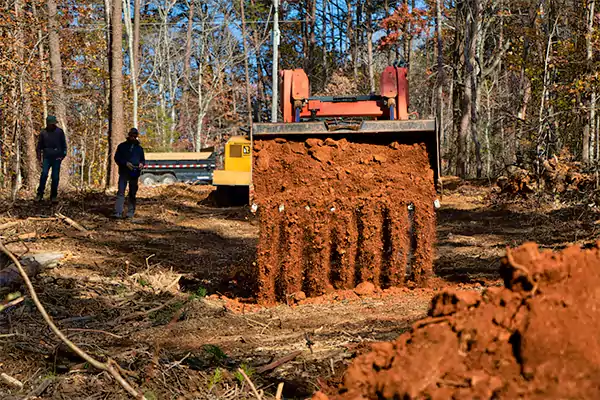
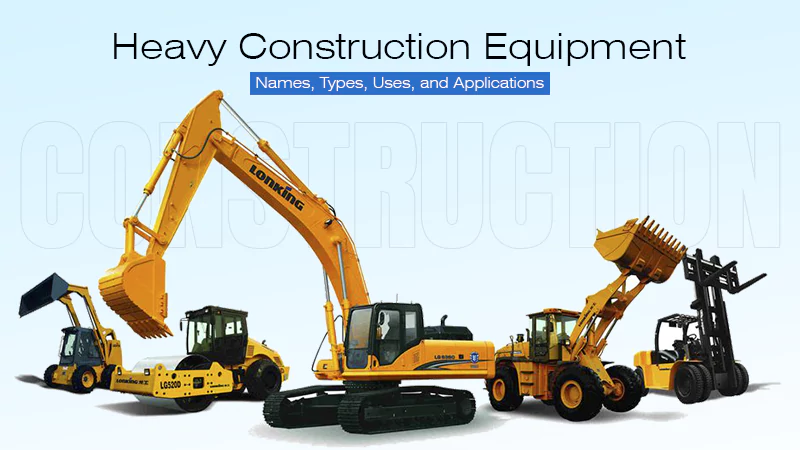
This is the first step of the process. Here, the site of the construction is generally surveyed, equipped with a footer installation, and waterproofed. At this stage, large, heavy-duty construction vehicles are used. Learn more about these points below.
- Site survey: The project owner might want to build a residential property on a messy land with trees, uneven terrain, embedded boulders, etc. There could be other types of obstructions as well. So, it requires clearing, leveling, and preparing the site for foundation development.
- Footer installation: Once the ground is prepared, it is time to construct a concrete footer. The footer should be around 6 inches (15 cm) thick, with rebar placed ⅓ of the way up. It helps reinforce walls maximally. However, that is just an ideal suggestion. Each project must adhere to its specific requirements, besides general guidance. Thus, if you can afford it, consider hiring a contractor for precision in the job.
- Waterproofing: Even though optional, applying water-resistive barriers or drain tiles provides added protection. Many choose this to protect the foundation from potential water damage in the future.
Note: If taking up this entire task as a DIY project, make sure that you are very well familiarized with all the essential steps to building a house right from the beginning. It will help reduce potential mistakes to a minimum. However, for perfection in the process, most people ultimately consider the biggest construction companies for their dream projects.
2. Installing ICF Blocks
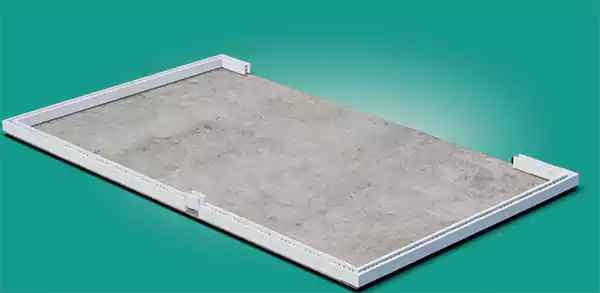
Next, there comes the installation work. The ICF blocks are carefully put in place before the concrete is poured inside for strength and stability. Professionals start from the corner, moving to interlocking, bracking-leveling, and cutting. Almost all construction types support development with this insulated concrete method. Consider the elaboration below.
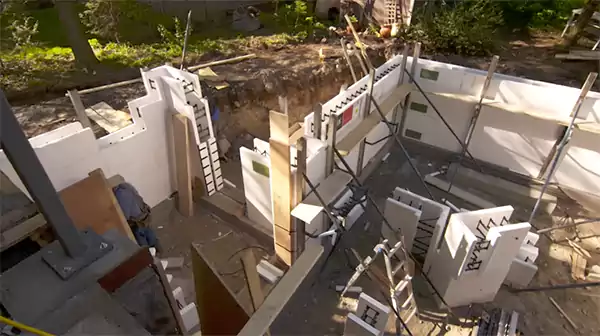
- Corner setups: Corners should be your point of start in setting up the form panels. It helps maintain a straight line without fail. In short, first install the corners and then move ahead. The point is highlighted in the image below.
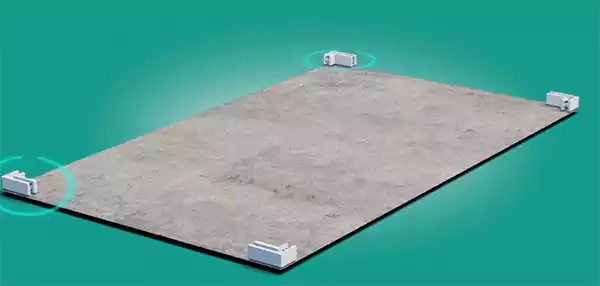
- Interlocking: Once all the area is installed perimetrically, it is time for interlocking. Here, the blocks are stacked like Legos. Then, webs inside the cavity are interlocked to secure the given width.
- Bracing & leveling: Keeping panels perfectly straight and perpendicular to the ground is also crucial. Additionally, highly securing these form pairs in place is required too. Thus, adjustable metal bracing systems are used. They help maintain the forms’ shape while the concrete is poured. Without them, the form walls will bow, bulge, or blow out. Basically, it will get warped for the worse.
- Cutting/Fitting: At this point, professionals cut blocks according to the size of the windows and doors to create desired openings. To do so, they use a hand saw, ensuring a perfect fit.
3. Pouring Concrete into Forms
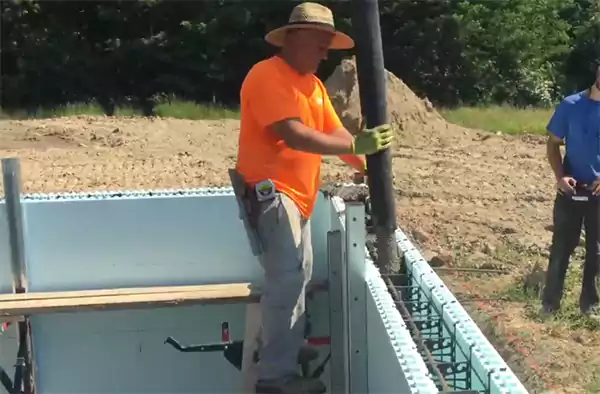
The main precaution is that the panels are perfectly installed and secured in place; concrete pouring and vibration come next.
- Concrete pouring: Here, using a concrete pump, experts pour the cement mixture into the form walls. It is done in layers, one by one, with time gaps. Pouring it all at once is avoided. Delay in the process helps avoid excessive pressure and also provides enough time for settlement.
- Vibration: After filling, vibration equipment ensures that the concrete completely reaches all the corners of the panels. So, there is no air left trapped. This procedure is crucial for maximum strength after curing.
4. Finishing the Walls
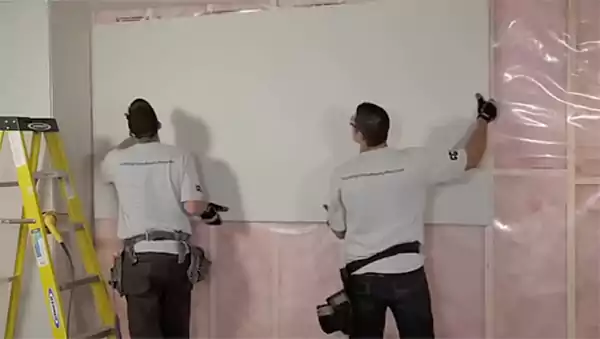
Lastly, experts ensure finishes, including electrical/plumbing, exterior finishes, and interior finishes.
- Electrical/plumbing: Suitable chases are cut out into the EPS form to embed electrical conduits and plumbing lines.
- Exterior finishes: Stucco, siding, brick veneer, or stone are used here. They are directly applied to the ICF surface for an excellent exterior look.
- Interior finishes: Attaching drywall directly to the ICF ties or applying plaster to the form provides interior finishes. Most homeowners also adapt to this for quick renovation.
Also read: 43 Heavy Equipment Names, Types, Uses, and Applications in Construction & Other Activities
What are the Key Benefits of ICF Construction?
Out of the multiple benefits of the ICF homes, the major highlights are discussed here. In short, these advantages are energy savings, disaster resistance, long-term durability, and eco-friendly building methods.
1. Energy Savings
ICF construction is highly insulated. Thus, it helps maintain the desired room temperature for longer with less energy consumption. The cooling or heating doesn’t escape the walls quickly. So, keeping the atmosphere comfortable and conducive becomes affordable. Automatically, it results in huge energy savings and electricity cost reductions.
2. Disaster Resistance
When it comes to disaster resistance or prevention, ICF construction tops the list. It outperforms wooden structures in the face of high winds, hurricanes, or tornadoes. Furthermore, as far as fire safety is concerned, ICF walls are built with non-combustible materials, which means total safety from extreme burns.
3. Long-Term Durability
Concrete structures always stand the test of time very easily. They don’t even need frequent repairs and replacement for this longevity. Furthermore, ICF components also contribute to the durability. These insulated forms are less prone to mold, mildew, and pest infestations. That is good for overall strength.
4. Eco-Friendly Building Method
An ICF-equipped type of building often uses sustainable materials and minimizes waste. As a result, Eco-friendly building practices are promoted. Additionally, lower energy consumption for heating and cooling due to high insulation means a significant reduction in the carbon footprint. All of it makes the ICF construction the best choice for future generations.
Also read: Commercial HVAC in Fort Worth & Key Considerations Before You Plan Its Installation!
ICF Construction Cost: Is It Expensive?
The average cost of the ICF construction per square foot is between $100 and $250 for the total project cost. But, the range is subject to fluctuation. It can vary from one project to another, due to several factors.
Major things that influence the cost of this special type of building method are listed below. In brief, they are design complexity, wall height & length, site accessibility, labor specialization, and concrete & steel pricing.
- Design complexity: Simple builds don’t cost much, but specifically custom-made house plans do. Thus, if you want to build on a low budget, keep your architecture as basic as possible. Stick to minimalism.
- Wall height & length: The higher the height and length of a house wall, the higher the cost of the project. And, that is not just due to the increased number of ICF panels but also the extra materials required for final finishing. That is why it is important to be mindful of the average square footage of a house.
- Site accessibility: If the lot is tight or confined, using the large boom pumps for concrete pouring will be challenging. Thus, it will require special equipment, such as longer hose setups or increased manual labor, to do the job. That increases the cost too.
- Labor specialization: ICF building construction is a specialization in the field of construction. It means it requires you to hire skilled labor or professionals for the project. Such trained professionals often charge more for their expertise.
- Concrete & steel pricing: Lastly, even though forms ensure higher insulation, the construction still almost 80% depends on reinforced concrete. This makes the walls structurally full of strength and stability. Thus, fluctuations in the prices of substances used for making this concrete also influence the ICF development cost.
Thus, whether building ICF homes is more expensive or not simply depends on the strength of your budget. It is not that costly if you count on the high security, durability, energy efficiency, and other benefits. However, don’t underestimiate the importance of construction estimating in this regard from an experienced professional. It will help you get a genuine idea of how much your project will cost.
ICF Construction vs Traditional Wood Construction
The following table draws a quick comparison between the ICF home construction and traditional wood construction. It swiftly touches upon the points such as initial expenditure, longevity, wind resistance, structural strength, energy savings, air leakage (or airtightness), and insulation value.
| Performance Factor | Traditional Wood Frame | ICF Construction | Advantage |
| Initial expenditure | Lower | Higher | Traditional |
| Longevity | 30-50 years approx. | 100+ years | ICF |
| Wind resistance | Lower | Higher | ICF |
| Structural strength | 300-400 PSI | 4,000+ PSI | ICF |
| Energy savings | Baseline | 40-60% reduction | ICF |
| Air leakage (or airtightness ) | 3-10 ACH | 0.02-0.1 ACH | ICF |
| Insulation value | R-13 to R-20 (effective R-9 to R-15) | R-22 to R-26 continuous | ICF |
Note:
Thus, as a result of this quick comparison, using insulated concrete forms seems to be a beneficial choice.Careful!
Don’t forget to conduct a deep analysis, factoring in the specifics of your particular project thoroughly. So, you can come to a more suitable decision.
Common Applications of ICF Construction
The insulated concrete form houses are becoming more and more popular day by day. It is due to the dual benefit—higher energy efficiency and great structural strength! Major areas of ICF applicability are residential homes, commercial buildings, and basements & foundations. In all of these spaces, the ICF panels work wonderfully for the most comfortable indoor environment.
Also read: Foundation Repair Cost, Typical Range & National Average, Cost-Affecting Factors, & Other Aspects
Is ICF Construction the Future of Home Building?
Yes, the ICF construction is the future of developmental work, given its high practicality in most urban and highly dangerous areas. For example, if you live in a noisy locality, the ICF-equipped dwelling ensures a relatively quieter indoor environment than most traditional buildings, due to enhanced airtightness. Furthermore, the strength of the reinforced concrete makes the structure more resilient to the elements than traditional wooden homes.
FAQs
Q: What are the disadvantages of ICF?
Q: What is ICF construction?
Ans: Insulated concrete form (ICF) construction is a way to build highly insulated walls for maximum energy efficiency, noise cancellation, and strength.
Q: Is ICF construction cheaper?
Ans: It depends on the method that stands in comparison, e.g., ICF construction is usually cheaper than cinder block, but costlier than wooden residences.